
What Makes Good Packaging Design? 6 Key Features to Consider

Most people do not think much about packaging until something goes wrong. A snack bag tears in the wrong place, a seal is difficult to peel open, or a zipper will not close properly after the first use. Problems like these may seem minor, but they can make a product less convenient to use and leave a poor impression of the brand.
Good packaging avoids many of these problems through small, practical design details. An easy-tear notch, a clean-peel seal, or a zipper that lines up properly can make opening, using, and storing a product much easier. For flexible packaging, these features also depend on the film structure, sealing performance, and production consistency. A good design only works when the packaging material can deliver it reliably.
Tear Notches and Laser Perforations – The Starting Point of Easy Opening
Tear notches and laser perforations give users a clear place to start opening a package. Instead of pulling at the edge or using too much force, they help the film tear where intended.
This is especially useful for multi-layer packaging used for snacks, coffee, personal care products, and other everyday goods. A clean opening is more convenient for the user and also reduces the chance of spilling or damaging the product inside.
However, adding a notch or perforation does not automatically guarantee a clean tear. The film structure also matters. If the layers are laminated evenly, the material is more likely to tear consistently. Poor or uneven bonding can make the package harder to open or cause the tear to move away from the intended path.
For converters, this means easy-open performance is also linked to lamination quality. Stable bonding across the web helps the finished package behave more consistently from one production batch to another. The Flexible Packaging Association also provides industry resources covering flexible packaging materials, converting, and package performance.
Easy-Peel Seals and Peel-Back Tabs – Low-Force Access for Everyone
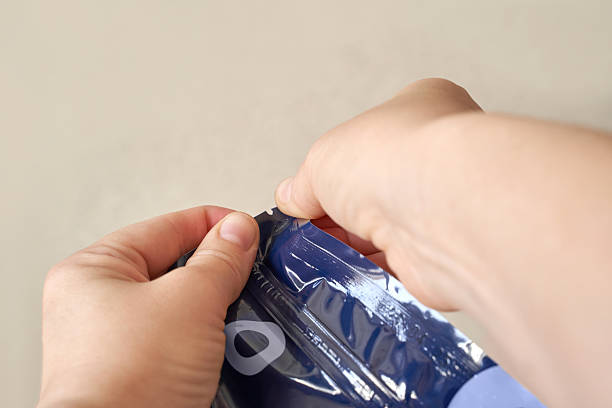
Another detail that improves usability is an easy-peel seal or a clearly defined peel-back tab. These elements are designed so the package stays secure during shipping and storage but opens with relatively low force when the user is ready.
This matters for a wide range of people. Older adults, individuals with reduced hand strength, and anyone opening packaging with one hand benefit from seals that do not require excessive pulling or twisting. Medical packaging and certain food applications have increasingly adopted these solutions because they balance product protection with accessibility.
Achieving the right peel strength is a technical balance. The seal must be strong enough to maintain barrier properties yet weak enough at the intended opening point to release cleanly. Multi-layer structures produced with precise lamination contribute to this consistency by helping each layer perform its intended role without unexpected delamination or overly aggressive bonding. Guidance from groups focused on inclusive design, including resources from the Arthritis Foundation, underscores how low-force opening features improve daily independence for many users.
Easy-Peel Seals and Peel-Back Tabs – Easier Opening with Less Force
Easy-peel seals and peel-back tabs make a package easier to open without giving up the protection needed during shipping and storage. The user should be able to find the opening point quickly and peel the seal back without excessive pulling.
This can make a noticeable difference for older adults, people with limited hand strength, or anyone trying to open a package with one hand. Easy-peel designs are also common in food and medical packaging, where the package needs to remain securely sealed but still be easy to access.
The key is getting the peel strength right. If the seal is too strong, the package becomes difficult to open. If it is too weak, it may not provide reliable protection before use. The seal should release cleanly at the intended point without tearing the film or causing the layers to separate.
Film structure and lamination quality can affect this performance. Consistent bonding helps the laminated structure remain stable while the peelable seal opens as designed. For converters, keeping this performance consistent across a production run is just as important as the initial package design.
Resources from organizations such as the Arthritis Foundation also show why easier-to-open packaging can be important for people with limited hand strength or dexterity.
Resealable Closures – Keeping Products Fresh After Opening
For products that are not used all at once, resealable packaging makes storage much easier. Zippers and press-to-close closures allow users to take what they need and close the package again, helping keep the remaining product fresh.
A good closure should also be easy to use. The opening area needs enough room to grip, and the zipper profiles should line up and close without requiring too much pressure. Users should be able to tell when the package is properly closed. If the zipper is difficult to align or keeps opening again, the resealable feature quickly loses its value.
The film around the closure also needs to remain stable. Excessive stretching, shrinkage, or delamination can distort the package and make the zipper harder to align and close. Consistent lamination helps the film structure maintain its shape and keeps the different layers securely bonded during repeated handling.
For flexible packaging converters, the closure and the laminated film therefore need to work as one structure. A reliable zipper cannot fully compensate for a film that stretches, curls, or separates during use.
Tactile Cues, Grip Zones, and Visual Hierarchy – Guiding the Hand and the Eye
Packaging does not always need a complicated opening mechanism to be easier to use. Small details such as raised textures, grip ridges, and notches can give users a better place to hold the package or show them where to open it. Simple visual cues, such as arrows and icons, can also make the intended opening direction clear at a glance.
These details can be particularly helpful for people with limited vision or when the package is used in poor lighting. A tactile notch, for example, can help users find the opening point without having to rely entirely on printed instructions. Japanese milk cartons are a well-known example. A small structural notch helps users identify the correct side to open, while also making the package easier to handle.
These features still need to work with the packaging material itself. The film needs enough stiffness and dimensional stability to hold its shape, while the laminated structure must provide the barrier and strength required for the product. When the material and physical design work together, small features such as grip areas and tactile cues can make the package noticeably easier to use.
One-Hand and Inclusive Design Features – Packaging That Works in Real Life
Packaging is not always opened under ideal conditions. Someone may be holding a child, preparing food, carrying something, or simply have only one hand free. Larger tabs, stable package bases, easy-grip areas, and simple opening steps can make these situations much easier.
The same features can also help people with limited hand strength or dexterity. A package that requires less force to open is useful for someone with arthritis, but it can also be more convenient for anyone who needs to open it quickly or with one hand. Clear opening cues and easy-to-grip surfaces reduce the need for precise hand movements.
For flexible packaging, these features also depend on the material structure. The film needs enough strength and stability to hold its shape during use, while the laminated layers need to stay securely bonded. If the film stretches too easily or the layers separate, even a well-designed tab or grip area may not work as intended.
Good packaging design therefore starts with the actual way people use a product. Small changes to the opening force, grip, or package shape can make a noticeable difference without adding unnecessary complexity.
Conclusion
Good packaging does not always need a complicated feature to make a difference. A tear notch that works properly, a seal that peels without too much force, or a zipper that closes easily can make everyday use much more convenient. Small details like these can have a noticeable effect on how people use a product.
For flexible packaging, these features also depend on the film structure behind them. Consistent film properties and even bonding between layers help the package maintain its shape, strength, and sealing performance during use. This makes lamination quality an important part of producing reliable easy-open and resealable packaging.
With more than 20 years of experience in solventless lamination equipment, Sinstar understands how film structures and lamination performance affect the finished package. Its solventless laminating machines are designed to help converters achieve stable coating, accurate web handling, and consistent bonding across multi-layer structures.
If you are looking to improve the performance of your flexible packaging, Sinstar’s team can help you evaluate the film structure, lamination process, and equipment requirements for your application. Feel free to contact our team to discuss your packaging needs.