
When Does a Triplex Laminator Become a Production Bottleneck Solution? A Capacity Planning Guide

A growing order book doesn’t necessarily mean a factory needs another laminating machine. The real problem may be the lack of available time on the machine. Three-layer requests can support two-layer work, increase work in progress and upset delivery schedules.
A triplex laminator can help when the laminating process limits production. However, adding equipment will not solve every bottleneck. Converters must first measure actual output, identify lost production time, and check whether downstream processes can handle more material.
This guide explains how to assess a three-layer laminating machine as a capacity planning solution, using production data rather than rated speed alone.
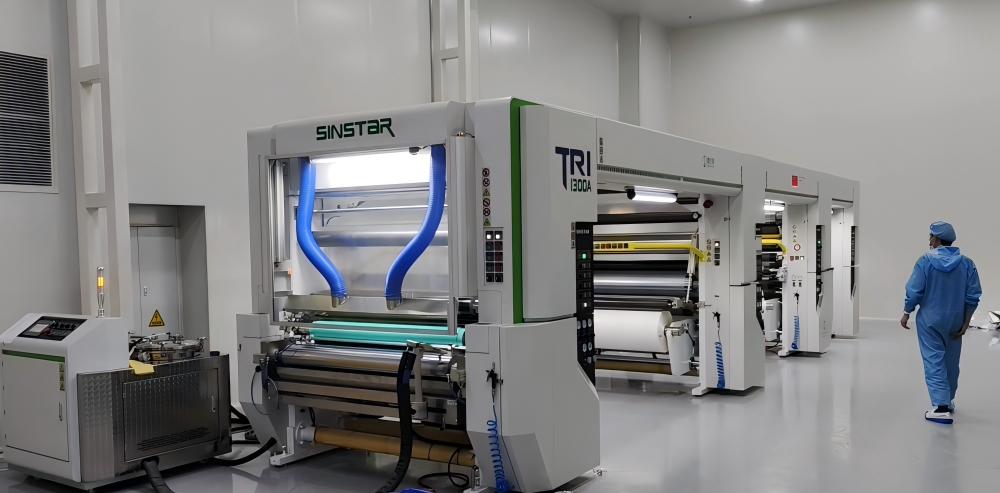
Why Can Three-Layer Orders Disrupt Production?
Most of these flexible packaging converters operate several laminate structures on common equipment. This works well when the order volumes are stable. Three-layer orders are on the rise and can cause problems. Depending on the sequence of production, it may require two lamination passes with intermediate roll handling and additional setup time. These steps take up capacity that could be used to fill other orders.
The impact often extends beyond the laminator:
- Longer lead times: Three-layer jobs compete with other orders for machine time.
- More work in progress: Intermediate rolls wait for the next production stage.
- More schedule changes: Planners must rearrange jobs to meet delivery dates.
- Higher material losses: Additional handling and setup can create more opportunities for waste.
The first step is to determine whether these problems come from insufficient laminating capacity, poor scheduling, or another process restriction.
How to Identify the Real Laminating Line Bottleneck
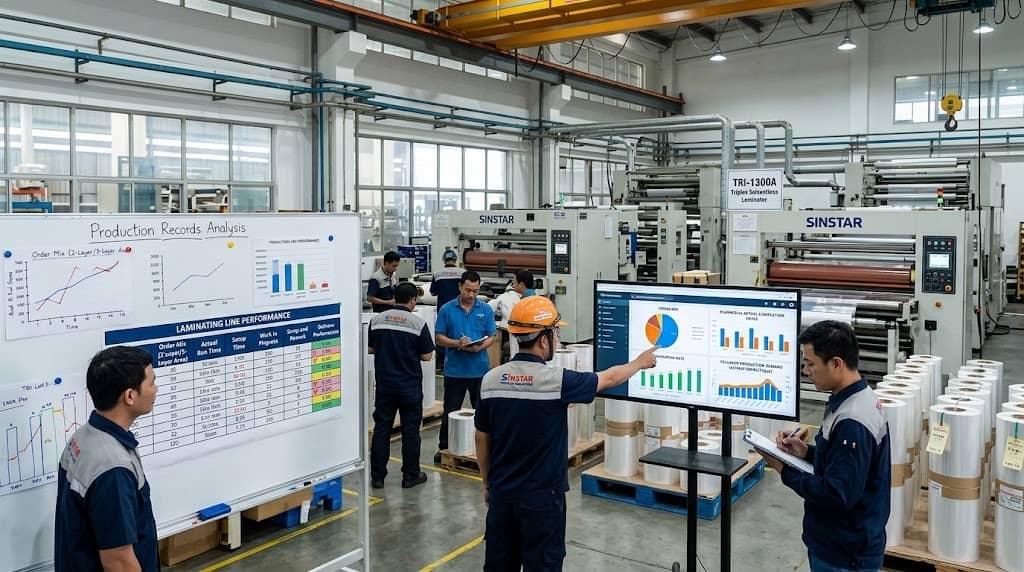
Start with four to eight weeks of production records. Choose a period that reflects normal order volumes and a representative range of material structures. Collect these metrics:
| Metric | Data to collect | Purpose |
| Order mix | Two-layer and three-layer order area | Measures demand by product type |
| Actual run time | Operating hours for each job | Shows machine time consumed |
| Setup time | Cleaning, adjustments, and roll changes | Reveals non-production time |
| Work in progress | Rolls waiting between operations | Identifies production queues |
| Scrap and rework | Material loss and corrective work | Measures avoidable capacity loss |
| Delivery performance | Planned versus actual completion dates | Shows the effect on customers |
Next, map the full production route. Include adhesive preparation, lamination, curing, slitting, rewinding, and material handling.
High machine utilization does not automatically prove that the laminator is the bottleneck. A curing room or slitting line may restrict finished output. A new laminator will not solve that problem unless the rest of the process can absorb the extra production.
How to Calculate Capacity Demand for Three-Layer Orders
Use actual production rates to estimate the machine time each order requires.
A practical first-pass formula is:
Required machine time = Processing time + Setup time
For multiple operations:
T_required = Σ (Aᵢ / Rᵢ) + T_setup
Where:
- Aᵢ = Material area processed during operation i, in m².
- Rᵢ = Effective production rate for that operation, in m²/h.
- T_setup = Total setup time, in hours.
- n = Number of processing operations included in the calculation.
For a sequential three-layer route, calculate each required pass separately if the passes use the same constrained machine. Include changeovers and intermediate handling when they consume relevant production resources.
Use effective production rates that reflect actual materials, quality requirements, and operating conditions. Do not substitute the machine’s maximum mechanical speed for real output.
Example: A Weekly Capacity Shortfall
Assume a converter processes 120,000 m² of three-layer orders each week. Its existing route requires two passes on the same laminator. For this example, assume each pass achieves an effective rate of 3,000 m²/h. Setup activities add four machine-hours per week.
The calculation is:
| Operation | Calculation | Machine time |
| First pass | 120,000 ÷ 3,000 | 40 hours |
| Second pass | 120,000 ÷ 3,000 | 40 hours |
| Setup | Assumed weekly total | 4 hours |
| Total | 84 hours |
These figures are illustrative assumptions, not SINSTAR equipment performance claims.
If the factory can allocate only 70 machine-hours per week to these orders, the estimated shortfall is 14 hours per week.
The production team should now test several options. It could reduce setup time, revise the schedule, change the production route, or evaluate a dedicated triplex line. The team must recalculate the workload using verified rates and realistic operating assumptions for each option.
When Should a Converter Add a Dedicated Triplex Line?
Three conditions provide a strong reason to investigate a dedicated three-layer laminating machine.
1. Three-layer jobs repeatedly compete for machine time
Review the schedule across several production cycles. If three-layer jobs regularly delay two-layer orders, separate production capacity may improve scheduling flexibility.
2. Demand is sustained, not temporary
Check confirmed orders, historical production volumes, and customer forecasts. A short-term order peak may not justify permanent expansion. A sustained increase in three-layer demand presents a stronger case.
3. Lamination is the actual constraint
Confirm that the laminator limits output. If curing, slitting, labor, or material supply restricts production, address those constraints before adding capacity. The decision should reflect the factory’s workload and process route. No single three-layer order percentage works for every converter.
For a separate explanation of how production route affects equipment use, see SINSTAR’s guide to one-shot triplex vs. sequential lamination. Use that article for process-method comparisons; use the present guide to diagnose capacity constraints.
What Should You Check Before Installing a Triplex Laminator?
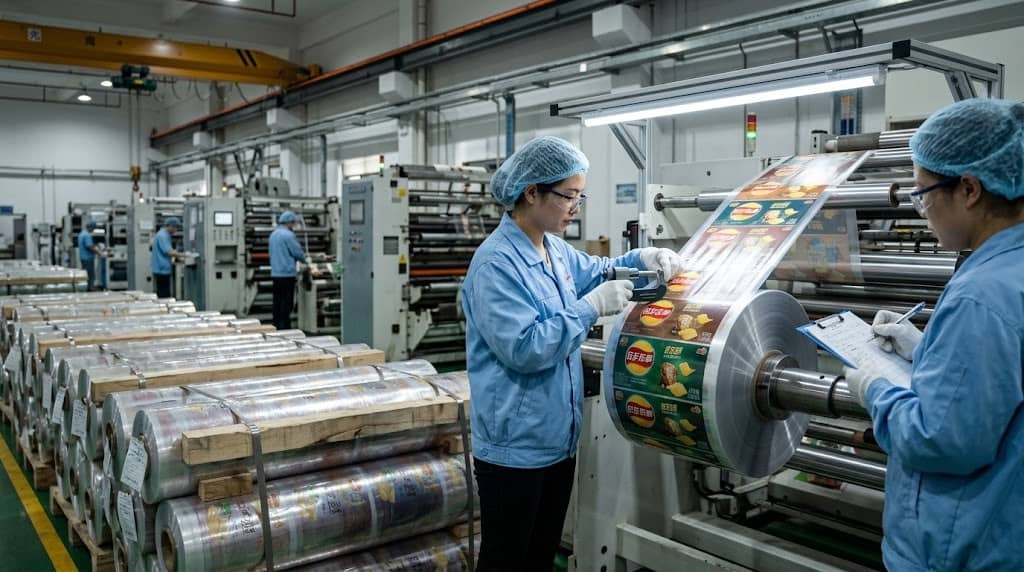
A new machine must fit the factory’s materials, production targets, and existing workflow.
- Material compatibility: List the film types, web widths, roll dimensions, adhesive systems, and laminate structures you plan to run. Ask the supplier to confirm compatibility for the intended applications.
- Production targets: Provide expected output by order type, batch size, weekly operating hours, and changeover frequency. Ask the supplier to distinguish rated mechanical speed from expected production output under your conditions.
- Upstream and downstream capacity: Check adhesive preparation, curing, slitting, rewinding, and roll handling. Confirm that these processes can support the planned output.
- Factory infrastructure: Verify the machine footprint, installation access, electrical requirements, maintenance clearance, and roll-handling arrangements.
- Acceptance criteria: Agree on the materials, operating conditions, output measurements, and quality tests before installation. Record the test conditions so the factory and supplier can evaluate performance consistently.
Review the TRI-1300A Triplex Solventless Laminating Machine to assess its stated configuration and application scope. Final suitability should be confirmed against your actual materials and production requirements.
How to Verify Whether the Upgrade Solves the Bottleneck
Measure production before and after installation. Use comparable order types and consistent reporting periods.
| Indicator | What to measure |
| Good output | Accepted product area per shift |
| Machine availability | Planned production time versus actual operating time |
| Setup time | Time lost during changeovers and adjustments |
| Work in progress | Rolls waiting between production stages |
| Scrap and rework | Material loss under consistent reporting rules |
| On-time delivery | Orders completed by the agreed date |
Speed is just as important as quality checks. Define acceptance criteria for the actual laminate structure and the intended end use. ASTM F904 provides a method to compare the bond strength or ply adhesion of similar laminates for appropriate flexible laminates. It does not set a universal acceptance limit for all packaging structures.
Before testing, agree on the appropriate test method, preparation of specimens, conditioning and acceptance limits. Record the results with production data.
Don’t measure an upgrade by rated speed only. Quantify the additional salable output and scheduling capacity it creates. But even if the new machine increases output from lamination, the factory still has to deal with the bottleneck downstream in curing or slitting. Calculate solventless laminating machine ROI and determine financial value of upgrade with actual operating data after production improvements verified.
Frequently Asked Questions
Q1: Will a triplex laminator always increase total factory output?
No. It can add to the available laminating capacity, but the total output may not change if curing, slitting, labor or material supply limits production. 1. Check the whole production route first.
Q2: How can I tell if my laminator is overloaded?
Review actual machine hours, set-up time, backlogs, delivery delays and work in progress. A continuing capacity shortage is a better indicator than a high rated-speed utilization number.
Q3: Would you add a triplex laminator, or another duplex machine?
Match both options with your order mix, required process routes, material compatibility, floor space and downstream capacity. Select the option to resolve the measured bottleneck.
Q4: What information do I need to give when requesting a quote?
Prepare order areas, material, structure, web widths, actual production speeds, setup times, scrap rates, available machine hours and delivery targets. This enables the supplier to assess the proposed configuration.
Conclusion: Base Capacity Expansion on Measured Demand
A dedicated triplex laminator can help converters manage sustained growth in three-layer orders. The strongest case exists when shared machine time repeatedly restricts production and the rest of the factory can support additional output.
Start with production records. Calculate the capacity gap. Identify the true constraint, then verify the proposed machine against real operating requirements. For a capacity review, share your material structures, weekly order area, actual production rates, and current process route with the SINSTAR team. These details provide a more useful starting point than selecting equipment by rated speed alone.