
Why Don’t Potato Chips Get Soft Inside Their Bags?

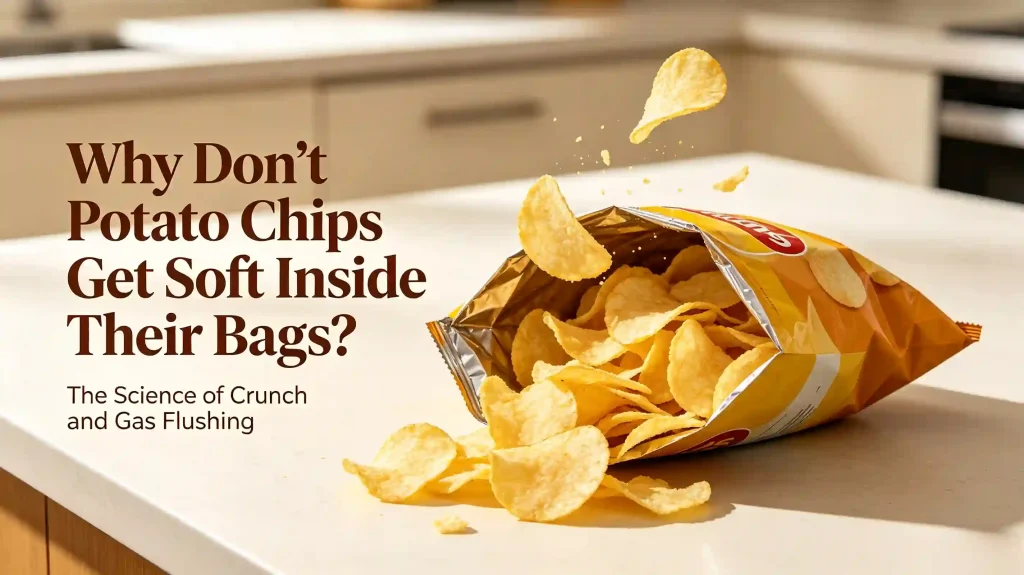
A sealed bag of potato chips can sit on a shelf for weeks or even months and still taste crisp. Open the bag, leave it for a day or two, and the chips can quickly become soft and lose their snap. The chips themselves have not changed. What makes the difference is the protection provided by the packaging while the bag remains sealed.
Here is what is happening inside the potato chips package.
What Actually Makes Potato Chips Go Soft?
For potato chips, moisture is one of the main causes of lost crispness.
Freshly fried chips contain relatively little water. Their porous structure and low moisture content are closely related to the crisp texture people expect. When the chips absorb moisture from the surrounding air, that structure changes and the chips gradually lose their crunch. Research on low-moisture foods such as crisps has identified moisture uptake and the resulting loss of crispness as a major deterioration mechanism.
Inside an unopened package, the chips are separated from the surrounding atmosphere by the packaging film. In an open bag, humid air can reach the product directly. The higher the humidity around the chips, the greater the opportunity for moisture to move into the food.
Oxygen is another concern, but it causes a different problem. Because potato chips contain oil, exposure to oxygen can promote lipid oxidation, eventually producing stale or rancid flavors. In other words, moisture is closely associated with softness, while oxygen is more closely associated with oxidation and off-flavors. Both need to be controlled during storage.
How Does a Potato Chip Bag Keep Moisture Out?
A single layer of ordinary plastic is usually not enough. Most common plastics allow small amounts of water vapor to pass through over time. For products that need to stay crisp for months, this level of barrier protection is simply not enough.
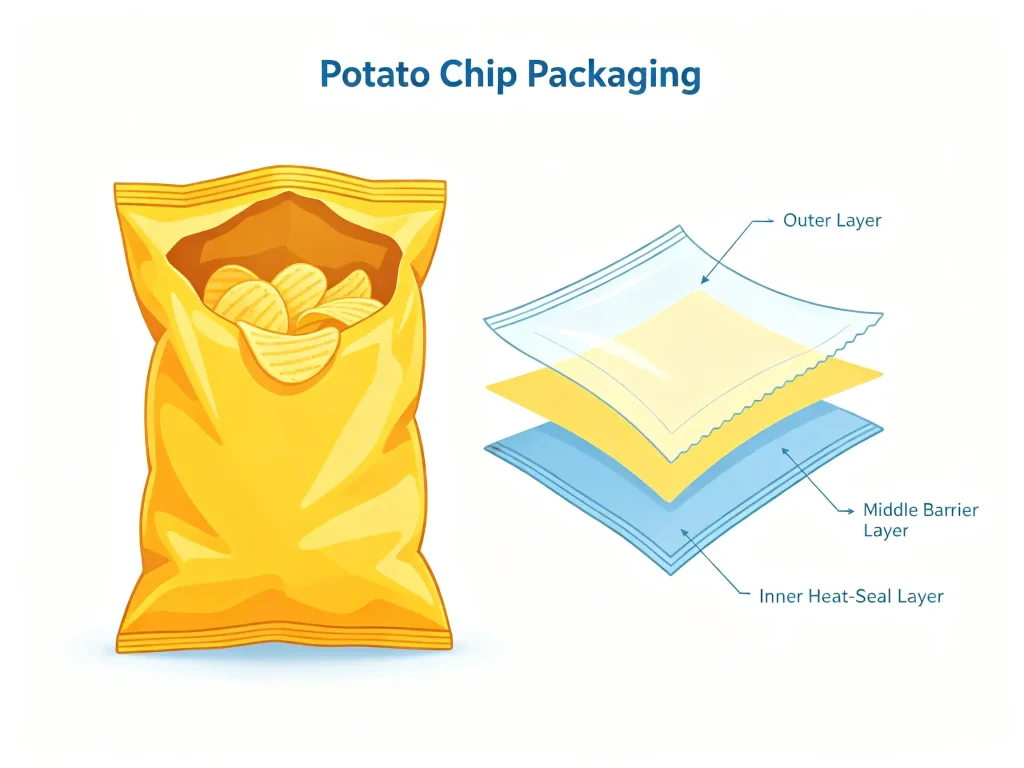
That is why chip bags typically use a multi-layer structure. Each layer serves a different purpose. The outer layer provides a surface for printing and adds mechanical strength, helping protect the package during handling and transport. The middle layer acts as the main barrier and is made from materials that limit the movement of water vapor and oxygen. The inner layer is designed for heat sealing, allowing the bag to be closed tightly, and it is the layer that comes into contact with the food.
Many chip bags are also flushed with nitrogen before they are finally sealed. This replaces most of the air inside the package. As a result, there is less oxygen inside the bag, while the internal conditions are better controlled. Both factors help slow moisture uptake and oxidation, giving the chips a longer period of crispness under normal storage conditions.
A key part of effective chip packaging is keeping the water vapor transmission rate low. The lower the rate, the less moisture can pass through the packaging over time. This controlled barrier performance helps many products maintain their texture for several months on the shelf. In practice, multi-layer films and nitrogen flushing work together as a common packaging approach for dry snacks.
Why Do Some Chip Bags Perform Better Than Others?
Choosing the right film is only part of the job. The way the packaging is manufactured can also affect how well the finished package protects the product.
In multilayer flexible packaging, the layers need to be properly bonded together. If adhesive coverage is uneven or the coating thickness varies, the barrier performance may not be consistent across the film. So, even when the material specification looks right on paper, the finished package may not perform as expected if production quality is inconsistent.
Sealing is another important part of the process.
Even a small defect in the seal can give air and moisture a direct path into the package. This is why factors such as seal temperature, pressure, dwell time, film condition, and machine settings need to be kept under control during production.
Storage conditions matter too. Packaging designed for a dry warehouse may face a much greater challenge when it is transported or stored in a hot, humid climate. As humidity outside the package increases, so does the moisture pressure across the film, making good water-vapor protection even more important.
This is where packaging production equipment also comes into the picture. For multilayer films, consistent coating, lamination, curing, and web handling help keep the intended structure uniform throughout the roll. In other words, the final performance depends not only on the material specification, but also on how consistently that structure is produced.
What Happens After the Chip Bag Is Opened
Once you tear open the bag, the situation changes immediately. The barrier film can still prevent moisture from passing through the unopened parts of the package, but the opening itself provides a direct route for humid air to reach the chips. The nitrogen-rich atmosphere is also no longer maintained.
That is why resealing an opened bag is not quite the same as having a factory-sealed package. A clip or folded opening may slow down air exchange, but it usually cannot recreate the original hermetic seal or controlled atmosphere.
If you are not going to finish the chips soon, moving them into a genuinely airtight container can help reduce further moisture uptake. Keeping the container away from humid conditions is also useful.
So, What Keeps Unopened Chips Crispy?
Potato chips stay crisp because their packaging slows the movement of moisture and oxygen into the package. A suitable multilayer film provides the necessary barrier, while the inner layer allows the package to be sealed properly. Nitrogen flushing also helps reduce oxygen exposure and protects the chips during handling and distribution.
Once the package is opened, humid air can reach the chips much more easily. As a result, moisture can enter the product faster, and the texture may start to change.
For snack manufacturers, maintaining this protection involves more than choosing a high-barrier film. The consistency of lamination, coating, sealing, and other production processes can also affect how well the finished package performs.
The next time you open a bag of chips, take a closer look at the package. The thin, flexible bag is not simply there to hold the chips. Its material structure and sealing help keep moisture out and preserve the crisp texture inside.