What Can a Mini Lab Solventless Laminator Do?

A laboratory solventless laminator is often seen as a smaller version of an industrial machine, with limited capabilities and a narrower range of applications. It is sometimes used only for demonstrations or simple material tests. However, its compact design makes it well suited to research, sample preparation, and process development.
Film structures, adhesives, and lamination conditions can be tested on a small scale before a trial is run on full-size equipment. Less film and adhesive are needed, and changes can be made more easily between tests. This makes laboratory equipment useful when a new material combination or lamination process is still being evaluated.
The applications of a mini lab solventless laminator are not limited to basic testing. Its capabilities and limitations depend on the materials being processed, the required sample size, and the type of process being studied.
What Can a Mini Lab Solventless Laminator Do?
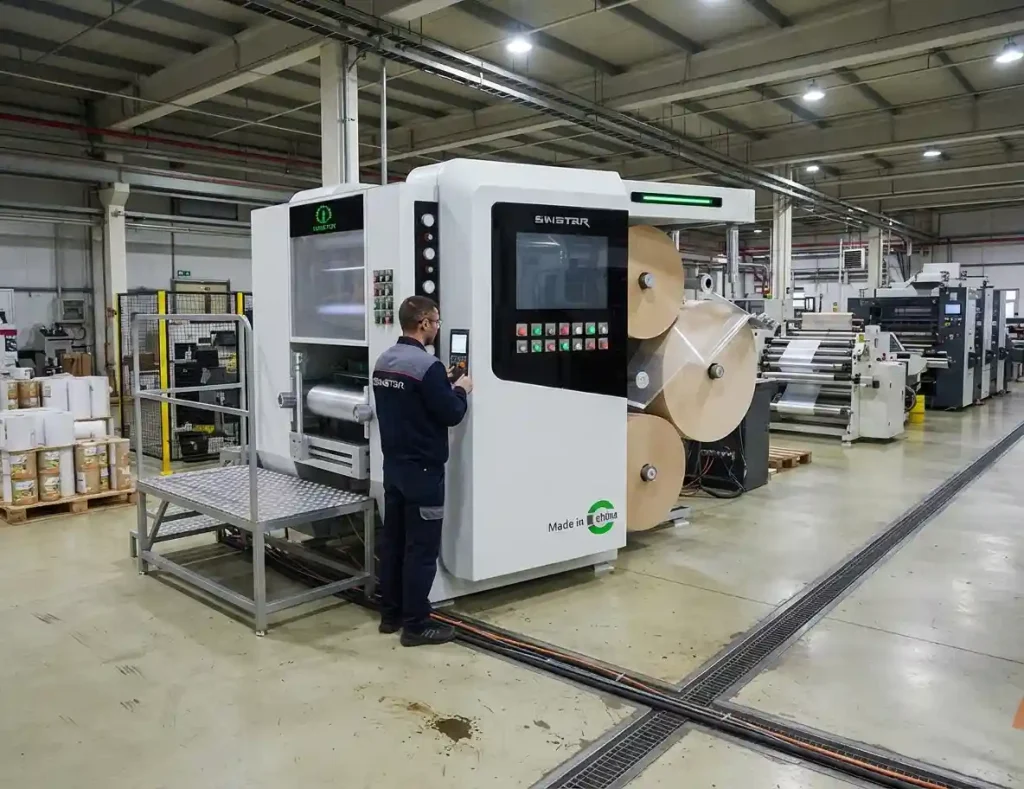
The exact capabilities vary by machine, but a well-designed laboratory solventless laminator can do much more than produce a few test samples. It can support adhesive development, packaging trials, process testing, troubleshooting, and technical training—all while using far less material than a full production line.
1. Develop and Test Solventless Adhesive Formulations
Adhesive development is one of the main applications.
Technicians can test different formulations, mixing ratios, coating weights, and curing conditions on a small scale before moving to a production machine. The resulting laminates can then be evaluated for appearance, wetting, bond strength, curing behavior, and substrate compatibility.
This is especially useful for flexible packaging, where solventless adhesives are used across applications ranging from standard packaging to demanding retort structures. A laboratory laminator gives adhesive manufacturers a practical way to compare formulations before committing to larger trials.
2. Test New Films and Packaging Structures
The adhesive is only part of the equation. The film combination also needs to perform well.
A laboratory laminator can be used to test structures such as PET/PE, PET/CPP, OPP/PE, and PET/AL/PE, as well as combinations involving metallized films, aluminum foil, and paper.
This is particularly useful when a company is evaluating a new barrier film, thinner material, recycled-content film, or biodegradable substrate. Several structures can be tested on a small scale first, making it easier to identify the most promising option before a production trial.
3. Check Process Conditions Before Scale-Up
Laboratory trials can also give engineers a better idea of how a new structure may behave during production.
Depending on the machine, variables such as coating weight, line speed, web tension, nip pressure, and temperature can be adjusted during testing. The results can then be used as a starting point for a larger production trial.
A laboratory laminator cannot reproduce every condition of a commercial line. Machine width, roll size, tension behavior, curing time, and production speed may all affect the final laminate. Even so, small-scale testing can reduce uncertainty and help engineers avoid unnecessary production runs.
4. Produce Samples for Customers and Product Development
New packaging structures often need to be tested or approved by customers before they go into production.
A converter may need samples of a new film combination, while an adhesive manufacturer may want to demonstrate performance on a specific substrate. A laboratory laminator makes it possible to produce these samples without tying up a full-size production machine.
It also makes comparison easier. Engineers can prepare several versions of a structure, evaluate them, and send the better-performing samples for customer testing.
5. Reduce Material Waste During Testing
One of the practical advantages of laboratory equipment is lower material consumption.
Production laminators are designed for high-speed, continuous operation. Running a short experiment on such a machine can still consume a considerable amount of film and adhesive. A laboratory laminator is designed to obtain useful test results with a much smaller material requirement.
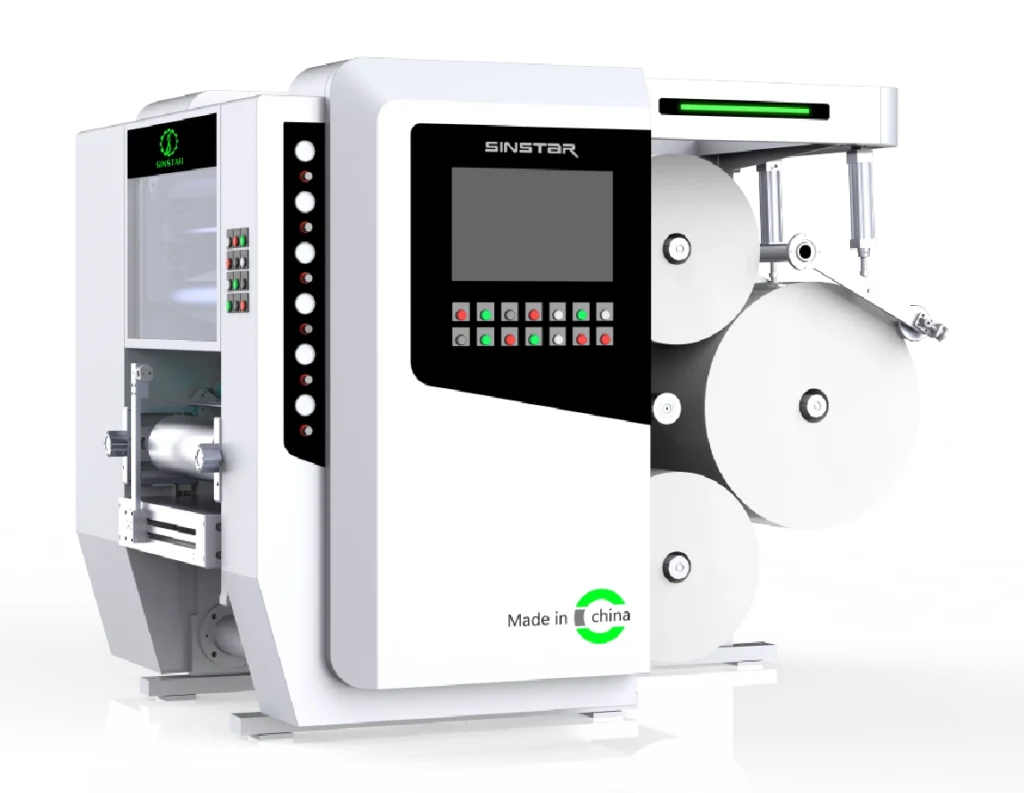
For example, Sinstar’s Mini 500 is designed for laboratory R&D and small-scale validation, with a maximum laminate width of 500 mm and a maximum speed of 400 m/min according to its published specifications.
The actual material saving depends on the test method, machine settings, substrate, and number of trials, so a fixed percentage should not be assumed. The main benefit is that early-stage experiments can be carried out without using production quantities of material.
6. Support Training and Technical Demonstrations
Laboratory laminators are also useful in universities, technical institutes, and company training programs.
Students and new technical staff can learn about substrate selection, adhesive application, coating weight, web tension, and laminate quality without working directly on a large production line.
For companies, this provides a practical environment for training before operators move on to full-scale equipment. The machine can serve both as an R&D tool and as a way to demonstrate the lamination process.
7. Help Investigate Lamination Problems
A laboratory laminator can also be useful when a production laminate does not perform as expected.
Problems such as poor bond strength, bubbles, wrinkles, uneven adhesive coverage, or poor appearance may be related to the adhesive, substrate, coating weight, machine settings, or several factors at once.
Engineers can recreate smaller-scale trials and change individual variables to see how they affect the result. For example, they might compare different coating weights or test the same adhesive with several substrates.
A laboratory trial will not always identify the exact production-line problem, but it can narrow down the possible causes and provide a more controlled starting point for troubleshooting.
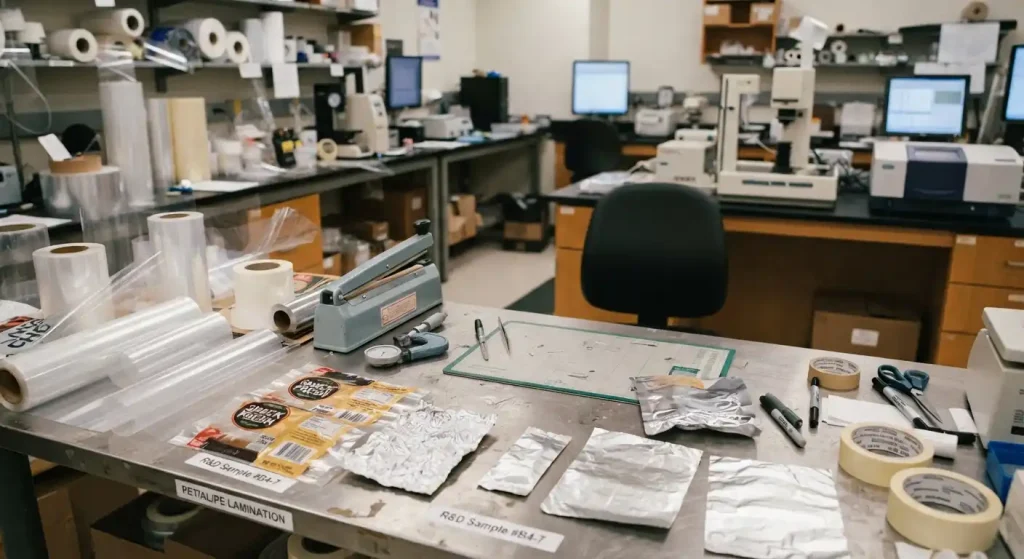
Typical Situations Where These Machines Are Used
Adhesive suppliers often keep a lab laminator in their technical center for formulation and process testing. It gives their technicians a way to try different adhesive formulations, check pot life, and collect performance data before a new product is introduced to customers. Packaging converters use lab machines in a similar way. When developing a new film structure or testing an alternative material, they can run a small trial first instead of tying up a production line for a test that may only take a few hours.
Universities and research institutes also use these machines for teaching and applied research. Students or researchers might compare different coating weights on the same film combination, for example, or look at how humidity and curing time affect bond strength. For teams working on more sustainable packaging, a lab laminator can also be useful for evaluating recyclable or mono-material structures before moving to larger-scale trials.
The amount of material saved can make a noticeable difference. A production trial may require thousands of meters of film once the machine is set up and running. A laboratory trial can often be carried out with only a few hundred meters, depending on the machine and test structure. That makes it much easier to repeat experiments, compare different conditions, and make adjustments without creating a large amount of waste.
What These Machines Are Not Designed For
A mini lab solventless laminator is mainly intended for testing and development, not for routine production. Its output is simply too limited for commercial orders. Most models are also designed around two-layer structures, so applications that require three-layer lamination in a single pass may not be suitable. Likewise, very thick materials or specialized laminates, such as some insulation products, are usually better handled on equipment designed specifically for those applications.
There are also some practical factors to keep in mind when working with a lab machine. Temperature and humidity can affect adhesive behavior and coating performance, particularly when testing different formulations or coating weights. For this reason, lab results are best used as a reference for process development rather than treated as the final production setting.
The goal is to identify a workable process on a small scale first. Once the formulation and basic parameters have been established, they should still be verified and adjusted on the actual production laminator before full-scale manufacturing.
Mini Lab Laminator vs. Industrial Laminator
| Factor | Mini Lab Solventless Laminator | Industrial Solventless Laminator |
| Main purpose | R&D, testing, sampling | Commercial production |
| Material consumption | Low | High |
| Web width | Narrower | Much wider |
| Production speed | Designed for short trials | Designed for continuous operation |
| Product development | Excellent | Possible, but costly |
| Customer samples | Suitable | Usually inefficient |
| Mass production | Not the main purpose | Primary purpose |
| Space requirement | Relatively small | Much larger |
| Operating cost for small trials | Lower | Higher |
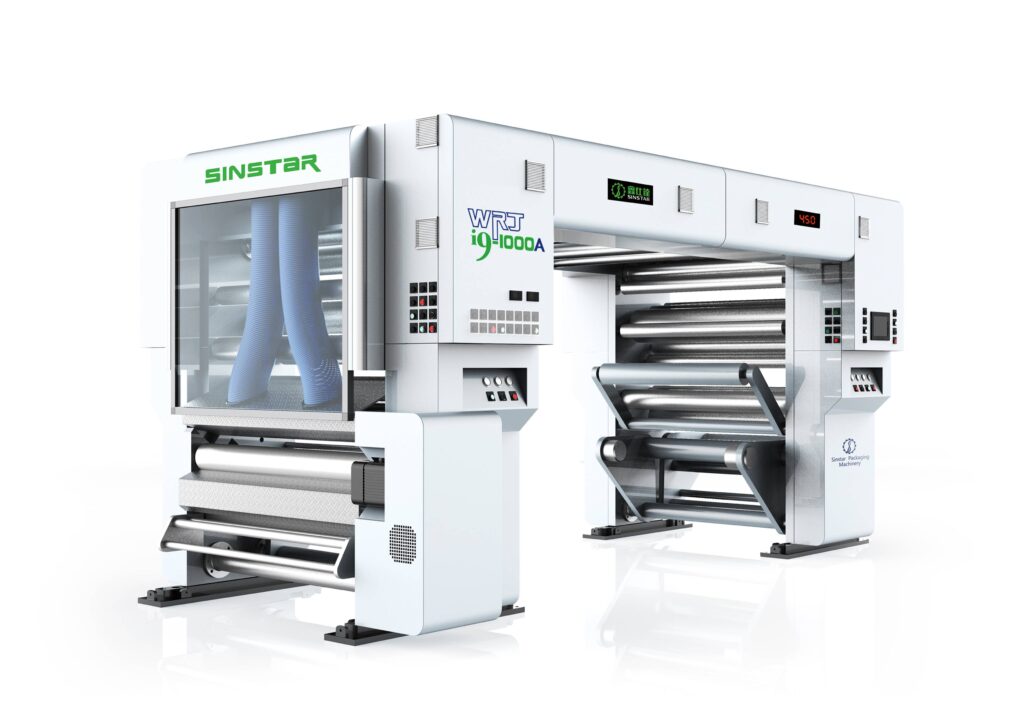
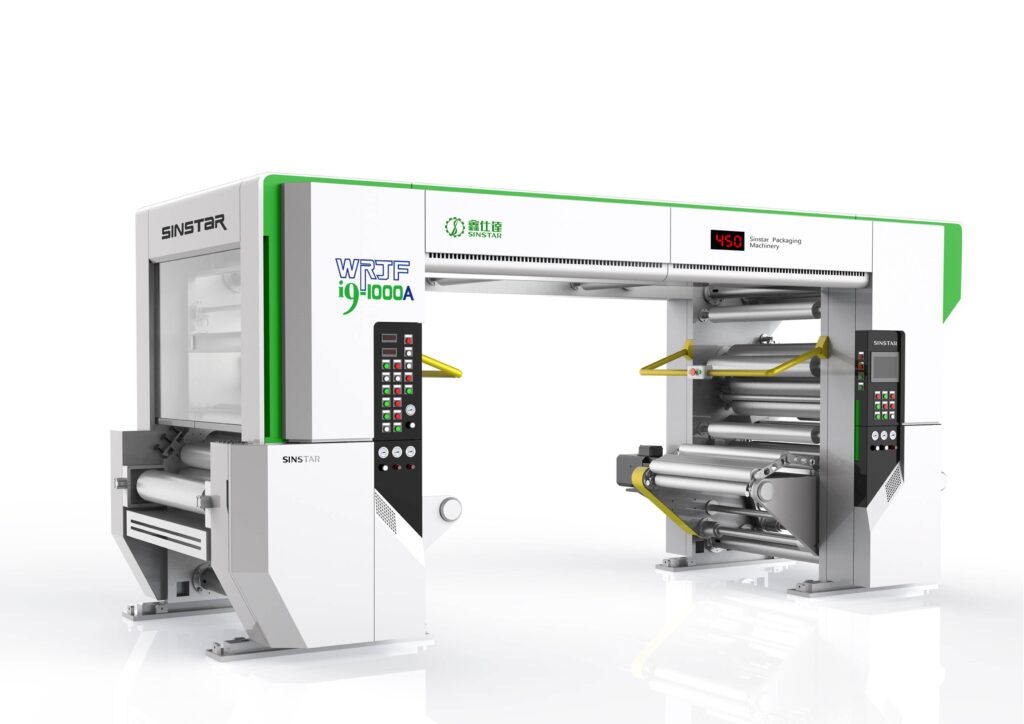
Industrial solventless laminators are usually designed for much higher production volumes. Many have working widths of 1000–1350 mm or more, larger roll capacities, and systems built to run continuously for long periods. A lab laminator takes a different approach. It is designed to use less material, make adjustments more easily, and switch between tests without a lot of setup. Its smaller footprint and lower energy consumption also make more sense for development work, where the machine may only run for a short time at a time.
The basic lamination process, however, remains much the same. Both machines rely on accurate adhesive metering, stable web tension, and a controlled laminating nip to produce a consistent bond. The main difference is the scale at which these functions are carried out. By putting them into a smaller, more manageable system, a lab laminator lets technicians test new materials, adhesives, and structures without tying up a full production line. For companies that use both types of equipment, this can make the transition from laboratory trials to production much smoother and reduce the amount of time spent preparing a new job.
Who Benefits Most from a Mini Lab Solventless Laminator
A mini lab solventless laminator is particularly useful for teams that need to run tests on a regular basis. Adhesive developers, for example, can use the machine to compare formulations under consistent conditions instead of relying on production equipment for every trial. Packaging R&D teams can do the same when testing new films, adhesive combinations, or laminate structures.
The machines also have a practical role in universities and research institutes, where students and researchers need hands-on experience with lamination processes. For smaller converters, having a lab unit can make it easier to test a new material or process before using valuable production time for a full-scale trial.
In general, the investment makes the most sense when a company is frequently changing formulations, qualifying materials, or preparing samples. The main benefits are not high output, but less material waste and a faster way to decide whether an idea is worth taking to the production line.
On the other hand, a company that mainly runs long, stable production jobs may have little reason to keep a separate lab laminator. If testing is only occasional, using existing production equipment may be the more practical option.
If you are comparing equipment for this purpose, the Sinstar Mini 500 Solventless Laminating Lab Equipment is one example designed specifically for laboratory R&D, material testing, sample lamination, and process validation. Its published specifications include a maximum laminate width of 500 mm and a maximum speed of 400 m/min.