Why Solventless Lamination Is Replacing Traditional Insulation Material Production

China’s new energy vehicle output crossed 12 million units in 2024, and every one of those drivetrains depends on insulation materials that most buyers never think about. Behind each traction motor and onboard transformer sits a layer of composite insulation film—DMD, NHN, NMN—doing the unglamorous work of keeping windings from shorting out under heat and vibration. As motor manufacturers scale production to meet EV and renewable energy demand, the equipment used to make these materials is under more pressure than ever, and a lot of factories are finding their existing solvent-based lines can’t keep up.
What Is DMD and NHN Insulation Material Used For?
DMD stands for Dacron-Mylar-Dacron: two layers of polyester fiber paper bonded to a polyester film core. NHN follows the same logic with Nomex aramid paper instead of polyester fiber. Both belong to a broader family of composite flexible laminates—NMN, AMA, PMP—that share a basic structure: a film core sandwiched between two outer layers, laminated together with adhesive.
These materials go into motor slot liners, transformer winding insulation, and generator coil wraps. The IEEE standards for electrical insulation systems classify them by thermal endurance—how long they hold up at a given operating temperature before breaking down. For a motor running continuously at elevated temperatures, that rating determines the equipment’s service life. Get the lamination wrong and you’re not looking at a cosmetic defect; you’re looking at premature winding failure.
The adhesive choice matters too. Polyester adhesives keep costs down for standard-duty applications. Epoxy systems handle higher bonding strength requirements. Polyimide adhesives go into anything that needs to survive extreme temperature swings, which is increasingly common as EV motors push toward higher power density and higher operating temperatures.
The Limitations of Traditional Solvent-Based Lamination
Most insulation laminate producers in China still run solvent-based coating lines, largely because that’s what the industry standardized on decades ago. The process works, but it comes with baggage that gets more expensive every year.
Solvent-based systems need a drying oven to evaporate the carrier solvent before the layers bond. That oven consumes a lot of energy, and it caps line speed—you can only push material through as fast as the solvent can evaporate cleanly, usually somewhere in the 15-25m/min range for insulation-grade laminates. Push it faster and you risk trapped solvent, which shows up later as bubbling or delamination in the finished material.
Then there’s the compliance side. Solvent emissions during coating and drying fall under VOC regulations in most manufacturing regions, which means recovery or incineration systems, permitting, and ongoing monitoring costs. None of that shows up on the machine’s price tag, but it shows up on the factory’s operating budget every month.
How Does a Solventless Insulation Laminator Work?
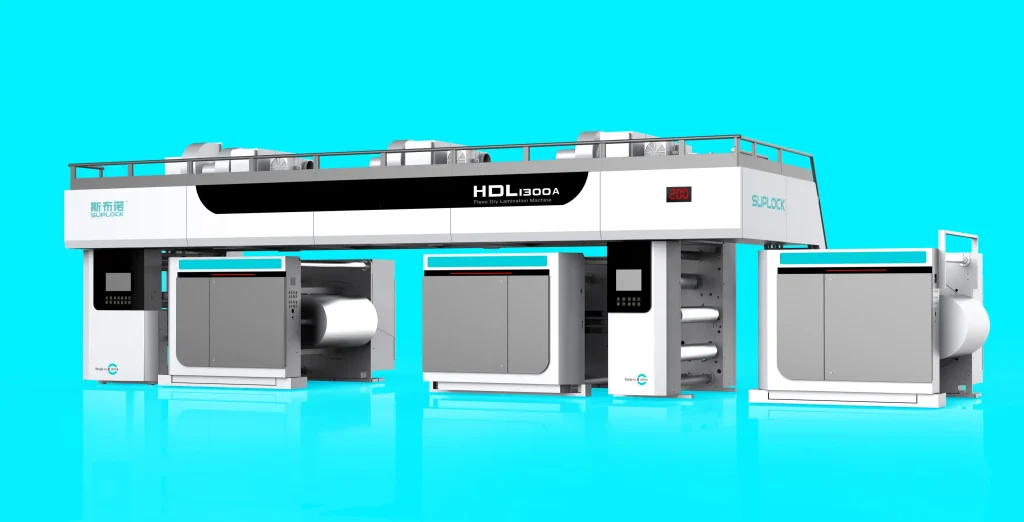
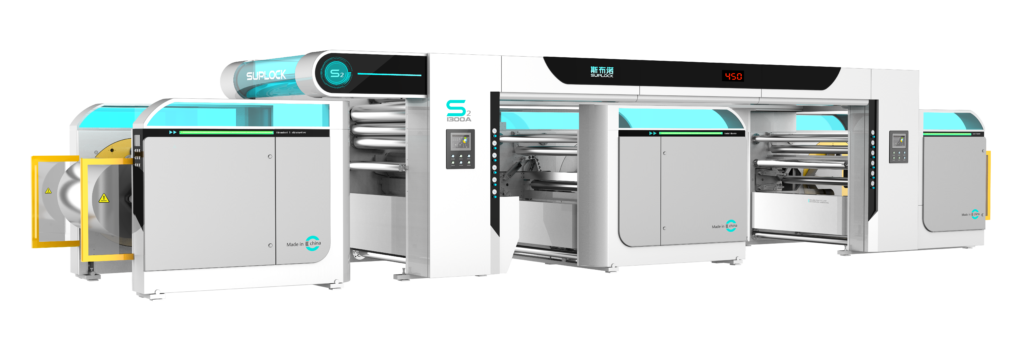
Solventless coating skips the solvent carrier entirely—the adhesive goes on as a low-viscosity liquid that cures through heat or a chemical reaction rather than evaporation. No solvent means no drying oven, and no drying oven means the line isn’t speed-limited by evaporation time anymore.
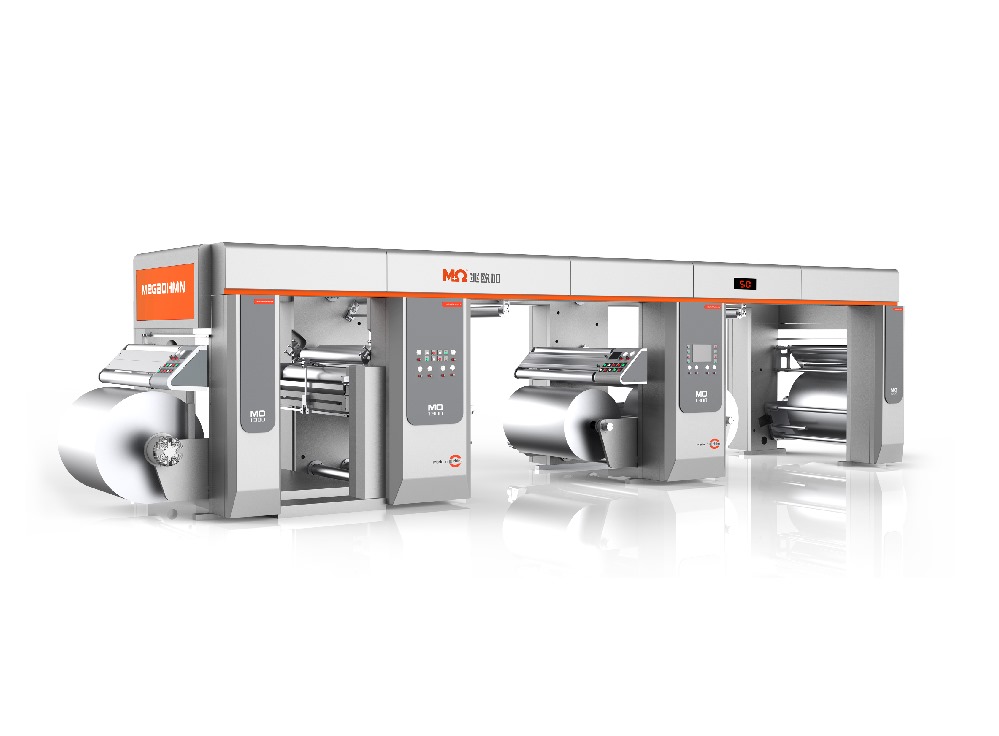
That’s the mechanical reason a machine like Sinstar’s MO 1300A insulation laminator runs at up to 100m/min on DMD and NHN substrates—roughly five times what a comparable solvent-based line manages. For a factory running two or three shifts, that speed difference compounds fast: the same order that took a full week on solvent-based equipment clears in a day and a half.
The MO 1300A applies adhesive to both sides of the middle film layer simultaneously, which keeps the bond line more even across the width of the material—something that’s harder to control when each side is coated in a separate pass. It also runs shaftless unwinding and rewinding, so operators aren’t manually threading material onto a mandrel every time a roll changes, which cuts changeover time between batches.
None of this requires a VOC recovery system, since there’s no solvent to recover in the first place. For a plant that’s been budgeting for incineration equipment or emissions permitting, that line item disappears.
Solventless vs Solvent-Based Lamination: Cost Comparison
Solventless equipment costs more upfront than a comparable solvent-based line—that part isn’t in dispute. What tends to get missed is how quickly the gap closes once a plant is running production.
Strip out the ongoing solvent purchase costs, the oven’s energy draw, and the VOC compliance overhead, and most manufacturers see the equipment pay for itself within twelve months, according to Sinstar’s own production data. That number will move depending on shift patterns and local energy prices, but the direction is consistent: solventless lines cost more to buy and less to run, and the running costs win out fast at any meaningful production volume.
There’s a labor angle too. Solvent-based lines typically need more hands-on monitoring—checking oven temperature profiles, watching for solvent odor issues, managing ventilation. A solventless line with servo-controlled tension and shaftless roll handling needs fewer people per shift to hit the same output.
Insulation Lamination Machine for EV and New Energy Motors
Motor and transformer insulation for EV and renewable energy applications carries tighter tolerances than older, lower-voltage equipment. Higher power density motors run hotter, which pushes thermal endurance requirements up. Battery-electric platforms also introduce faster switching frequencies in the power electronics, which raises dielectric strength requirements on the insulation system as a whole.
That combination means bond uniformity across the laminate matters more than it used to. A slightly uneven adhesive layer that would’ve been within tolerance for an older industrial motor can become a weak point in a high-frequency EV drivetrain application. This is part of why simultaneous double-side coating—rather than coating one side, then flipping and coating the other—has become a meaningful spec difference between insulation laminators, not just a throughput feature.
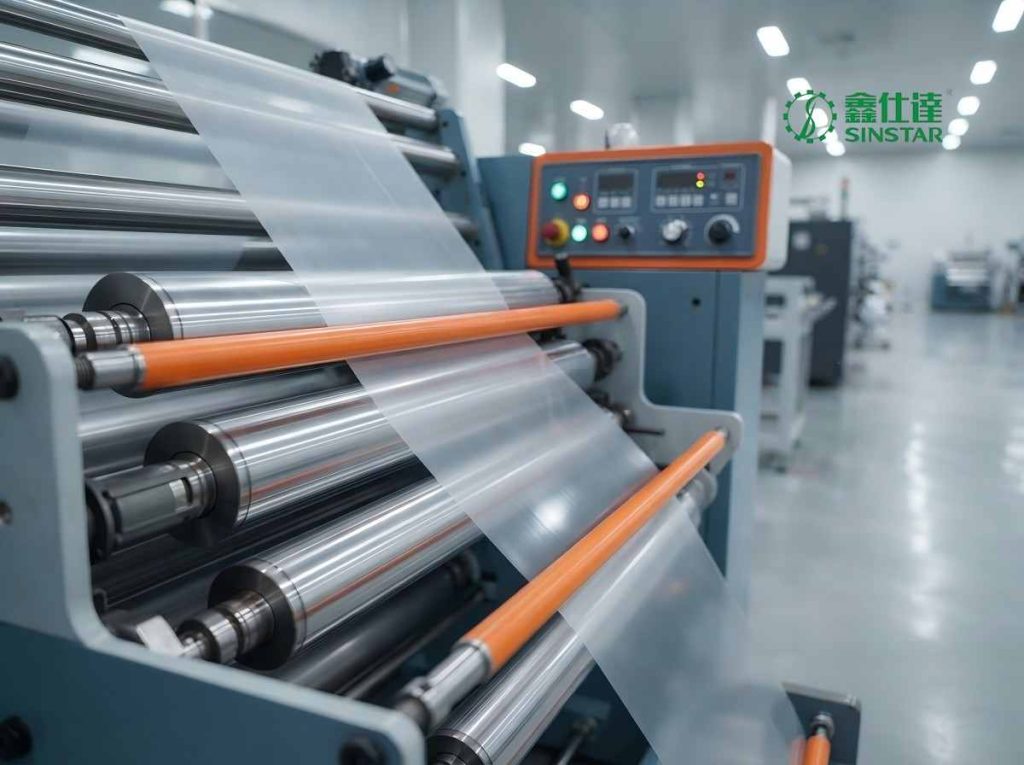
Tension control matters just as much. DMD and NHN materials are thin and can wrinkle or stretch unevenly if tension isn’t held steady through the unwind, coating, and rewind stages, particularly at higher line speeds. A servo-driven tension system with dancer roller synchronization, which the MO 1300A uses, keeps the material flat and consistent even as speed increases—something that gets harder to manage on older mechanical tensioning setups.
For plants supplying motor and transformer manufacturers in the EV and renewable energy space, these aren’t abstract specs. They’re the difference between passing a customer’s incoming material inspection and getting laminate rejected for inconsistent bond strength.
Is It Time to Switch to a Solventless Insulation Laminator?
The solvent-based equipment installed base in China’s insulation laminate industry isn’t going away overnight—there’s too much sunk capital in existing lines for that. But for producers adding capacity, or replacing aging equipment, the math has shifted. A line that runs five times faster, skips VOC compliance costs, and pays back its premium within a year isn’t a marginal upgrade anymore.
As motor and transformer manufacturers tighten specs to keep pace with EV and renewable energy demand, insulation laminate producers running solvent-based equipment may find themselves increasingly boxed out of higher-spec orders—not because their materials are wrong, but because their production line can’t hold the tolerances those orders require.