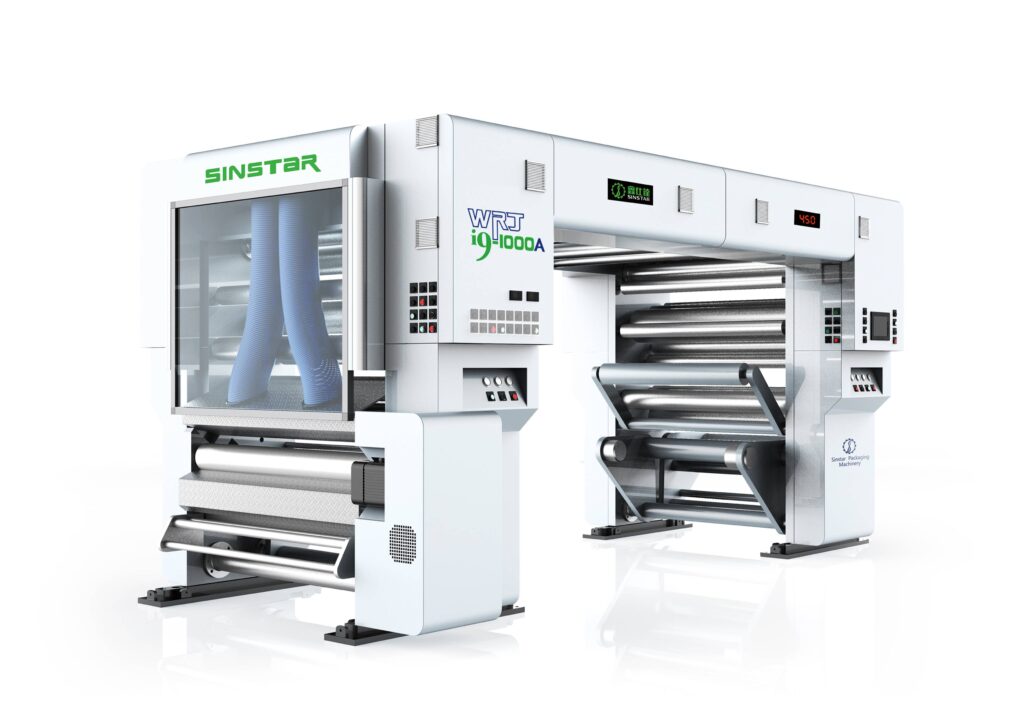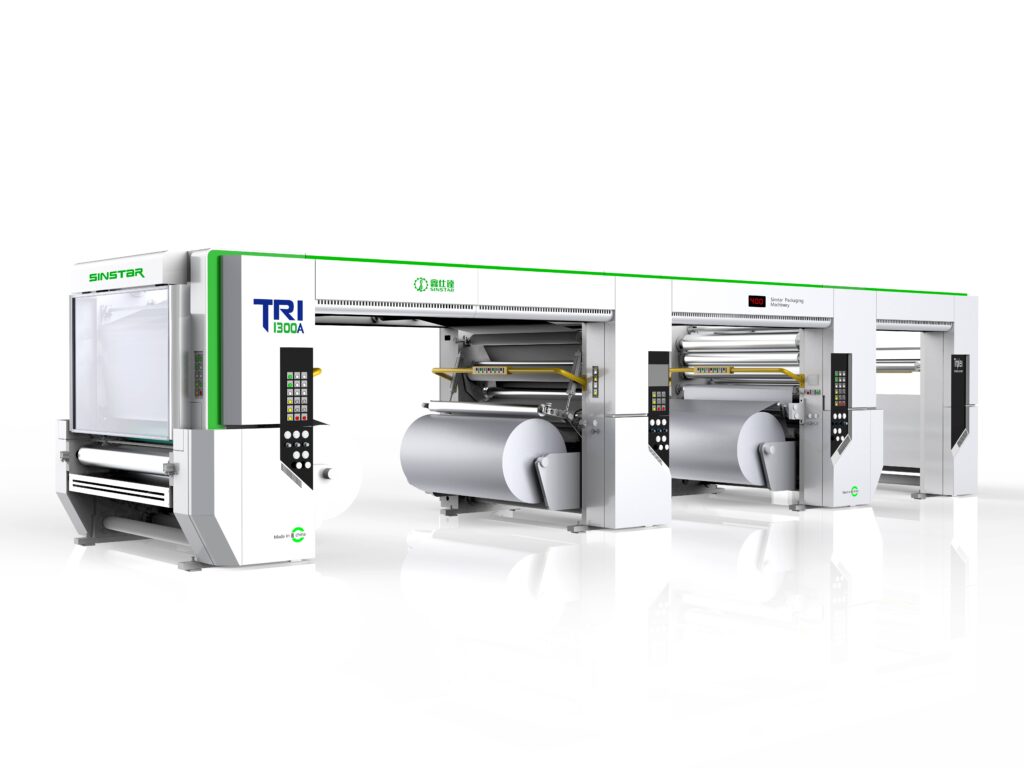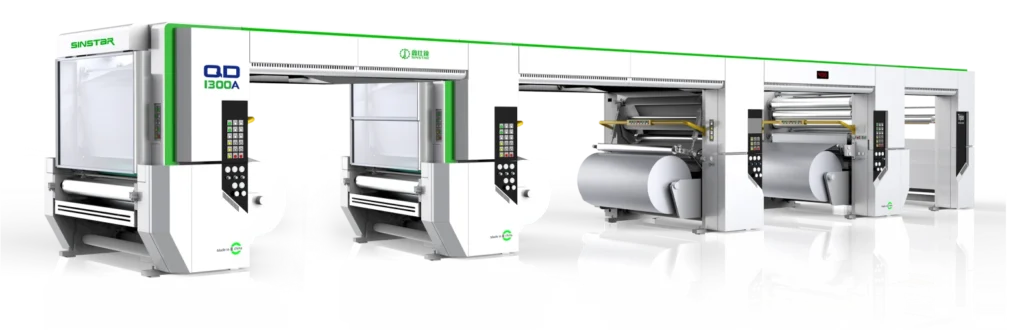
3-layer Solventless Lamination Machine: Causes & Fixes for Web Breakage

To keep the profitability high in the flexible packaging industry, it is vital to optimise the production efficiency with minimised material waste. A web break is the most disruptive technical failure that can occur when running a 3-layer solventless lamination machine. A 3-layer laminator operates at high speeds and processes three separate webs of material. A single web break means immediate downtime, waste of a large amount of substrate, adhesive spoilage and potential damage to expensive rollers. This technical guide provides a system-level analysis for diagnosing, troubleshooting and preventing web breakage in the three core dimensions of equipment, process and preventive maintenance.
Step 1: Determine the Web Break by Observing the Shape of the Fracture
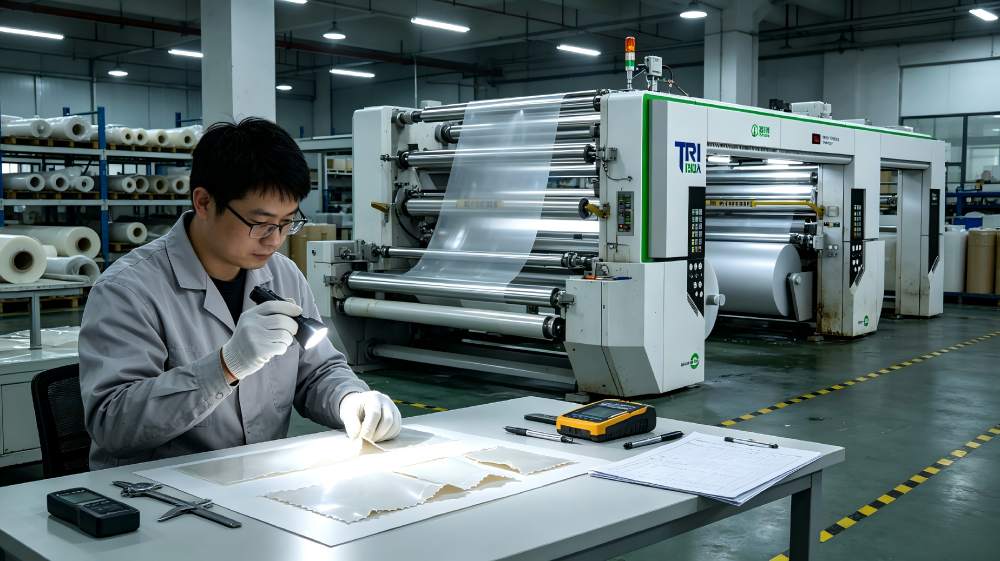
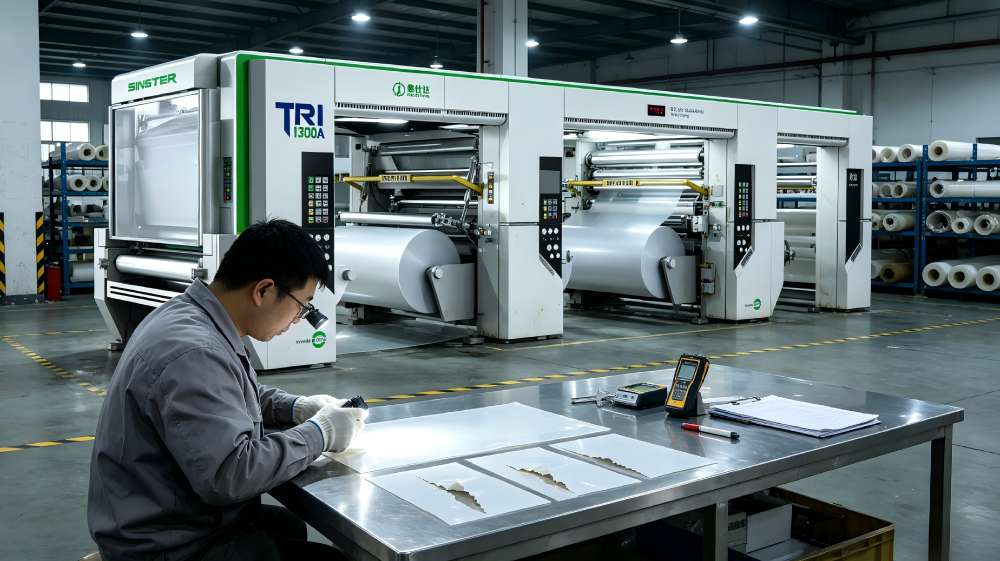
Physical characteristics of the broken film edge should be analysed by the technical operators prior to adjustment of machine parameters. The fracture morphology gives instant information on the root cause of the failure.
Straight and Clean Edge: This profile indicates a mechanically cut or inherent slitting defect. This happens when a sharp object (such as a dried adhesive crystal or a nicked guide roller) scratches the moving web, setting up a stress concentration point that immediately snaps under normal running tension.
Jagged or serrated edge: This shape is a sure sign of too much web tension. The tensile force applied to the particular layer exceeded the mechanical yielding limit of the substrate and caused a violent, irregular tear.
Neckdown or Stretched Edge: This look indicates thermal damage or localized overheating. The mechanical modulus of thermally sensitive substrates, such as Polyethylene (PE) or Polypropylene (PP), drops significantly when subjected to higher temperatures. The film stretches, thins and even breaks with a normal tension profile.
Step 2: 3-Way Analysis of 3-Layer Solventless Lamination Machine Breakage
1. Equipment & Hardware Factors
Multilayer solventless lamination demands precise mechanical synchrony. Hardware instability in any of the following subsystems will induce web breaks:
Tension Control System Mismatch: A 3-layer solventless lamination machine relies on multiple closed-loop tension zones. If a load cell drifts or a pneumatic brake suffers from internal friction (stiction), the tension feedback loop lags. This creates sudden tension spikes during acceleration or deceleration, snapping the thinnest film layer.
EPC/LPC Guiding System Over-correction: Edge Position Control (EPC) systems maintain web alignment. If the sensor sensitivity is set too high or the hydraulic/servo actuator responds with excessive force, the guiding roller swings violently. This rapid lateral movement creates an uneven tension distribution across the web width, tearing the tight side of the film.
Line Speed Asynchrony: The primary driving roller, the coating rollers, and the individual unwinding stations must achieve precise linear speed synchronization. If the feed rate of a specific layer falls below the linear throughput speed of the main lamination nip roller, the nip roller pulls the film faster than it is supplied, creating a mechanical tug-of-war that terminates in a web break.
2. Process & Material Parameters
Operational configurations must match the specific physical properties of the laminated films and the solventless chemical adhesive.
Incorrect T-V-P (Temperature-Velocity-Pressure) Matching: Solventless lamination requires heating the steel laminating roller to lower adhesive viscosity and promote initial tack. However, if the roller temperature is set too high for a thermal-sensitive material like a 30μm PE film, the heat conducts through the web, reducing its tensile strength. If the machine running velocity is decreased without a corresponding reduction in roller temperature, the extended dwell time under heat results in thermal breakage.
Adhesive Viscosity and “Sticky Roller” Effect: Solventless adhesives are highly dependent on temperature to maintain the correct running viscosity (typically 2,000 to 3,000 mPa·s at the coating head). If the mixing ratio shifts or the temperature drops, the adhesive viscosity increases rapidly. This high tackiness prevents the coated film from releasing smoothly from the transfer rollers, causing the film to wrap around the roller instead of advancing to the lamination point.
Raw Material Slitting Defects: Variations in the quality of the incoming film rolls represent a major process hazard. If the film roll has microscopic edge tears or cracks generated during the slitting process, these imperfections act as crack propagation points under normal winding and unwinding tensions.
3. Preventive Maintenance Failures
Mechanical degradation inside the machine introduces parasitic forces that disrupt film transport.
Seized Guide Roller Bearings: Guide rollers must rotate freely with minimal rolling resistance. If a bearing accumulates dust or loses lubrication, it becomes a “dead roller.” The moving film slides over a stationary surface, creating massive frictional drag that alters the downstream tension zone and strains the material to its breaking point.
Adhesive Residue Build-Up: Solventless polyurethane adhesive cures into a tough, solid elastomer. If operators fail to clean the roller edges at the end of a shift, dried adhesive blocks accumulate on the steel or rubber rollers. As the film passes over these hard protrusions, it experiences high localized point pressure, puncturing or weakening the film.
Static Electricity Accumulation: Plastic films are highly insulating and generate substantial electrostatic charges via friction. Without functional static eliminators, the film layers cling to the metal rollers or to each other. This creates a jerky, non-uniform release from the web path, causing fluctuating tension spikes.
Step 3: Actionable SOP to Prevent Web Breaks in Solventless Laminators
To transition from reactive troubleshooting to structured prevention, production plants must implement a rigorous maintenance protocol. The following matrix outlines the required preventive maintenance actions:
| Maintenance Frequency | Core Component | Maintenance Standard & Action | Expected Operational Outcome |
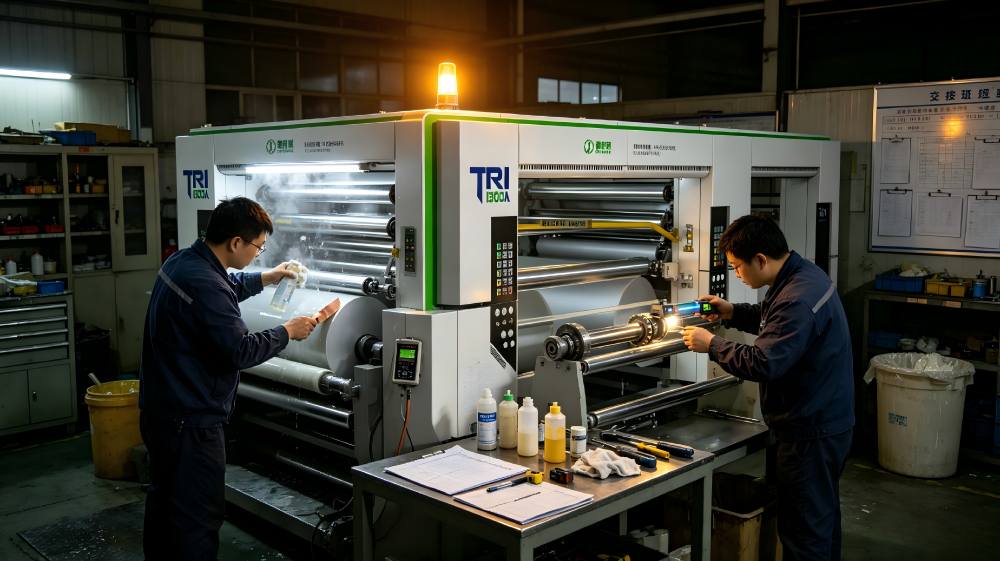
| Every Shift / Daily | Lamination & Coating Rollers | Clean all steel and rubber rollers using specialized solventless cleaning agents. Inspect roller edges for cured adhesive residue. | Prevents localized point pressure punctures and sticky roller wrapping. |
| Every Shift / Daily | Static Eliminators | Clean static bars and verify proper electrical grounding. Test voltage outputs with a static meter. | Eliminates film clinging and stabilizes web tension profiles. |
| Weekly | Pneumatic Subsystems | Inspect all air lines for leaks. Drain water traps from air filters. Calibrate the pressure gauges of the nip roller cylinders. | Ensures balanced lateral pressure across the lamination nip. |
| Monthly | Transmission & Bearings | Check the tension of all timing belts and drive chains. Inject high-temperature synthetic grease into all heated roller bearings. | Eliminates dead rollers and friction-induced tension spikes. |
| Quarterly | Roller Parallelism | Utilize a digital laser alignment system to measure the parallelism of all guide rollers relative to the lamination nip. | Maintains a tolerance of <0.05mm/m to prevent single-sided web tearing. |
Common Questions
Q1: Why does the PE layer always break in a 3-layer solventless laminator?
A1: The frequent breakage of the Polyethylene (PE) layer is primarily caused by excessive thermal exposure from the heated lamination steel roller.
PET or aluminum foil does not have a low melting point and a low thermal resistance threshold, unlike PE. If the steel roller temperature is above the thermal tolerance of the material, the heat will rapidly transfer through the thin PE web, causing it to soften, lose its tensile strength and thermal elongation (neckdown). This softened zone, under normal running tension, cannot support the mechanical load and snaps.
Corrective Actions:
- Reduce the lamination roller temperature to the minimum required for proper adhesive flow (typically 40°C to 50°C for PE).
- Increase the machine line speed to reduce the thermal dwell time of the PE film on the hot roller.
- Check the downstream cooling roller to confirm that it is functioning properly to freeze the web structure immediately after lamination.
Q2: How often should I clean the rollers of a solventless lamination machine?
A2: Rollers must be cleaned at the end of every single shift (every 8 to 12 hours) and immediately following any unplanned production shutdown.
Solvent-free polyurethane (PU) adhesives cure via a time- and moisture-dependent chemical cross-linking reaction. After the adhesive has set on the surfaces of the steel or rubber roller, it forms a hard skin of insoluble polymer that cannot be dissolved by conventional solvents. These cured residues create surface irregularities which result in localized pressure spikes, film punctures, optical defects (bubbles/spots) and web tracking problems in the next run.
Mandatory Cleaning Protocol:
- End of Shift: Strip all unreacted adhesive from coating, transfer, and steel lamination rollers with specialized ethyl acetate or safety-approved solventless cleaning agents.
- Weekly Deep Clean: Check roller edges and bearing housings for accumulations of partially cured adhesive crusts and scrape them clean with non-marring copper scrapers.