Control Adhesive Coating Accuracy

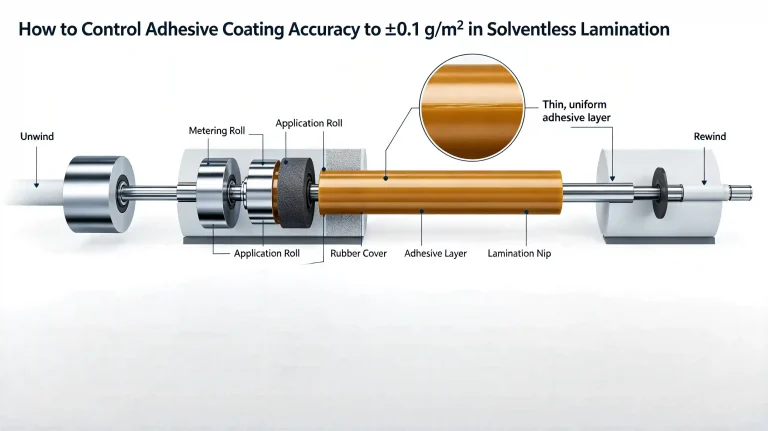
How to Control Adhesive Coating Accuracy to ±0.1 g/m² in Solventless Lamination

In solventless lamination, adhesive coating weight is one of the first things to check when laminate quality becomes unstable. A small change in coating weight can affect bond strength, appearance, curing, and adhesive consumption. The problem is that simply setting a target value on the machine does not guarantee that the actual coating weight will…
MonoMaterial Lamination

How to Master Tension Control for Monomaterial PE Film Lamination?

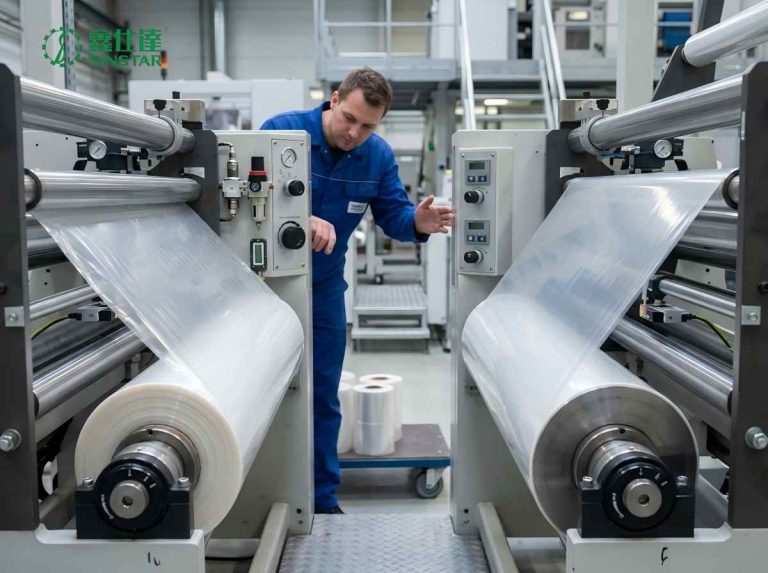
Converters switching to all-PE laminates for recyclability often run into the same problem: tension settings that worked fine for years on PET/PE structures start producing curling, uneven winding, or intermittent delamination once the structure changes to PE-PE. The film itself isn’t more difficult to work with. The issue is that most lamination equipment and operator…

Dry Lamination vs Extrusion Lamination

Dry Lamination vs Extrusion Lamination: Which Process Is Right for Your Packaging?

If you’ve spent any time sourcing flexible packaging, you’ve probably run into this question: should we go with dry lamination or extrusion lamination? On the surface, both processes bond layers of film together. But the differences in how they work and when to use each one can significantly affect your product quality, production cost, and…

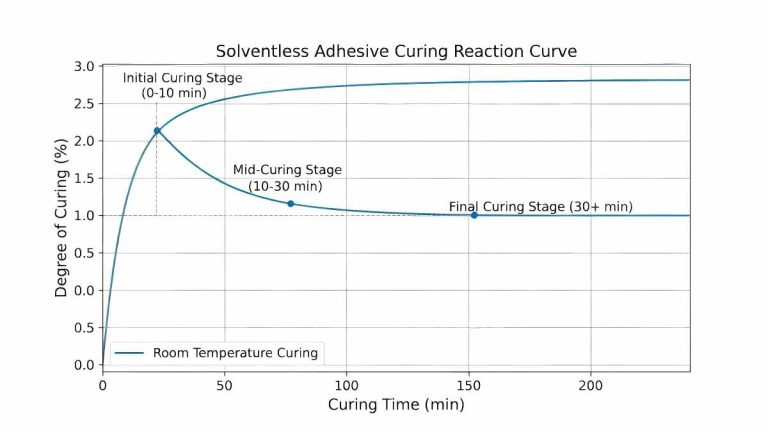
Solventless adhesive curing reaction curve

How to Cure Time in Solventless Lamination Adhesive via Precise Temperature Control

The efficiency and quality of flexible packaging production depend heavily on the chemical and physical performance of the materials used. This type of bond involves the use of solventless lamination adhesives. Solventless lamination process is the preferred method due to its environmentally friendly nature and convenience in that it does not require drying tunnels used by…

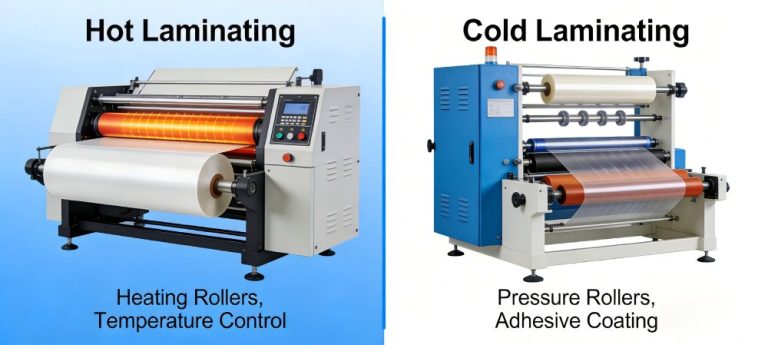
Hot vs Cold Laminating technology

Hot vs Cold Laminating Systems: Technical Analysis of Surface Protection

The process of lamination involves applying a thin plastic protective layer to a substrate, which consists of paper, cardstock, and synthetic media to enhance durability, moisture resistance, and visual clarity. The decision to select thermal or pressure-sensitive systems for industrial and professional printing environments represents an essential technical choice. This article provides a comprehensive comparison…

laminating-machine-temperature

Why Summer and Winter Require Different Temperature Settings on Your Laminating Machine?

If you’ve been running a laminating machine for a while, you’ve probably noticed something strange: the settings that worked perfectly last summer start causing problems once winter arrives. The film won’t bond properly, edges lift, or bubbles appear out of nowhere — even though you haven’t changed anything. You didn’t do anything wrong. The machine didn’t…

lamination web tension control

Mastering Web Tension in Solventless Lamination Machines for Defect-Free Packaging

In today’s flexible packaging industry, the solventless lamination process has become the preferred solution for manufacturers seeking higher efficiency, lower VOC emissions, and improved sustainability. However, while solventless technology eliminates solvent drying systems, it significantly increases sensitivity to one critical parameter: web tension control. In a modern solventless lamination machine, adhesive coating weight is extremely low—typically…

Zero-Aging Technology for food packaging

How Solvent Free Adhesive and Zero-Aging Technology Are Transforming Modern Packaging

In the last few decades, the packaging sector transitioned towards sustainability, food safety, and carbon mitigation. Abandoning the harmful substances in adhesive systems and applying the solventless laminating machines have been significantly helpful in reducing VOC emissions. However, the experience of many converters and many similar products shows that “solvent-free” does not always mean “fast” and…

solventless laminating machine

Why Solventless Laminating Machine Drives Flexible Packaging Boom

Driven by the rapid pace of urbanization, changing consumer behaviors, and the growth of the e-commerce, food, and pharmaceutical industries, the global packaging sector is changing at an increasing rate. Newly flexible packaging makes a unique opportunity in terms of sales/market profit. There are so many options for creating flexible packaging, and it’s sustainable for our…

Material-lamination

What Is The Difference Between Wet Lamination And Dry Lamination?

In the printing, packaging, labeling and composite materials industries, lamination processes almost run through all aspects of product appearance protection and performance improvement. Whether it is composite film for food packaging, book covers, promotional materials or functional films, the quality of lamination will directly affect the service life, visual effect and user experience of the…

End of content

End of content