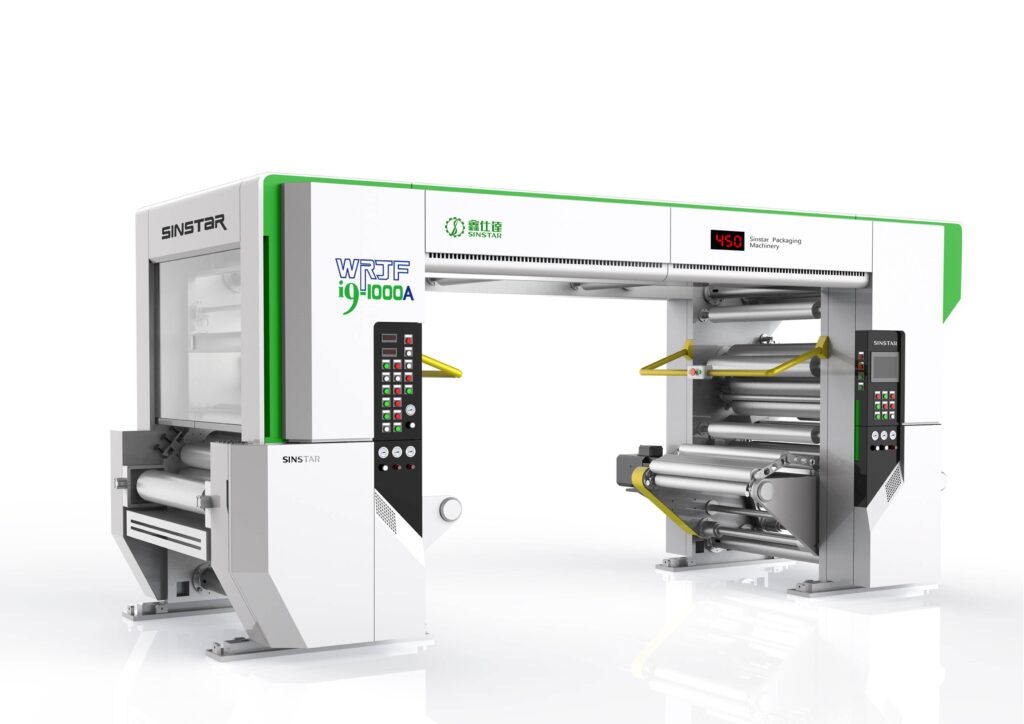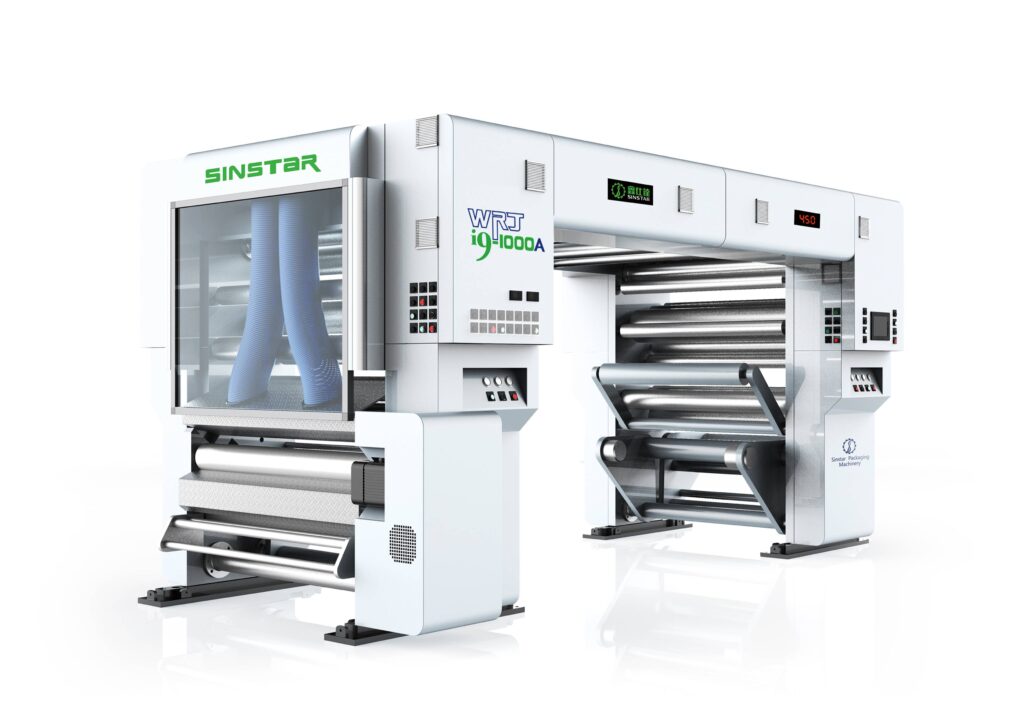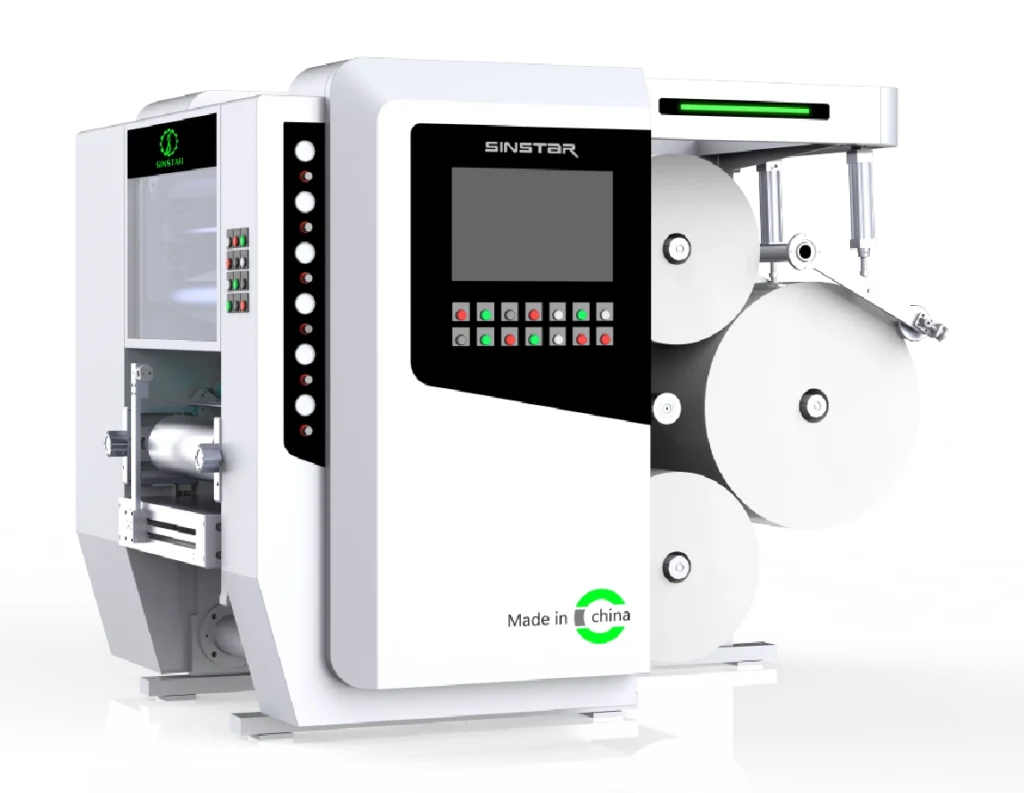
How Much Does a Solventless Laminating Machine Cost?

Flexible packaging converters who are looking to move from traditional dry lamination to solventless technology have a critical capital expenditure evaluation ahead of them. Baseline pricing for an industrial-grade solventless laminating machine starts at $80,000 and can top $600,000. Prices range widely from $110,000 to $160,000 for Chinese-built duplex units to more than $550,000 for European-designed triplex machines.
The initial purchase cost varies significantly based on mechanical speed, automation complexity, web width, and structural design (duplex versus triplex configurations). This guide breaks down these technical price drivers, compares Chinese and European equipment, and provides a precise return on investment (ROI) formula to guide your procurement strategy.
Technical Specifications That Drive the Solventless Laminating Machine Price
A solventless laminating machine is not a commodity; its price is a direct reflection of its mechanical engineering, web handling accuracy, and tension control architecture. Three primary hardware factors dictate the final manufacturer quotation:
1. Mechanical Speed and Structural Rigidity
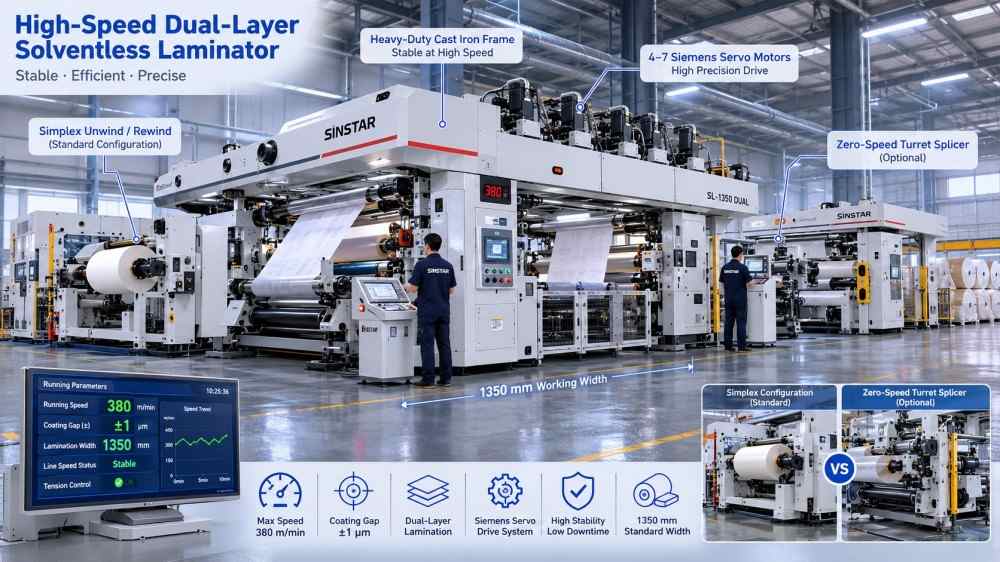
Entry-level economic solventless laminators operate at stable production speeds of 300 to 350 meters per minute (m/min). High-speed, high-efficiency models achieve running speeds of 450 to 600 m/min. Engineering a machine to run reliably at 500 m/min without web vibration requires:
- Solid, heavy-duty cast iron side walls (typically 60mm to 80mm thickness) to absorb harmonic frequencies.
- Independent multi-axis servo motor drive systems (often integrating 4 to 7 individual Siemens or Yaskawa servo motors).
Upgrading from an economic 300 m/min chassis to a high-speed 500 m/min precision chassis increases the baseline equipment cost by 35% to 50%.
2. Rewind and Unwind Automation (Simplex vs. Turret Matrix)
The continuous operation capability of the machine impacts the price:
- Simplex Stations: Require the operator to slow down or completely stop the machine to change material rolls. This configuration represents the baseline price.
- Automatic Turret Disc Rotators with Zero-Speed Splicers: Allow the machine to perform fully automated roll changes at maximum line speed without stopping. Incorporating automatic turret systems on both unwinders and the rewinder adds $30,000 to $50,000 to the machine price.
3. Coating Head Precision and Web Width
The standard web widths for flexible packaging are 1050mm and 1350mm. Extending the web width to customized profiles like 1450mm or 1600mm demands heavier precision ground rollers to prevent deflection under nip pressure, increasing the cost by 15% to 25%.
Furthermore, the coating unit must utilize a high-precision five-roll transfer coating system. The gap tolerances between the metering roller, transfer roller, and coating roller must be controlled via micrometric adjustment within ±1 micron to guarantee a uniform coating weight of 0.8 to 2.5 grams per square meter (g/m²).
Duplex vs. Triplex Lamination Machine Cost
The choice between a duplex (two-layer) and a triplex (three-layer) system alters the physical footprint, the number of coating heads, and the electronic synchronization requirements of the equipment.
| Machine Configuration | Layers Laminated per Pass | Price Range (High-End China) | Price Range (European Brands) |
| Duplex Laminator | 2 Layers (e.g., BOPP/PE, PET/CPP) | $110,000 – $160,000 | $350,000 – $450,000 |
| Triplex Laminator | 3 Layers (e.g., PET/AL/PE, PET/VMPET/PE) | $260,000 – $320,000 | $550,000 – $750,000+ |
Why Triplex Machines Cost Twice as Much
A triplex solventless laminating machine does not merely add a third unwinder. It integrates two complete solventless coating units and a highly complex web path consisting of three unwinders and one rewinder.
The main cost inflation stems from tension control synchronization. When handling aluminum foil (AL) or metallized films (VMPET), the material is highly susceptible to stretching or tearing. A triplex machine requires at least 10 to 12 independent servo drives managed by high-speed PLC microprocessors alongside multiple ultra-sensitive floating rollers to execute closed-loop tension control. Consequently, a triplex machine commands a price premium of 100% to 120% over a duplex machine of equivalent width.
China-Made vs. European Solventless Laminators
The global solventless lamination market is divided into two primary manufacturing sectors: Tier-1 European manufacturers and high-end Chinese technology brands.
1. European Brands (e.g., Nordmeccanica, Comexi)
Price Range: $350,000 to $600,000+ for new installations. Used European machines over 7 years old still maintain a market value of $120,000 to $200,000.
Technical Character: Exceptional mechanical longevity, ultra-precise adhesive distribution systems, and global brand equity. They are favored by multinational packaging corporations with large capital expenditures.
2. Top-Tier Chinese Manufacturers (e.g., Sinstar)
Price Range: $100,000 to $220,000 for premium, high-speed automated systems.
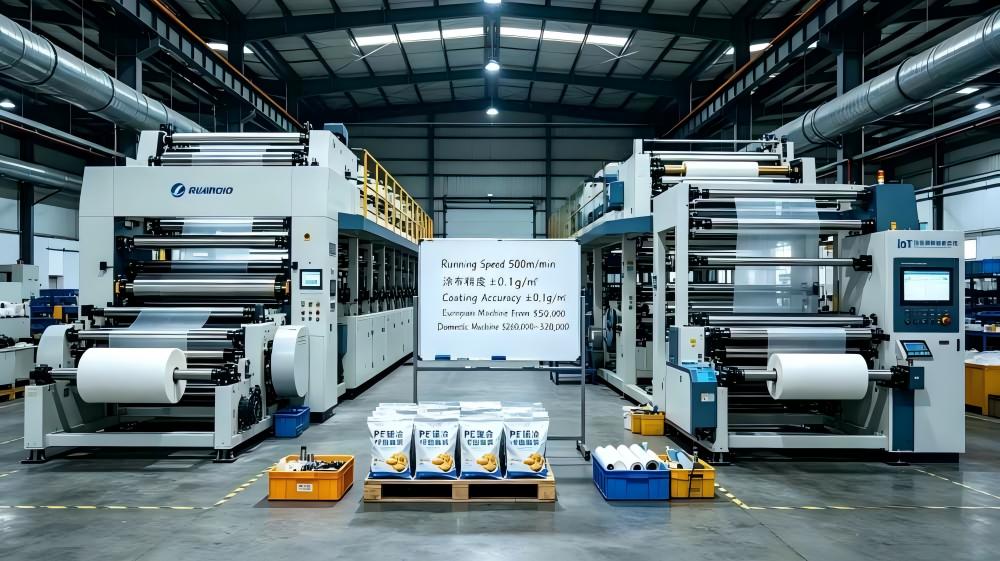
Technical Character: Chinese manufacturers have optimized digital tension control algorithms and automated splicing mechanisms. Current high-end Chinese machines match European competitors with mechanical speeds of 500 m/min and coat weight tolerances within ±0.1 g/m².
Strategic Advantage: Chinese machinery offers an identical production output for 30% to 40% of the European capital outlay, combined with lower maintenance costs, readily available replacement parts, and integrated remote IoT troubleshooting.
Return on Investment (ROI) and Operational Cost Calculation
To justify a capital expenditure of $150,000 for a high-end Chinese duplex solventless laminator, converters must compare operational expenses directly against traditional dry lamination. Solventless lamination eliminates ethyl acetate solvents and the thermal energy required to operate large drying tunnels.
1. Operational Cost Comparison (Per 10,000 Square Meters)
Dry Lamination Cost Matrix:
- Adhesive + Ethyl Acetate Solvent Consumption: $140
- High-Consumption Drying Tunnel Electrical Energy: $50
- Total Dry Lamination Operational Cost: $190 / 10,000 m²
Solventless Lamination Cost Matrix:
- 100% Solid Content Solventless Adhesive (Lower coat weight required): $75
- Electrical Energy (No drying oven; only minor thermal roller regulation): $8
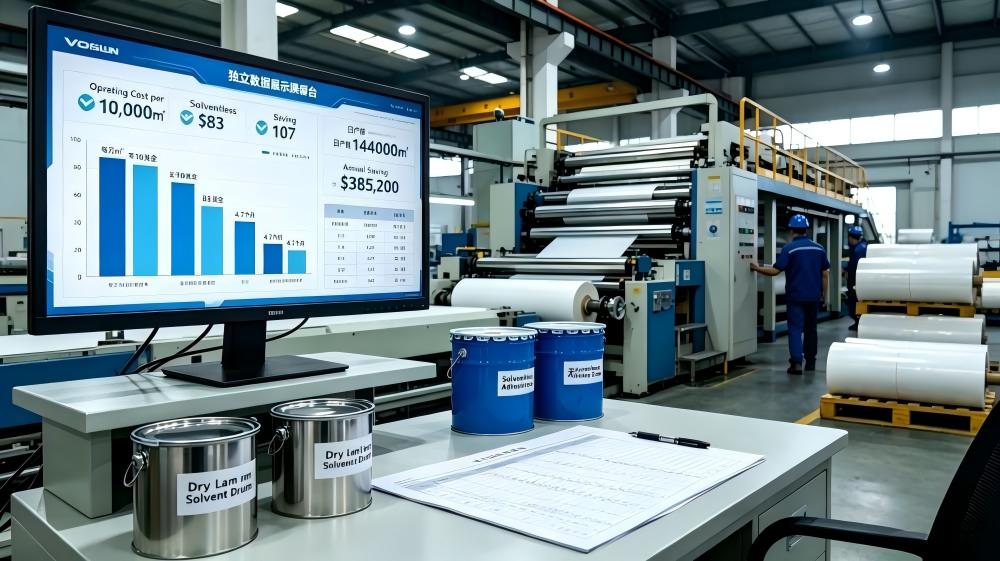
- Total Solventless Lamination Operational Cost: $83 / 10,000 m²
Net Operational Saving: Switching to solventless lamination saves $107 per 10,000 m² produced.
2. Payback Period Calculation Model
Assume a medium-capacity packaging plant operating a solventless laminator at a conservative production speed of 300 m/min over a single 8-hour shift per day, processing a standard 1-meter web width:
Daily Production Volume=300 m/min×60 min×8 hours×1 meter=144,000 m²/day
Daily Operational Savings= (144,000 m²/10,000 m²)×$107=$1,540.80 per day
Annual Savings (Based on 250 working days)=$1,540.80×250=$385,200 per year
Amortization / Payback Period=Initial Equipment Cost ($150,000)/Annual Savings ($385,200)≈0.39 Years (approx. 4.7 Months)
Even factoring in plant utilization variables, localized labor parameters, and raw material variations, a modern solventless lamination asset amortizes its hardware costs within 9 to 12 months of commissioning.
Procurement Strategy and Conclusion
Selecting a solventless laminating machine requires matching your substrate requirements with appropriate machinery tolerances:
High-Capital Multinational Operations: If your plant requires standardized global asset allocation and has a budget exceeding $400,000, European machinery remains an option.
Fast Amortization and High ROI Requirements: For flexible packaging converters requiring maximum profitability, rapid capital recovery, and specialized processing capabilities—such as recyclable mono-material PE, paper-plastic alternatives, or aluminum foil lamination—top-tier Chinese manufacturers provide a technically viable solution.
As an industry-recognized brand with over 2,680 installations across 38 countries, Sinstar manufactures high-performance solventless laminating machines, precision glue mixers, and customized triplex inline production lines that deliver European-standard manufacturing tolerances at a highly competitive total cost of ownership.
Frequently Asked Questions (FAQ)
Q1: What is the price of a used solventless laminating machine?
A1: Second-hand equipment typically retains 40% to 60% of its original market value, depending on the brand, manufacturing year, and operational maintenance logs.
Q2: Can Chinese solventless laminators process aluminum foil?
A2: Yes. High-end Chinese systems, such as the Sinstar WRJ Fi9 multi-functional series, utilize advanced closed-loop digital tension control and digital steel-on-rubber gap adjustments specifically engineered to prevent the wrinkling or breaking of 6-micron aluminum foil.