
What Are Primary Aromatic Amines (PAA) and Why Do They Matter in Flexible Packaging?

If you work in flexible packaging whether you manufacture laminates, run a print operation, or source packaging materials for food products you have probably come across the term primary aromatic amines, or PAA. Regulatory bodies are paying closer attention to them, retailers are adding them to supplier questionnaires, and food brands are asking harder questions about what is actually inside their packaging structures.
But what exactly are PAA, and why have they become such a pressing concern? This article will give you answers.
What Are Primary Aromatic Amines?
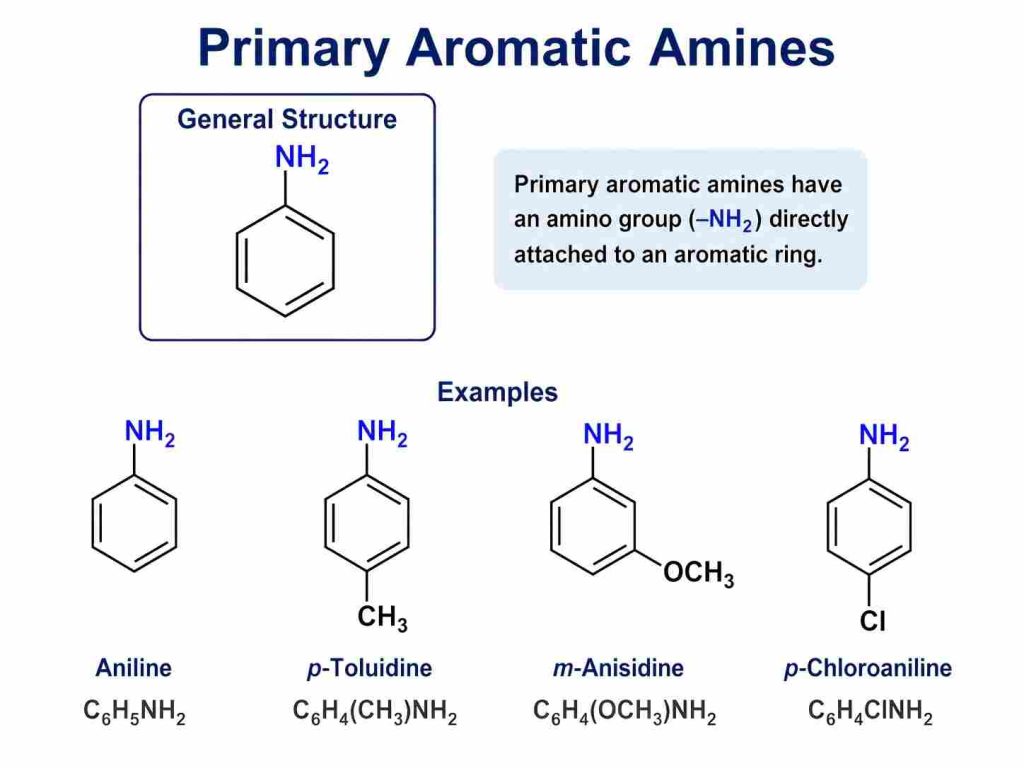
Primary aromatic amines are a class of organic chemical compounds. What makes them “aromatic” is the presence of a benzene ring in their molecular structure — a stable ring of carbon atoms that gives these compounds particular chemical properties. The “primary” part refers to the fact that the amine group (–NH₂) is attached directly to the aromatic ring, with no other carbon substituents on the nitrogen.
Some of the most commonly referenced PAA in packaging contexts include aniline, 4-aminobiphenyl, and 4,4′-methylenedianiline (MDA). The names are technical, but the underlying concern is straightforward: these compounds are chemically reactive, potentially toxic, and capable of migrating out of packaging materials into food.
It is worth distinguishing PAA from aliphatic amines, which have a similar functional group but lack the aromatic ring. The aromatic ring structure is precisely what makes PAA more biologically active and, in many cases, more hazardous. The ring increases chemical stability in one sense, but it also makes PAA more likely to interact with biological molecules in ways that are harmful.
Where Do PAA Come From in Flexible Packaging?
PAA do not usually get added to packaging materials on purpose. They typically arise as byproducts or breakdown products from other chemical components. There are two main sources.
Azo dyes and pigments in printing inks
Many printing inks used in flexible packaging contain azo colorants compounds that include a nitrogen-nitrogen double bond (–N=N–) as part of their structure. Under certain conditions, such as exposure to heat, UV light, or even microbial activity, these azo bonds can break apart. When that happens with certain azo dyes, the fragments released are primary aromatic amines.
Not all azo dyes pose this risk. The concern is specifically with dyes that can cleave to release PAA that are known or suspected carcinogens. Solvent-based and some UV-curable inks have historically been more associated with this issue, though ink chemistry varies widely across suppliers and formulations.
Isocyanate-based adhesives in laminated structures
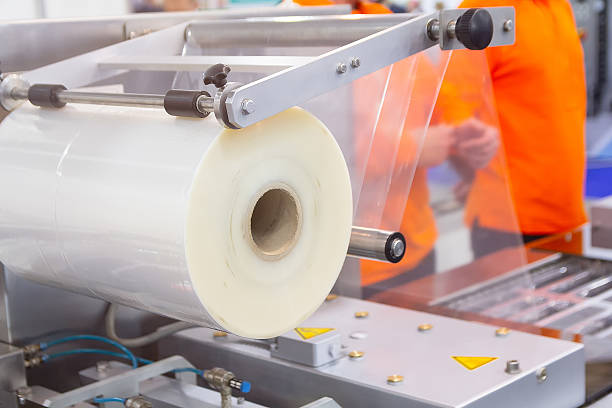
This is the source that tends to be most relevant for laminating machine operators and converters working with polyurethane (PU) adhesive systems. Two-component PU adhesives work by mixing a polyol with an isocyanate hardener. If aromatic isocyanates are used such as MDI (methylene diphenyl diisocyanate) or TDI (toluene diisocyanate) and if the curing reaction is incomplete, residual isocyanate can remain in the adhesive layer.
Once the laminate comes into contact with moisture which is inevitable in food packaging applications, these residual aromatic isocyanates can hydrolyze, meaning they react with water and convert into primary aromatic amines. MDA, one of the PAA most frequently detected in food packaging incidents, is a direct hydrolysis product of MDI-based adhesives.
This is a particularly relevant issue for multi-layer laminated structures where an adhesive layer sits between film substrates, close to or in contact with the food-facing layer.
How PAA migration happens
Once PAA are present in a packaging structure, they can migrate into the food product through several pathways. Direct contact migration occurs when the food-contact layer itself contains or comes into contact with a PAA source. Set-off migration happens when the outer printed surface of one package transfers contaminants to the food-contact inner surface of another during storage or transit, a common issue with roll or stack packaging.
Migration rates are not uniform. Fatty foods, acidic foods, and high-moisture products tend to accelerate chemical migration. So does temperature. A laminated pouch used for a ready-to-eat meal that gets heated is a higher-risk scenario than the same structure used for dry goods at ambient temperature.
Why Are Primary Aromatic Amines a Health Concern?
The health concern with PAA comes down to their behavior inside the body. Several PAA compounds are classified as carcinogens or probable carcinogens by the International Agency for Research on Cancer (IARC). The mechanism involves metabolic activation: once ingested, the body processes PAA through a series of enzymatic reactions that convert them into reactive intermediates. These intermediates can bind to DNA, and DNA damage of this kind is associated with tumor formation.
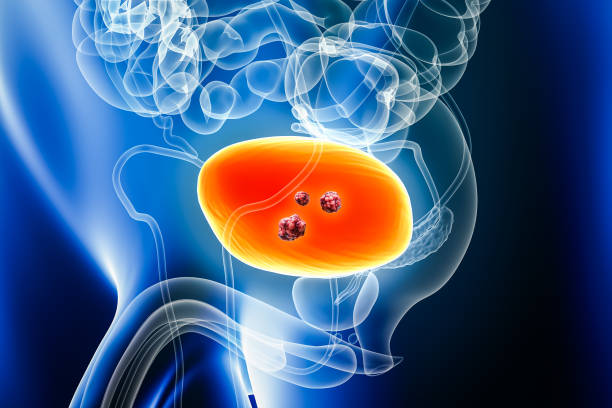
The link between aromatic amine exposure and bladder cancer is the most well-established in the scientific literature, with historical evidence from occupational exposure in the dye and rubber industries. While dietary exposure through food packaging represents a much lower dose than occupational exposure, the concern is cumulative and ongoing, consumers eat from packaged food products every day.
Children and people with high consumption of packaged convenience foods represent groups with potentially higher cumulative exposure, which is part of why regulatory frameworks have focused on setting strict detection limits rather than simply establishing acceptable exposure levels.
The Regulatory Landscape Around PAA
The regulatory position on PAA in food contact materials is clear, at least in the European Union. Under Regulation (EC) No 10/2011 on plastic food contact materials, specific migration of PAA into food is not permitted above a detection limit of 0.01 mg/kg (10 ppb). For substances classified as carcinogens, the regulation effectively requires non-detectable levels. The overarching framework is Regulation (EC) No 1935/2004, which requires that all food contact materials be safe and not transfer substances to food in quantities that could endanger human health.
Testing for PAA in food contact materials is typically carried out using the methods described in EN 14362 (for textiles, adapted for packaging applications) and internal food contact migration testing protocols. “Non-detectable” in practice means below the analytical detection limit of the test method typically around 2 ppb which is considerably more stringent than many people assume.
Outside the EU, the picture is more fragmented. Switzerland largely mirrors EU standards. The UK has maintained alignment with EU food contact regulations post-Brexit, though divergence is possible over time. The U.S. Food and Drug Administration operates under a different framework that does not have a single unified PAA standard comparable to EU 10/2011, which creates real complexity for packaging suppliers exporting to multiple markets.
Why PAA Compliance Is a Growing Priority
Regulatory requirements alone do not fully explain the level of attention PAA are receiving right now. Several parallel pressures are converging.
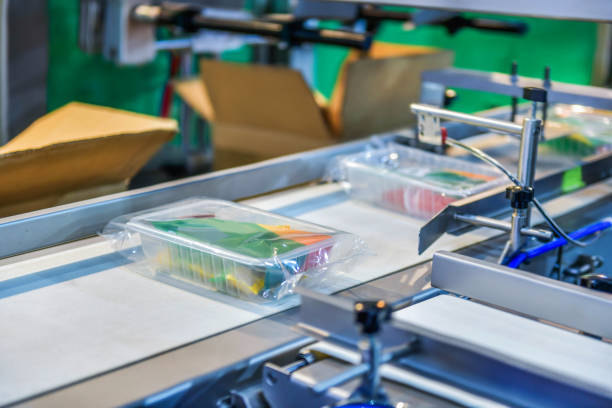
Retailer and brand-owner audits have become significantly more detailed over the past few years. Major supermarket chains and food manufacturers now routinely require suppliers to provide testing documentation for PAA as part of their food safety due diligence, sometimes annually, sometimes for each new packaging specification. For converters and laminate producers, this means compliance is not just a regulatory checkbox but a commercial necessity.
There have also been documented product recalls and market withdrawals linked to PAA exceedances in food packaging, primarily in European markets. These incidents tend to involve laminates where adhesive curing was inadequate or where ink-adhesive interactions were not fully characterized before going into production.
Consumer awareness is increasing too. Food safety topics that were once confined to technical and regulatory circles now surface in mainstream media, and brands are acutely sensitive to any association with chemical contamination in packaging.
For businesses in the flexible packaging supply chain including laminating machine manufacturers and converters understanding PAA is not just a compliance exercise. It directly affects how lamination processes are validated, how adhesive systems are selected and cured, and how finished products are tested before they reach food manufacturers.
Take the Next Step Toward Certified Packaging Safety
Are you planning to upgrade your laminating equipment to meet the strict food-contact requirements of EU 10/2011? Our engineering team at Sinstar specializes in developing high-precision solventless lamination machinery designed to eliminate chemical migration risks through automated mixing and state-of-the-art tension controls.