Why PET/VMPET/PE Remains Popular in Coffee Packaging: How Triplex Solventless Lamination Maximizes ROI

In the worldwide coffee market, packaging must provide long shelf life, perfect aroma retention and high-speed production efficiency. Although regulatory pressure is rising for mono-material constructions, the classic three-ply laminate PET/VMPET/PE (Polyethylene Terephthalate / Vacuum Metallised Polyester / Polyethylene) still dominates the flexible coffee packaging market especially for drip coffee bags, instant coffee sachets and mid-tier coffee bean bags. This structure continues to be the structure of choice for coffee brand owners and flexible packaging converters as it provides a critical balance between cost, barrier performance and mechanical stability. However, this 3-ply structure conversion has traditionally been associated with high operational bottlenecks such as long curing times, substrate waste and high energy consumption. Modern high-efficiency triplex solventless laminating machine technology has resolved these converting challenges, maximizing the return on investment (ROI) for packaging manufacturers while maintaining the cost-effectiveness of the PET/VMPET/PE structure.
What is the PET/VMPET/PE Barrier Structure in Flexible Coffee Packaging?
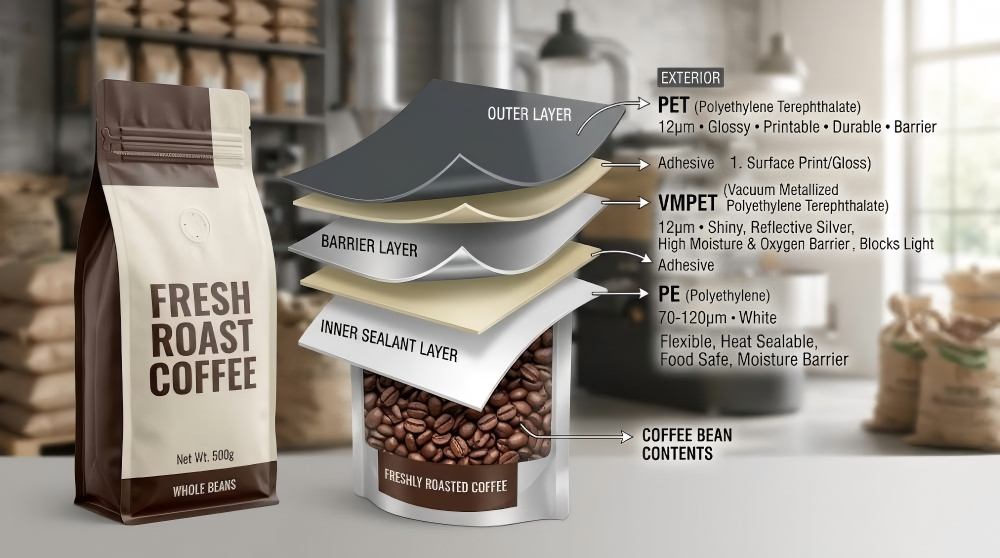
To understand why this specific laminate remains commercially unbeatable, it is necessary to analyze the flexible coffee packaging layers’ structure. Roasted coffee is highly vulnerable to four environmental factors: oxygen, moisture, UV light, and volatile aroma loss. The PET/VMPET/PE structure addresses these vulnerabilities through a strict, functional division of labor among its three distinct layers.
Outer Layer: PET (Polyethylene Terephthalate) – The Mechanical Shield
The external layer utilizes PET film primarily for its high tensile strength, dimensional stability, and superior thermal resistance. During high-speed vertical form-fill-seal (VFFS) or horizontal form-fill-seal (HFFS) packaging processes, the material is subjected to mechanical pulling and high-temperature sealing jaws. PET resists elongation and thermal deformation, ensuring that the package maintains its structural integrity and that the surface print remains sharp, vibrant, and resistant to scuffing during transit.
Middle Layer: VMPET (Vacuum Metallized Polyester) – The Barrier Shield
VMPET is used for the core barrier properties of the laminate. VMPET is a polyester film that has been vapor-deposited with a microscopic layer of aluminium atoms. It offers excellent oxygen transmission rate (OTR) and water vapour transmission rate (WVTR) barrier resistance. The fats in coffee and volatile aromatic compounds oxidise quickly when exposed to oxygen and light, and this causes rancidity. VMPET is a very good barrier to UV radiation and gases, so the shelf life of this product could be increased to 6–12 months. VMPET has better flex-crack resistance compared to pure aluminium foil (AL), preventing the formation of pinholes and micro-fractures when the package is flexed or crushed during distribution.
Inner Layer: PE (Polyethylene) – The Food-Grade Sealant
The innermost layer, directly contacting the coffee powder or beans, is PE film. PE provides excellent low-temperature heat-sealability and high seal strength. In coffee packaging lines, fine coffee dust often contaminates the sealing zone. PE possesses the contamination-surmounting seal properties required to fuse securely despite dust presence, preventing micro-leaks that would compromise the modified atmosphere packaging (MAP) or nitrogen flushing inside the bag.
| Packaging Layer | Material Substrate | Primary Technical Function | Coffee Protection Metric |
| Outer Layer | PET | Tensile strength, high heat resistance, print carrier | Resists high-speed mechanical pull & heat-jaw sealing |
| Middle Layer | VMPET | High OTR/WVTR barrier, UV blockage, flex-crack resistance | Prevents aroma oxidation, blocks light, eliminates pinholes |
| Inner Layer | PE | Food-contact compliance, low-temperature heat sealing | Ensures hermetic seal integrity despite dust contamination |
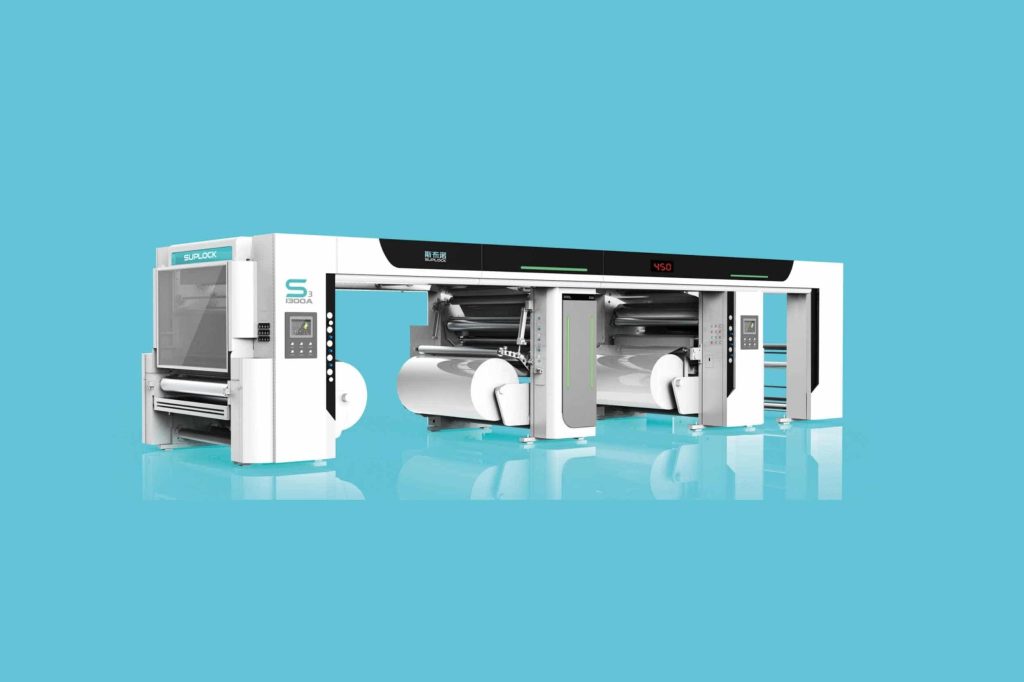
Triplex vs. Duplex Solventless Laminator: How 3-Layer Single-Pass Lamination Increases Plant ROI
While the material properties of PET/VMPET/PE are optimized for coffee, the traditional manufacturing process of this 3-ply flexible packaging presented massive inefficiencies for converters. Historically, producing a 3-ply laminate required a duplex (two-station) solventless laminator. A duplex machine can only bond two layers at a time. Therefore, to make a PET/VMPET/PE structure, the operator had to laminate PET to VMPET in the first pass, rewind the roll, transfer it to a curing room for 24 to 48 hours to allow the adhesive to cross-link, and then run the semi-finished roll through the machine a second time to bond the PE layer.
This multi-pass process created severe operational liabilities: double the material handling, increased substrate waste during setup, prolonged production lead times, and increased web tension variations due to secondary unwinding.
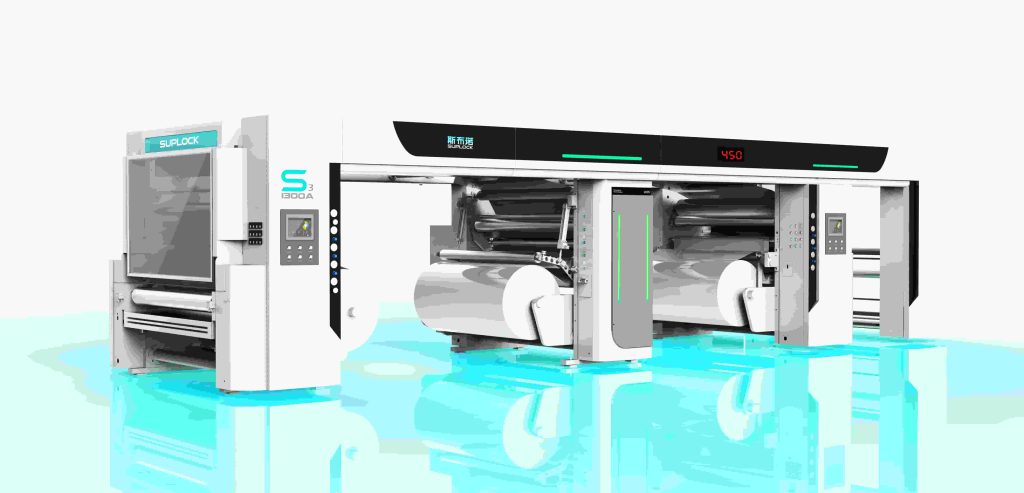
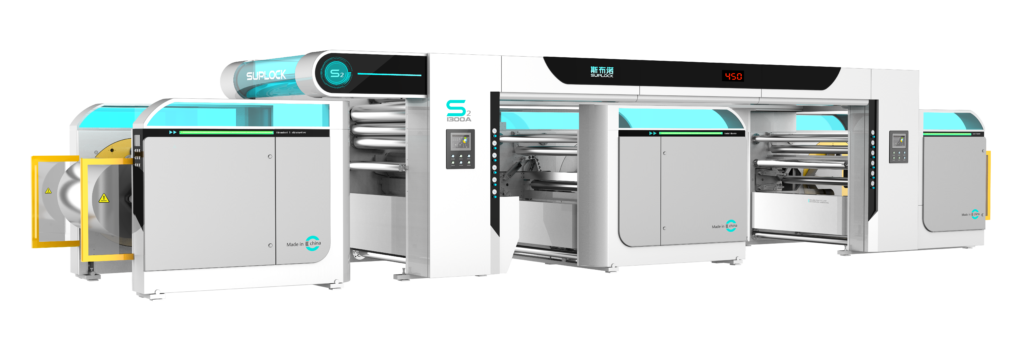
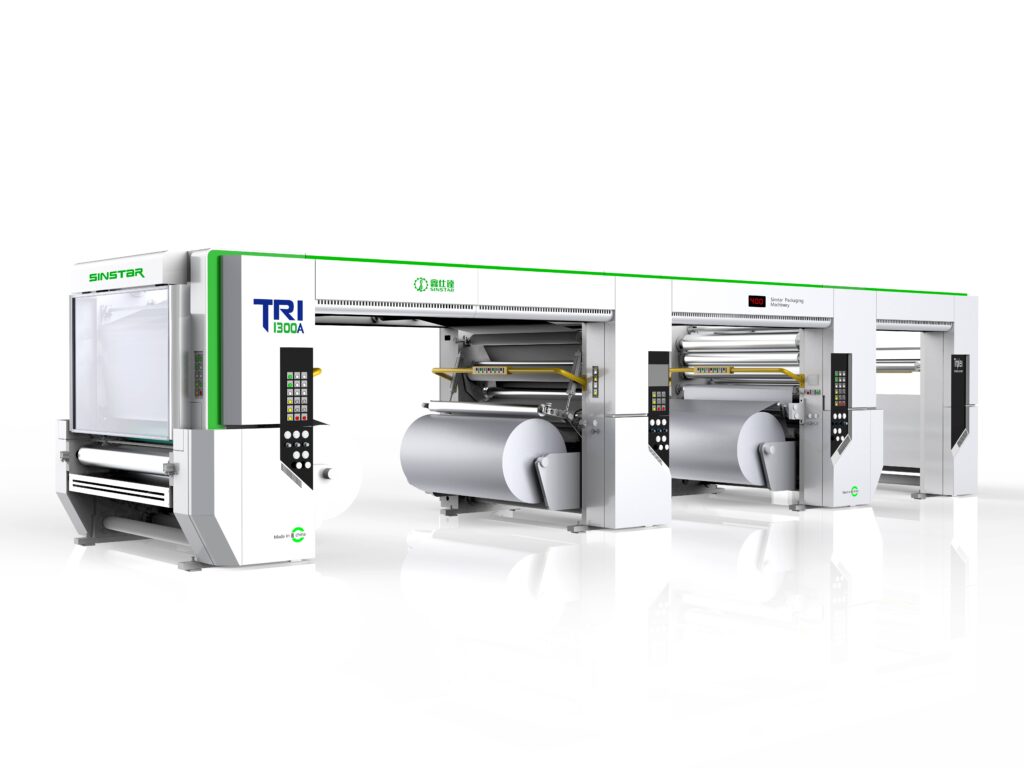
The introduction of the triplex solventless laminating machine, exemplified by Sinstar machinery solutions like the Sinstar TRI 1300A and the SUPLOCK S3, directly eliminates these manufacturing inefficiencies. By integrating three unwind stations and two coating/laminating units into a single inline machine configuration, the triplex system completes the entire PET/VMPET/PE lamination process in a single pass.
The implementation of inline triplex solventless lamination yields quantifiable economic benefits for packaging converting plants:
- Production Throughput Increases by up to 300%: Eliminating the secondary setup and intermediate curing phase allows converters to reduce a standard 3-ply production cycle from days to hours.
- Substrate Waste Reduction: Multi-pass lamination inherently multiplies roll-end waste and tension-related trim losses. A single-pass inline process slashes startup material waste by over 50%.
- Substantial Energy and Floor Space Savings: Operating one triplex inline machine consumes significantly less power than running multiple duplex machines or operating massive dry-lamination drying tunnels. Plant data indicates that switching to a Sinstar solventless laminator saves approximately 90,000 kWh of electricity annually per production line while reducing the required factory floor space by up to 40%.
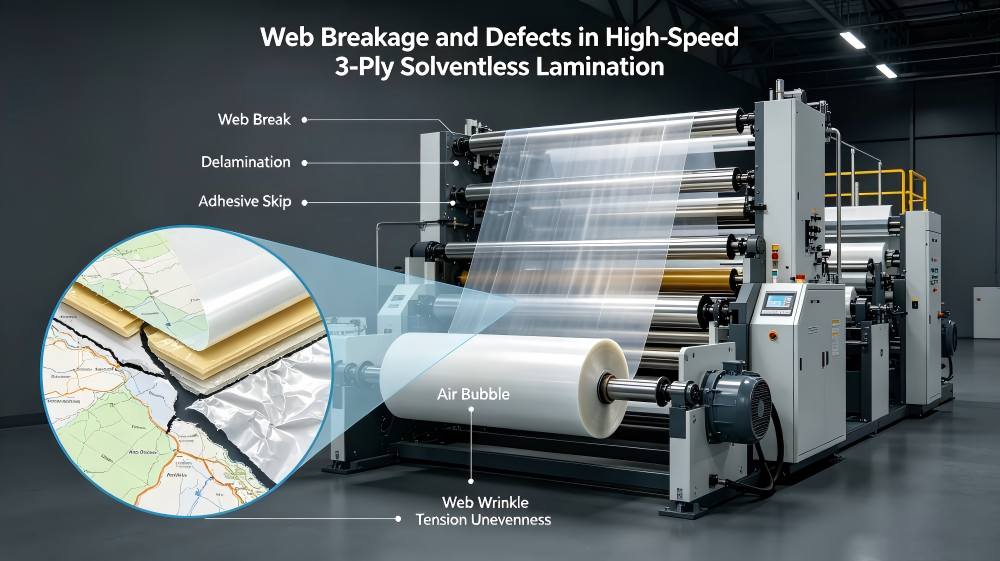
How to Prevent Web Breakage and Defects in High-Speed 3-Ply Solventless Lamination
Despite the clear financial advantages of single-pass lamination, handling three distinct webs simultaneously introduces complex mechanical challenges. The primary risks include web breakage, adhesive misting, tension mismatch causing curling, and electrostatic accumulation. Advanced engineering solutions built into the Sinstar solventless laminator series explicitly mitigate these technical risks.
1. Overcoming Web Breakage via Digital Tension Control
When three materials with different elastic moduli (rigid PET, delicate metallized VMPET, and highly stretchable PE) are processed simultaneously, minor tension fluctuations will cause wrinkling or a catastrophic web break. Sinstar addresses this by utilizing a high-frequency, closed-loop digital tension control system managed by independent servo motors and floating rollers. The system features a built-in memory capable of storing up to 300 distinct substrate profiles. This ensures that during acceleration from 0 up to the maximum operating speed of 450 m/min, the web tension for each layer remains perfectly uniform, eliminating web breakage.
2. Preventing Aluminum Layer Damage and Adhesive Back-Osmosis
The aluminium coating of VMPET is extremely thin and sensitive to mechanical friction and improper application of adhesive. Adhesive back osis can occur if there is too much adhesive or if the nip pressure is uneven. This process strips the metal layer away from the polyester base, destroying the barrier properties. This is solved by a low-level unwinding configuration and ultra-short web path layout, as realised in Sinstar SUPLOCK S3. The machine is equipped with a five-roller coating system with high precision and digital adjustment of the coating gap. This ensures that the operators can apply a consistent and accurate adhesive coat weight (typically 1.2 to 1.8 grams per square metre) evenly across the width of the film, maximising green strength without affecting the VMPET metallised surface.
3. Electrostatic Charge Mitigation
Running three synthetic polymer layers through multiple steel and rubber rollers at high speeds generates substantial static electricity. High static charges cause dust attraction, roll blocking, and potential spark hazards. Sinstar counters this by integrating an active, synchronized ionization static elimination bar system throughout the critical unwinding and laminating zones, ensuring that the finished three-ply coffee roll stock remains flat, static-free, and ready for immediate slitting and pouch-making.
Can Solventless Laminators Transition to Recyclable Mono-Material PE?
Sustainable Coffee Packaging Trends: The flexible packaging industry is under increasing pressure to follow sustainable coffee packaging trends, especially away from multi-material laminates to mono-material PE lamination (e.g. MDO-PE/PE structures) to enable 100% recyclability. However, the processing difficulties of mono-material PE films are extreme; they have a low heat-resistance threshold and stretch easily under tension, so they are susceptible to deformation during lamination and subsequent high-speed form-fill-seal operations.
For packaging converters, investing in machinery requires long-term asset protection. The advanced tension resolution and precise temperature-controlled laminating rollers of Sinstar triplex machinery ensure that these systems are not limited to traditional PET/VMPET/PE production. The exact digital parameters that stabilize the complex three-ply structures allow the equipment to process modern, highly stretchable mono-material PE and PP laminates without mechanical modification. Investing in high-tier solventless lamination technology provides converters with immediate efficiency for dominant market structures, while ensuring seamless adaptability for future eco-friendly material transitions.
Frequently Asked Questions
Q1: Why is VMPET preferred over pure Aluminum Foil (AL) in mid-range coffee packaging?
A1: VMPET significantly reduces raw material costs compared to solid aluminum foil while offering superior flex-crack resistance. Pure aluminum foil is susceptible to creasing and pinhole formations during handling and transport, which compromises seal integrity. VMPET retains adequate OTR and WVTR barrier performance to secure a 6–12 month shelf life for standard coffee applications without the structural vulnerabilities of foil.
Q2: What are the primary operational benefits of a triplex solventless laminating machine over a duplex machine?
A2: Unlike a duplex machine, which needs two runs and an intermediate 24–48 hour curing cycle, a triplex laminating machine can produce a 3-ply laminate structure in one pass. The triplex system increases production throughput by up to three times, reduces material waste by more than 50%, cuts down plant floor space requirement by 40% and saves approximately 90,000 kWh of electricity per line annually.
Q3: Can Sinstar solventless laminators handle modern sustainable mono-material films?
A3: Yes. Sinstar machines are engineered with high-precision digital tension control systems and independent servo drives that handle highly elastic, heat-sensitive substrates like MDO-PE and standard PE. This mechanical precision prevents substrate stretching and deformation, allowing converters to transition from PET/VMPET/PE to fully recyclable mono-material structures on the same equipment.