Solventless vs Solvent-Based Lamination: A Real Carbon Footprint Comparison

Solventless lamination gets described as “more sustainable” so often that the phrase has stopped meaning much. Ask what that actually translates to in tons of CO2, and most manufacturer content goes quiet. That gap matters more than it used to, because the questions converters are fielding from clients have changed. European brand owners are increasingly required to report Scope 3 emissions across their supply chain, and CBAM-related carbon disclosures are starting to appear in procurement paperwork that used to stop at price and lead time.
This article tries to close that gap, not with another “solventless is greener” claim, but with an actual calculation you can check against your own production numbers.
Why Carbon Footprint Now Matters in Lamination Equipment Procurement
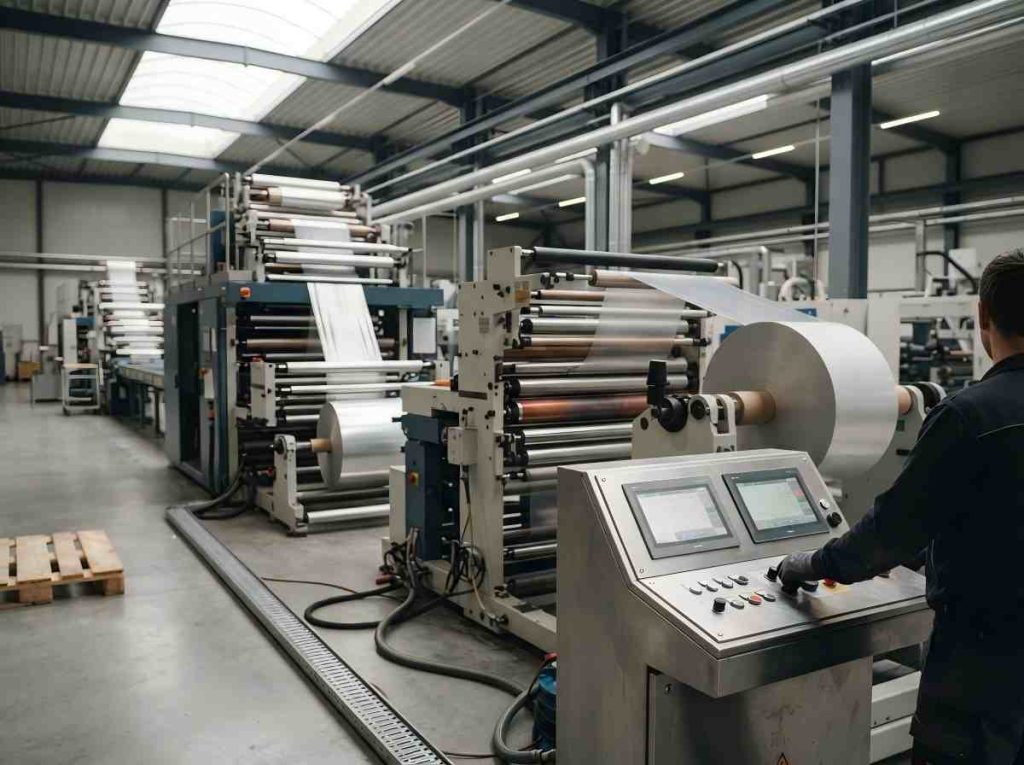
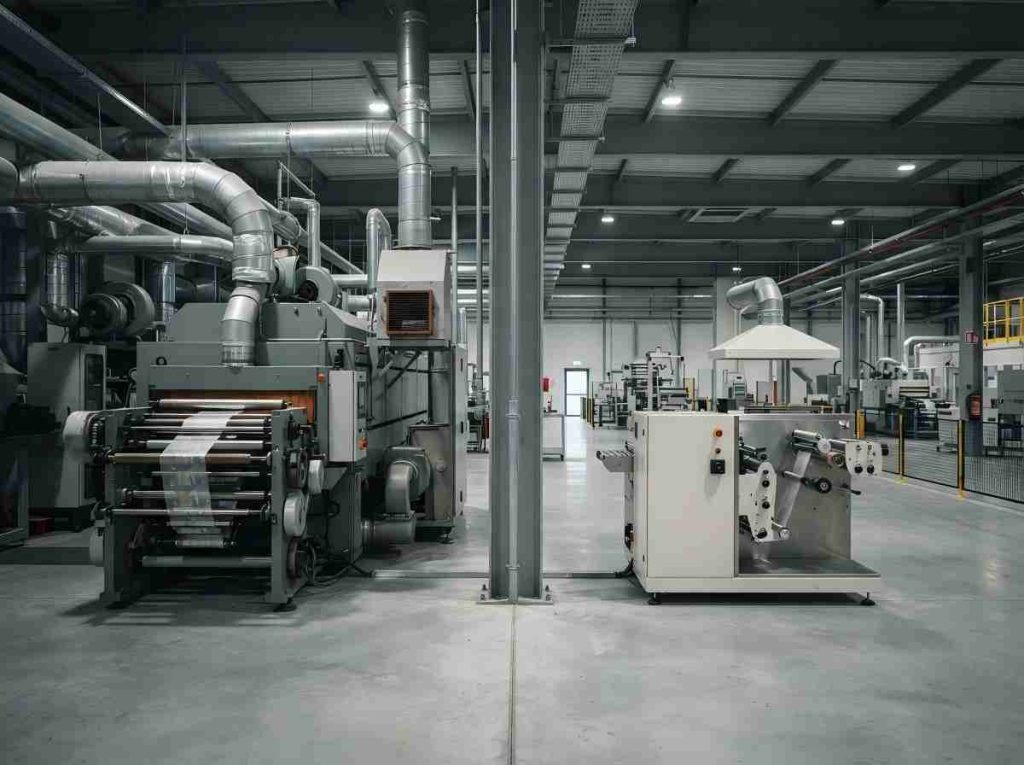
“Eco-friendly” used to be a phrase you’d see printed on a product page and not think much more about. It isn’t anymore. Buyers in food, pharmaceutical, and personal care packaging are increasingly asked to trace where their emissions actually come from across the supply chain, and the equipment their converters run is now part of that trail. A solvent-based line carries two extra sources of energy draw that a solventless line doesn’t have to deal with at all: the drying oven that evaporates solvent out of the adhesive, and the abatement system that burns off the VOC-laden exhaust before it’s allowed to vent. Neither one switches off while the line is running.
Solventless lamination doesn’t need either step. The adhesive sets through a reaction between two components rather than through heat and evaporation, which means there’s no oven cycle to fuel and no exhaust to treat afterward. The carbon difference between the two processes comes down almost entirely to that — not because solventless adhesive chemistry is somehow cleaner on its own, but because getting a roll of finished film off a solventless line simply takes less energy than getting the same roll off a solvent-based one.
Where Solvent-Based Lamination’s CO2 Emissions Actually Come From
It’s worth separating these into two distinct energy sinks, because most articles lump them together under “drying energy” and stop there.
The drying oven. The adhesive in a solvent-based system arrives diluted in a carrier solvent, and that solvent has to come back out again after coating — usually through a multi-zone oven running somewhere between 60–120°C, depending on the adhesive. That oven stays on for as long as the line is running, and it doesn’t get more efficient at higher speeds. A wider web or a faster line just means more gas or electricity burned per hour, not less.
The VOC abatement system. Solvent-based lines release volatile organic compounds as a byproduct, and most markets now require that exhaust to be captured and destroyed before it can vent — typically through a regenerative thermal oxidizer. These units do the job regulators require, but they’re not cheap to operate, since they have to hold combustion temperatures above 800°C long enough to fully break down the VOCs. A regenerative thermal oxidizer is, in energy terms, basically a second furnace running alongside the first one.
A solventless line doesn’t carry either of these. There’s no oven drawing continuous heat, and no oxidizer that needs to stay hot around the clock. Strip those two systems out of the process, and most of the energy gap between solventless and solvent-based lamination is already accounted for.
Solventless vs Solvent-Based Lamination: Converting Energy Savings into CO2 Reduction
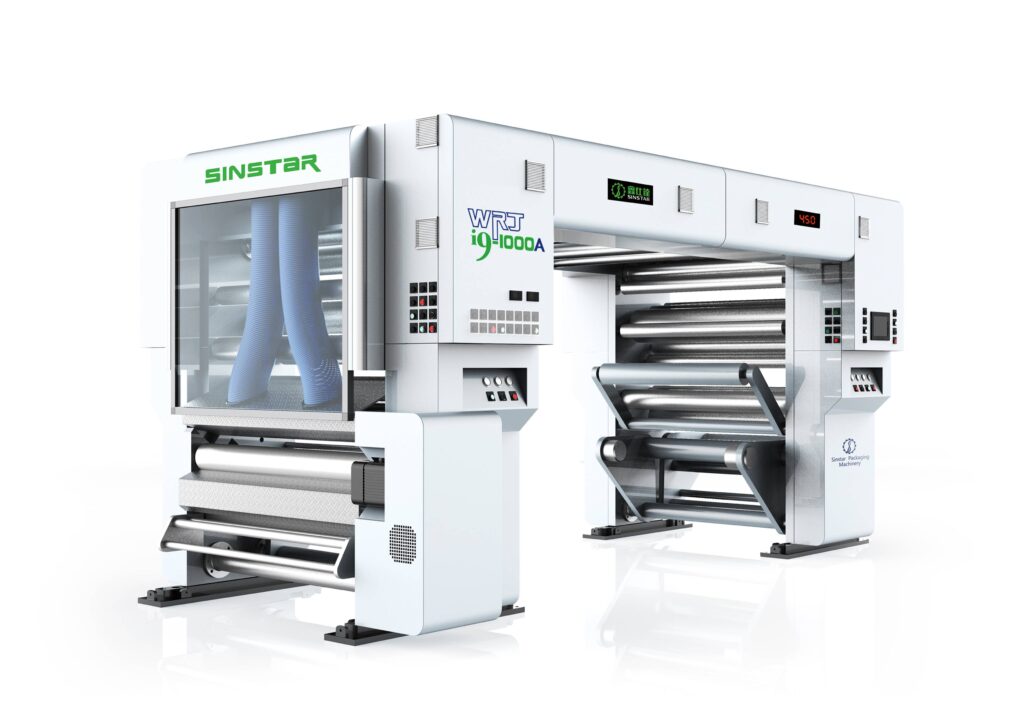
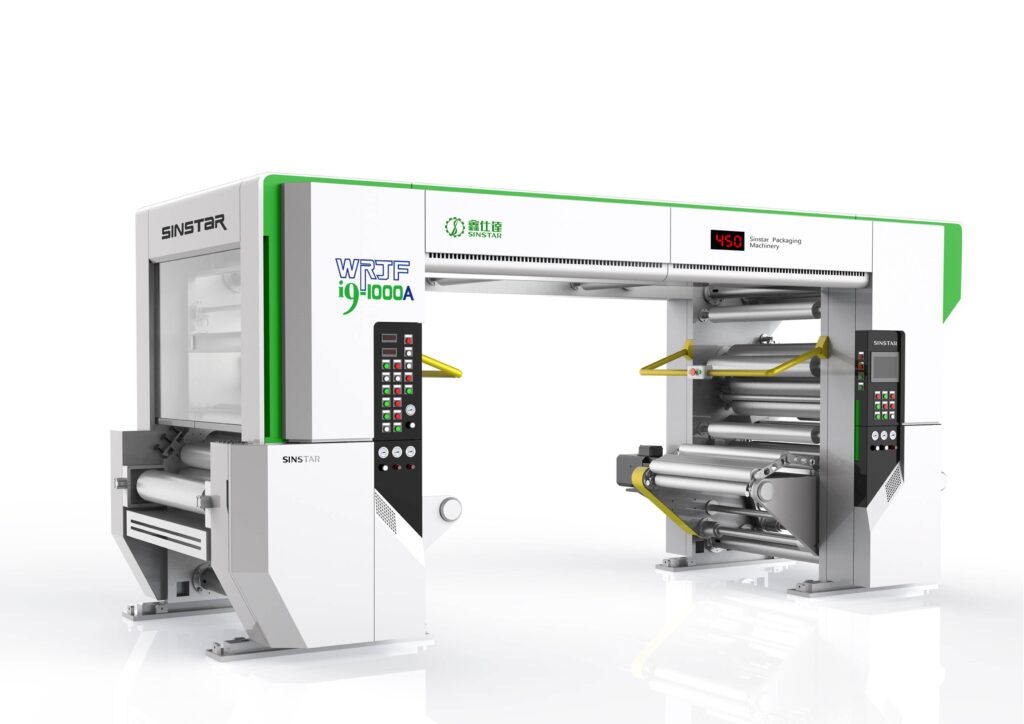
Take our machine like the WRJ Fi9, documented to save around 60,000 kWh of electricity a year against a comparable solvent-based setup running similar volumes. Converting that into a carbon figure requires a grid emission factor — essentially, how much CO2 gets released for every kilowatt-hour drawn from the grid. For mainland China, published figures put this somewhere around 0.53 kg CO2 per kWh, though the exact number shifts depending on the source and year, with the IEA’s Emissions Factors dataset and China’s Ministry of Ecology and Environment reporting slightly different figures based on their own methodologies.
At 60,000 kWh and roughly 0.53 kg CO2/kWh, that comes out to just under 32 tons of CO2 avoided per year, per line. A converter running two or three lines is looking at close to 100 tons annually — nowhere near what a steel mill produces, but a figure that holds up in a packaging supplier’s Scope 2 disclosure.
One thing worth flagging upfront: this number moves depending on where the factory is located. A line sitting in a province with a coal-heavy grid will show a larger carbon saving per kWh avoided than one running somewhere with more hydro or nuclear in the mix, since provincial grid carbon intensity in China varies substantially — hydropower-heavy regions run well below the national average, coal-dependent ones run well above it. For a sustainability report, that’s worth including rather than leaving out. Auditors tend to trust figures that account for their own limits over ones that look suspiciously tidy.
Solventless vs Solvent-Based Lamination: Carbon Footprint Comparison Table
| Energy source | Solvent-based lamination | Solventless lamination |
| Drying oven | Continuous heating, 60–120°C, scales with line speed | Not required |
| VOC exhaust treatment (RTO/RCO) | Sustained combustion above 800°C | Not required |
| Solvent recovery/storage systems | Additional electrical load and ventilation | Not required |
| Typical electricity use per line | Baseline | Roughly 60,000 kWh/year lower on comparable volume |
| Estimated annual CO2 avoided | — | ~32 tons per line (China grid average) |
Does Switching to Solventless Lamination Always Reduce Carbon Emissions?
Utilization matters more than people expect. A line running at 40% capacity won’t generate anywhere close to the same avoided emissions as one running near full output, because a good portion of the oven and oxidizer energy in a solvent-based system stays roughly fixed regardless of how much film is actually moving through it.
Adhesive chemistry hasn’t become irrelevant either. Certain high-barrier or retort packaging structures still rely on solvent-based systems for specific performance reasons, and switching purely to chase a carbon number without checking bond strength and material compatibility first is how converters end up with a line that looks good on paper and fails in the field.
And the grid factor itself will move the outcome more than people assume. A factory sitting on a cleaner regional grid will show a smaller emissions gap between the two processes than one on a coal-heavy grid, simply because its electricity was already lower-carbon to begin with. Anyone preparing figures for a client audit is better off pulling their local grid factor rather than defaulting to a national average — most utility providers or local environmental bureaus will supply this directly on request.
None of this weakens the case for solventless lamination. It just means the number worth putting in a report is the one calculated from your own line data and your own local grid factor, not a round figure lifted from a manufacturer’s brochure.
Choosing a Lower-Carbon Lamination Machine
Clients asking for carbon data alongside price and lead time is usually the first sign this conversation has shifted, it’s no longer just about running costs, it’s about whether the numbers hold up with their auditors. Solventless lines have a real edge here, not because they’re marketed as green, but because losing the oven and the oxidizer removes two energy loads solvent-based lines can’t avoid.
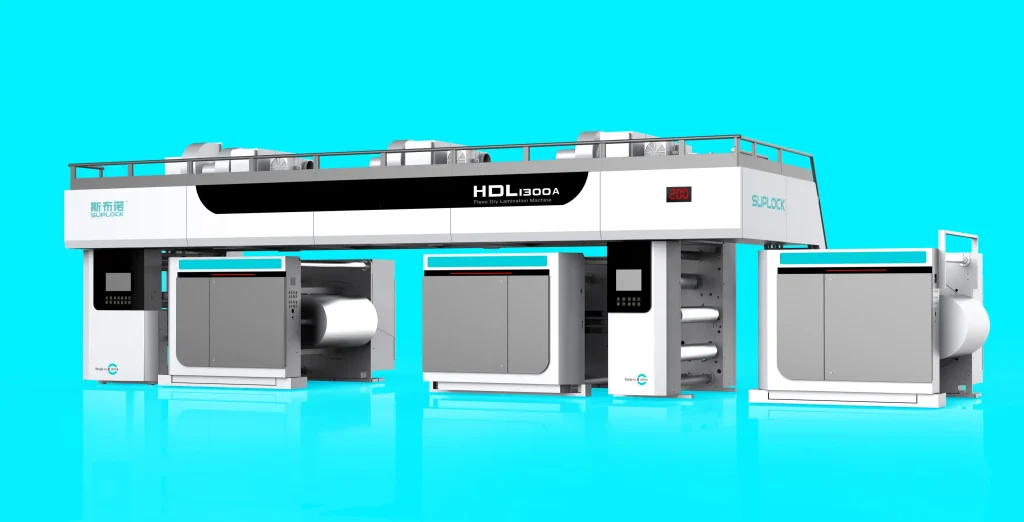
If you need a carbon estimate for your own production volume and grid factor — for the WRJ Fi9, the HDL dry laminator, or otherwise — reach out and we’ll run the math together. And if VOC compliance is the bigger driver behind your switch, our piece on reducing PAA risk in flexible packaging production covers that side of it.