
What Should You Ask a Solventless Laminating Machine Manufacturer Before Buying?

Before buying a solventless laminating machine, ask the manufacturer about seven areas: actual production capability, machine configuration, measurable lamination performance, pre-delivery testing, installation and commissioning, warranty and technical support, and contractual acceptance criteria. Buyers should request measurable data and documented commitments rather than relying only on advertised speed, price, or general claims about automation.
For packaging converters, these questions help determine whether a laminator is suitable for the intended film structures, production volume, quality requirements, and long-term operating conditions.
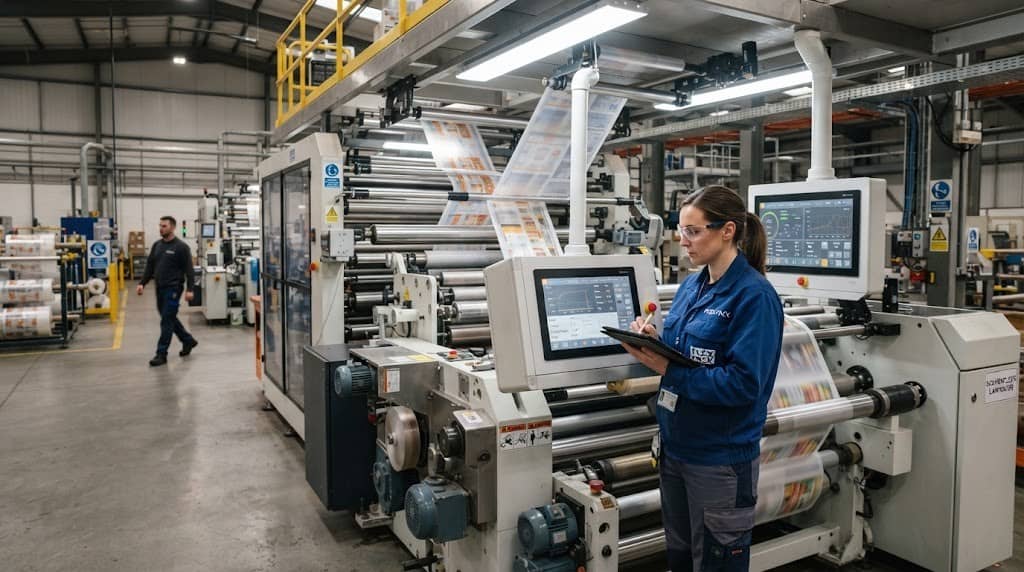
What Questions Should You Ask About Production Capability?
The first question should not be “What is the maximum speed?” but “What production performance can this machine maintain under our actual operating conditions?”
Ask the manufacturer:
- What is the maximum line speed?
- What is the recommended continuous production speed?
- At what substrate and adhesive conditions was this speed achieved?
- What output can be expected during normal production?
- How much material is typically lost during startup and changeover?
- How long does it take to reach stable production?
- What production limitations apply to different film structures?
Maximum Speed vs. Actual Production Speed
A laminator’s maximum rated speed is not necessarily its sustainable production speed. Actual output can be affected by substrate properties, adhesive requirements, roll changes, web tension, machine setup, operator intervention, and downtime.
| Specification | What Buyers Should Verify |
| Maximum speed | Highest rated machine speed |
| Recommended speed | Sustainable production speed |
| Actual output | Usable production after downtime |
| Startup waste | Material consumed during setup |
| Changeover time | Time required between jobs |
| Continuous operation | Stability during extended production |
Best practice: Ask the manufacturer to provide production results under conditions that are as close as possible to your intended application.
What Questions Should You Ask About Machine Configuration and Customization?
A solventless laminating machine should be configured around the converter’s production requirements. A standard machine may not be the most appropriate solution if the factory processes multiple substrates, widths, or packaging structures.
Ask:
- What substrate types can the machine process?
- What film thickness range is supported?
- What working widths are available?
- How many lamination layers can be configured?
- What unwinding and rewinding options are available?
- What roll diameters can be accommodated?
- Which automation functions are standard?
- Which options are available for future upgrades?
- Which components can be customized?
Information to Give the Manufacturer
Before requesting a quotation, provide:
- Substrate and film types
- Film thickness
- Maximum web width
- Roll diameter
- Lamination structures
- Adhesive type
- Target production speed
- Expected production volume
- Required automation
- Special application requirements
This information allows the manufacturer to recommend a configuration based on the actual production process rather than simply quoting a standard model.
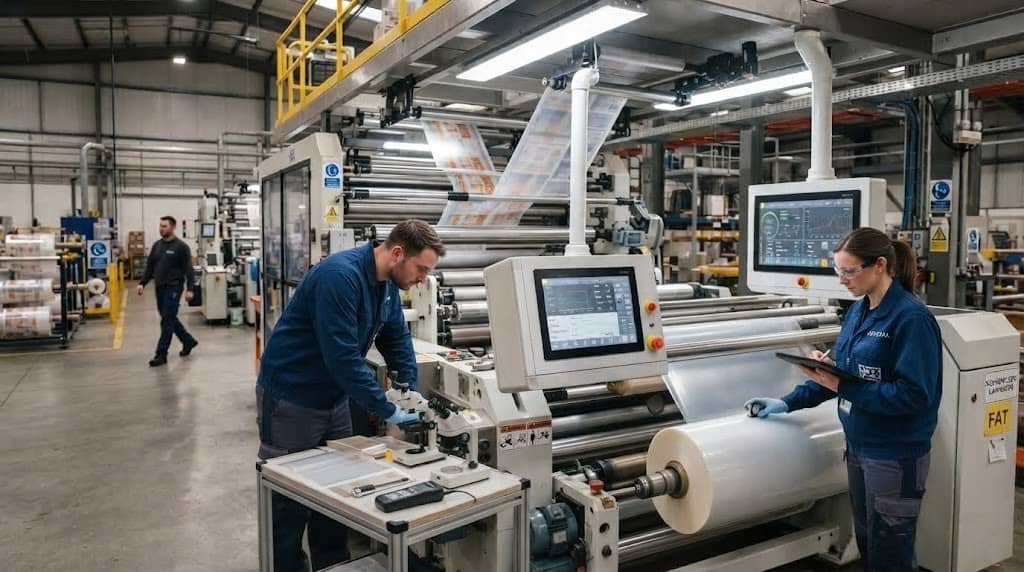
What Performance Specifications Should the Manufacturer Provide?
Buyers should request measurable performance specifications for coating, web handling, and lamination quality.
1. Adhesive Coating
Ask:
- What coating-weight range can the machine achieve?
- What coating accuracy and repeatability are expected?
- How is adhesive application controlled?
- How stable is coating performance at different line speeds?
2. Web Tension for monomaterial PE film lamination
Ask:
- How is web tension controlled?
- How many tension-control zones are included?
- How is tension adjusted for different substrates?
- How is web alignment maintained during continuous operation?
- How does the system respond to acceleration and deceleration?
3. Lamination Quality
Ask how the manufacturer verifies:
- Coating consistency
- Web tracking
- Lamination pressure
- Finished roll quality
- Process stability
Procurement principle: Replace vague claims such as “high precision” or “high speed” with measurable specifications, test conditions, and acceptance criteria.
What Should Be Tested Before the Laminating Machine Is Shipped?
A Factory Acceptance Test (FAT) gives the buyer an opportunity to verify whether the machine meets agreed requirements before shipment. Ask whether the manufacturer can test the machine using your own substrates and adhesive whenever practical.
Recommended FAT Checklist
| Test | What to Verify |
| Line speed | Stable operation at agreed speed |
| Coating weight | Accuracy and consistency |
| Web tension | Stability during operation |
| Web tracking | Consistent material alignment |
| Adhesive application | Correct and repeatable application |
| Rewinding | Roll formation and winding quality |
| Automation | PLC/HMI functions |
| Safety | Alarms, sensors, and interlocks |
Also ask:
- Can we provide our own materials for testing?
- Can the manufacturer produce sample rolls?
- Will test parameters and results be recorded?
- What happens if agreed performance is not achieved?
- Are FAT results part of the formal acceptance process?
Why FAT Matters
A successful FAT reduces the risk of discovering configuration, performance, or control-system problems after the machine has already arrived at the customer’s factory. The most important FAT requirements should be agreed upon before production, not after the machine has been completed.
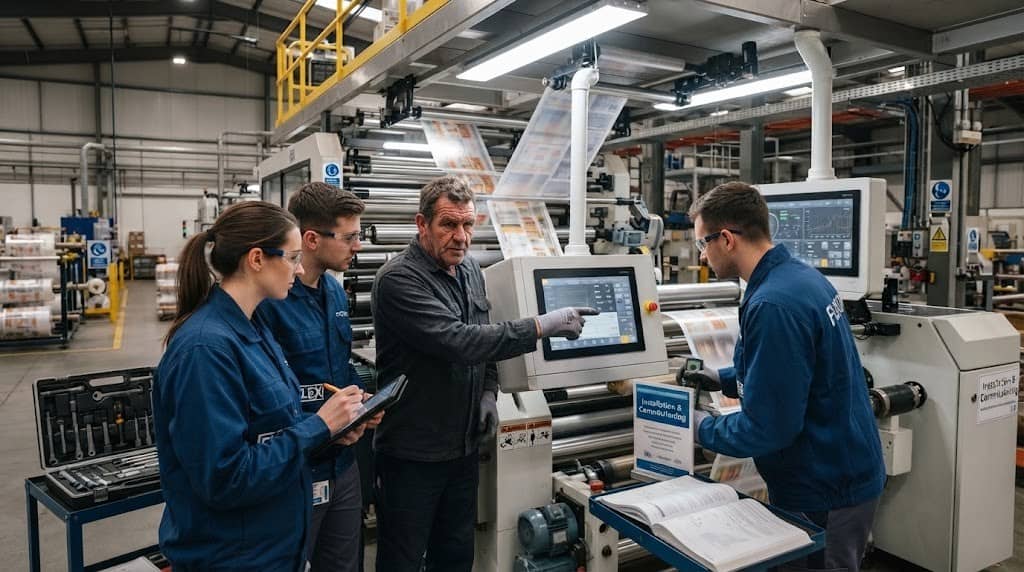
What Should You Ask About Installation, Commissioning and Training?
A machine can meet its specifications and still experience a difficult startup if installation, commissioning, and operator training are not clearly defined.
Ask the manufacturer:
Installation
- Is onsite installation included?
- What factory space is required?
- What electrical supply is required?
- What compressed-air or other utilities are required?
- What environmental conditions should be maintained?
Commissioning
- Who is responsible for commissioning?
- Is production trial included?
- What parameters are checked during commissioning?
- What constitutes successful commissioning?
Training
Confirm whether training covers:
- Machine operation
- Parameter setting
- Production monitoring
- Routine maintenance
- Alarm handling
- Basic troubleshooting
- Safety procedures
Required Documentation
The manufacturer should specify whether the delivery package includes:
- Operation manual
- Maintenance manual
- Electrical drawings
- Mechanical documentation
- Spare-parts list
- PLC/HMI documentation
- Recommended maintenance schedule
What Should You Ask About Warranty, Spare Parts and Technical Support?
A laminating machine is a long-term production asset, so after-sales support should be evaluated before purchase rather than after a problem occurs.
Warranty Questions
Ask:
- How long is the warranty?
- Which components are covered?
- Which parts are considered consumables?
- How are warranty claims handled?
- What service is included during the warranty period?
Spare Parts Questions
Ask:
- Which spare parts should be stocked locally?
- Which components have long lead times?
- Are critical electrical and automation components available?
- How quickly can replacement parts be supplied?
Technical Support Questions
Confirm whether the manufacturer provides:
- Remote troubleshooting
- PLC/HMI support
- Video or online technical assistance
- Onsite service
- Maintenance guidance
- Post-warranty technical support
A reliable supplier should be able to explain not only what support is available, but also how the support process works when production is interrupted.

What Should Be Written Into the Purchase Contract?
Important technical discussions should be converted into written specifications and acceptance criteria before the purchase order is finalized.
1. Technical Requirements
Document:
- Machine model
- Working width
- Maximum and recommended speed
- Applicable substrates
- Coating range
- Layer configuration
- Automation functions
- Electrical requirements
- Included accessories
- Optional equipment
2. Commercial Requirements
Clearly define:
- Equipment price
- Optional equipment
- Installation
- Commissioning
- Training
- Spare parts
- Delivery schedule
- Warranty
- Payment terms
3. Acceptance Requirements
The contract should also specify:
- FAT procedure
- Test materials
- Test conditions
- Performance criteria
- Acceptance standards
- Documentation requirements
- Procedure for handling failed acceptance tests
4. Final Solventless Laminating Machine Buying Checklist
Before signing the purchase contract, confirm the following:
| Purchase Item | Confirmed? |
| Machine configuration | ☐ |
| Production capability | ☐ |
| Substrate compatibility | ☐ |
| Coating performance | ☐ |
| Tension-control requirements | ☐ |
| FAT procedure | ☐ |
| Installation scope | ☐ |
| Commissioning | ☐ |
| Operator training | ☐ |
| Warranty | ☐ |
| Spare parts | ☐ |
| Technical support | ☐ |
| Documentation | ☐ |
| Acceptance criteria | ☐ |
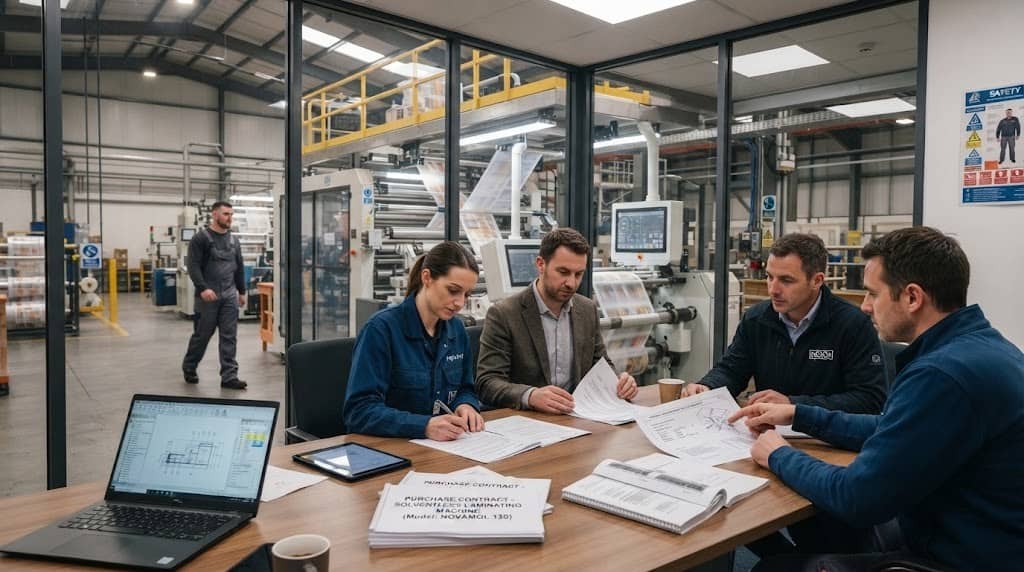
How Do You Know If a Solventless Laminating Machine Manufacturer Is Reliable?
A reliable manufacturer should be able to provide specific, measurable, and verifiable answers before the order is placed.
Look for a supplier that can:
- Match the machine configuration to your actual materials and production requirements.
- Explain the difference between rated and sustainable production performance.
- Provide measurable coating, tension, and process specifications.
- Conduct material trials or FAT when required.
- Clearly define installation, commissioning, and training responsibilities.
- Provide a documented warranty and spare-parts strategy.
- Offer a defined technical-support process.
- Put critical performance requirements into the purchase and acceptance documentation.
Be cautious when a supplier focuses heavily on machine price or maximum speed but cannot clearly explain testing procedures, acceptance criteria, spare-parts availability, or technical support.
Conclusion
The best solventless laminating machine is not necessarily the fastest or the least expensive model. If you are evaluating a solventless laminating machine manufacturer, provide your film structures, target output, adhesive type and required automation so the manufacturer can recommend a suitable configuration.
It is the machine that can demonstrably meet the converter’s production, material, quality, automation, and service requirements. Before buying, ask the manufacturer seven essential questions:
- Can it achieve our actual production target?
- Can it handle our materials?
- What measurable performance can it guarantee?
- How will the machine be tested before delivery?
- What installation and training are included?
- How will spare parts and technical support be handled?
- What requirements will be written into the contract?
A detailed evaluation based on these questions allows packaging converters to compare manufacturers on technical capability and long-term production value—not simply on the initial quotation.