
Mono-Material Packaging & Solventless Lamination: Can It Replace Multilayer?

Mono-material packaging can be produced using solventless lamination, but it cannot replace every traditional multilayer structure. The feasibility depends on the polymer family, barrier requirements, mechanical performance, sealing conditions, adhesive compatibility, and intended recycling pathway. All-PE and all-PP packaging structures are among the most promising options, while applications requiring extremely high barrier or retort performance may still require more complex material combinations.
For flexible packaging converters, the important question is therefore not whether solventless lamination is compatible with mono-material packaging, but whether the complete mono-material structure can provide the required product protection while remaining suitable for commercial lamination and recycling.
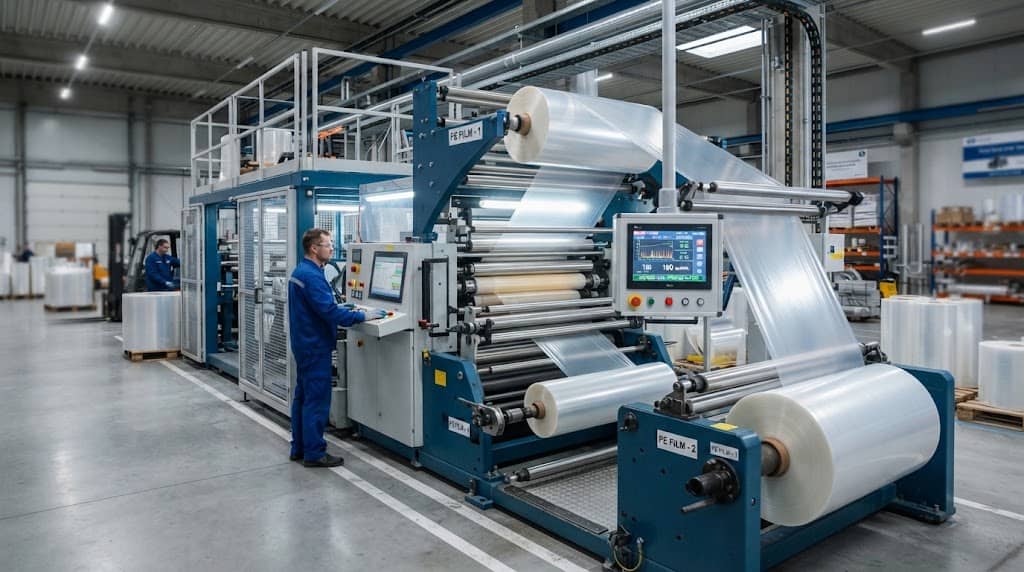
What Is the Difference Between Mono-Material and Traditional Multilayer Packaging?
The key difference is the material composition of the final package, not simply the number of layers.
Traditional flexible packaging often combines different materials because each contributes a specific property. PET can provide stiffness and dimensional stability, PA can improve toughness and puncture resistance, aluminum foil can provide an extremely strong barrier, while PE commonly provides heat sealing and flexibility.
A mono-material flexible package attempts to obtain these functions while keeping the primary packaging structure within a compatible polymer family, most commonly polyethylene or polypropylene.
Mono-Material Does Not Mean Single-Layer
A mono-material package can contain multiple functional layers. For example, an all-PE flexible package may combine:
Printable PE layer + functional PE-based layer + PE sealing layer
The package can still be laminated because the different layers need to be bonded together to achieve the required mechanical and functional properties. Therefore, Mono-material packaging refers to material compatibility, not the absence of multiple layers.
This distinction is particularly important when evaluating solventless lamination for recyclable flexible packaging.
Solventless Lamination Is a Process, Not a Recycling Strategy
Solventless lamination and mono-material packaging address different parts of the packaging system.
- Mono-material packaging is a material and structural design approach.
- Solventless lamination is a converting process used to bond flexible substrates with a solvent-free adhesive system.
For example, PET/PE laminated with solventless adhesive is still a mixed-material structure. Changing the adhesive does not automatically make the finished package mono-material. For a mono-material project, the substrates, adhesive, coatings, printing system, and intended recycling route need to be considered together.
Which Traditional Packaging Structures Can Move to Mono-Material?
The feasibility of replacing a conventional multilayer structure depends strongly on the function provided by each original material.
| Traditional Structure | Potential Mono-Material Direction | Main Engineering Challenge |
| PET/PE | PE/PE or all-PE | Stiffness, web handling and sealing |
| PET/PP | PP/PP or all-PP | Dimensional stability and sealability |
| PET/PA/PE | PE-based structure | Puncture resistance and mechanical strength |
| PET/AL/PE | High-barrier PE structure | Oxygen, moisture and light barrier |
| PET/VMPET/PE | PE-based barrier structure | Barrier performance and appearance |
These should be regarded as conversion pathways rather than direct material substitutions. The objective is not simply to remove PET, PA, or aluminum. The new structure must reproduce the functions that those materials previously provided.
1. PET/PE to All-PE Packaging
PET/PE lamination is one of the more practical structures to evaluate for mono-material conversion.
PET traditionally provides:
- high stiffness
- dimensional stability
- good printability
- stable web handling
PE contributes:
- heat sealing
- flexibility
- moisture resistance
When moving toward all-PE packaging, converters need to compensate for differences in stiffness and film behavior. This can affect:
- web tension
- film tracking
- lamination stability
- roll formation
- sealing performance
A suitable solventless laminating machine should therefore provide stable tension and coating control when processing flexible PE substrates.
2. PET/PP to All-PP Packaging
All-PP structures can be considered where polypropylene can satisfy the required thermal and mechanical properties. Important factors include:
- heat resistance
- seal initiation temperature
- film stiffness
- dimensional stability
- surface treatment
- adhesive compatibility
The final structure should be selected according to the product’s requirements rather than simply because both substrates belong to the same polymer family.
3. PET/AL/PE to High-Barrier Mono-Material Structures
Replacing aluminum foil is more technically demanding. Aluminum provides excellent protection against:
- oxygen
- moisture
- light
- aroma transmission
A PE-based alternative may therefore require high-barrier films, coatings, or other functional technologies. The correct evaluation question is: Can the mono-material structure provide the required barrier performance throughout the product’s shelf life while remaining compatible with the intended recycling system?
For moderate-barrier products, a high-barrier mono-material structure may be practical. For highly sensitive products, conventional aluminum-based structures can still offer important technical advantages.
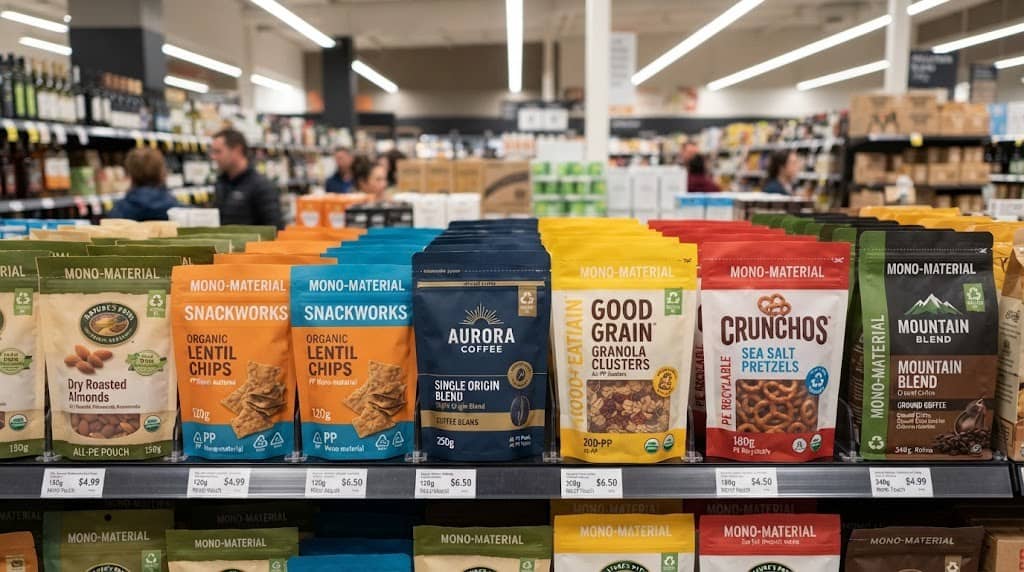
Can Solventless Lamination Meet the Requirements of Mono-Material Packaging?
Yes. Solventless lamination can be used for mono-material flexible packaging, but process control becomes particularly important when working with flexible PE or PP substrates.
The critical variables include:
- substrate surface treatment
- adhesive compatibility
- adhesive coating weight
- web tension
- lamination pressure
- adhesive temperature
- curing conditions
- rewinding stability
These factors determine whether a mono-material laminate can be produced consistently at commercial production speeds.
1. Adhesion Between PE and PP Films
Polyolefin films can present surface-related bonding challenges. Before production, converters should evaluate:
- surface energy
- corona treatment
- film surface condition
- adhesive compatibility
- bond strength
- treatment consistency
Surface treatment should be stable across the production width and throughout the expected storage period of the film. The goal is not simply to obtain initial adhesion. The finished laminate must maintain adequate bond strength during:
curing → slitting → filling → sealing → transportation → storage
2. Adhesive Coating Weight Control
Solventless lamination uses a relatively low adhesive coating weight compared with some conventional lamination processes, making accurate metering important.
Insufficient adhesive can result in:
- weak bonding
- incomplete coverage
- localized delamination
Excessive adhesive can increase:
- material cost
- curing requirements
- adhesive consumption
For commercial production, stable adhesive metering and temperature control are therefore important for maintaining repeatable coating conditions.
3. Web Tension for Flexible PE Films
One of the most important process considerations for all-PE packaging is web handling. Flexible PE films can be more sensitive to excessive tension than relatively stiff PET films. Excessive tension can stretch the film and contribute to:
- wrinkles
- dimensional variation
- web tracking problems
- unstable winding
- roll deformation
A well-controlled laminating line should coordinate tension from unwinding → coating → lamination → rewinding rather than treating tension control as an isolated machine setting.
4. Curing and Final Bond Strength
Solventless adhesive systems still require appropriate curing and bond development. The actual curing behavior depends on:
- adhesive chemistry
- substrate combination
- coating weight
- temperature
- production conditions
- final application
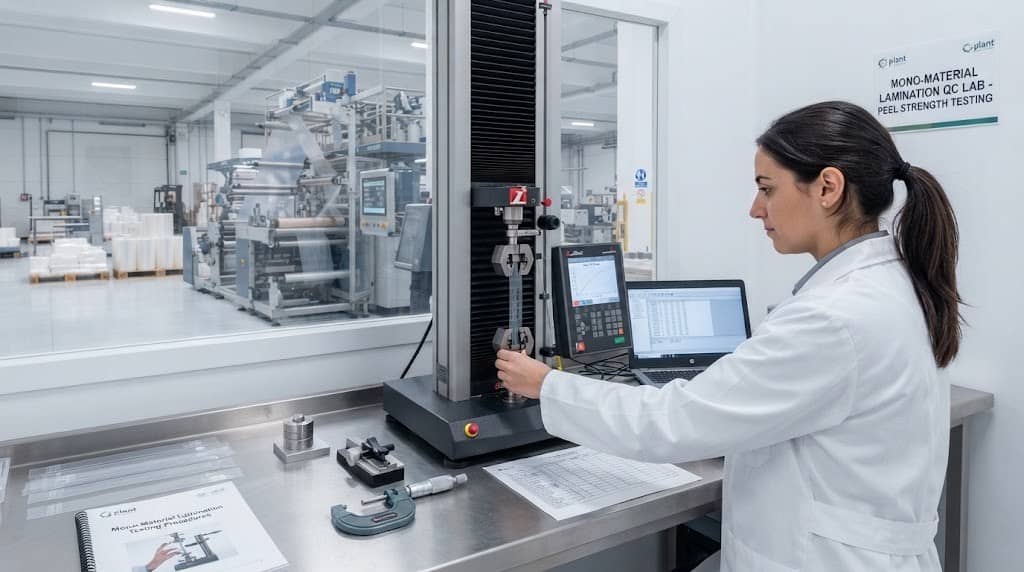
Converters should validate the finished structure after the required curing period rather than evaluating only its initial appearance. Testing can include:
- peel strength
- bond strength
- delamination resistance
- blocking
- visual quality
- seal performance
What Are the Main Limitations of Mono-Material Packaging?
Mono-material packaging is not a universal replacement for conventional multilayer packaging because different polymers have historically been combined to achieve specific performance characteristics.
1. Barrier Performance
Barrier requirements vary significantly by product. A dry snack may need moderate protection, while coffee or an oxygen-sensitive product may require much stronger oxygen and aroma barriers.
Important measurements may include:
- OTR — Oxygen Transmission Rate
- WVTR — Water Vapor Transmission Rate
- aroma barrier
- light protection
A mono-material structure should therefore be evaluated according to the actual shelf-life requirement rather than by polymer type alone.
2. Mechanical Strength
Changing from PET or PA to a polyolefin-based structure can affect:
- stiffness
- tensile strength
- puncture resistance
- tear behavior
- flex-crack resistance
For applications exposed to mechanical stress, the new laminate should be tested under realistic handling conditions.
3. Heat Resistance and Retort Performance
High-temperature packaging remains one of the more challenging areas for mono-material conversion. Retort applications may require simultaneous control of:
- thermal resistance
- dimensional stability
- seal integrity
- bond strength
- barrier retention
In such applications, a traditional multilayer structure may still offer advantages that are difficult to reproduce with a mono-material design.
4. Shelf-Life Requirements
Packaging structure should ultimately be determined by the product protection requirement. A structure that works for a short-shelf-life bakery product may not provide sufficient protection for:
- oxygen-sensitive food
- high-fat products
- aroma-sensitive products
- long-shelf-life products
Therefore, recyclability should be evaluated together with product protection rather than as an independent target.
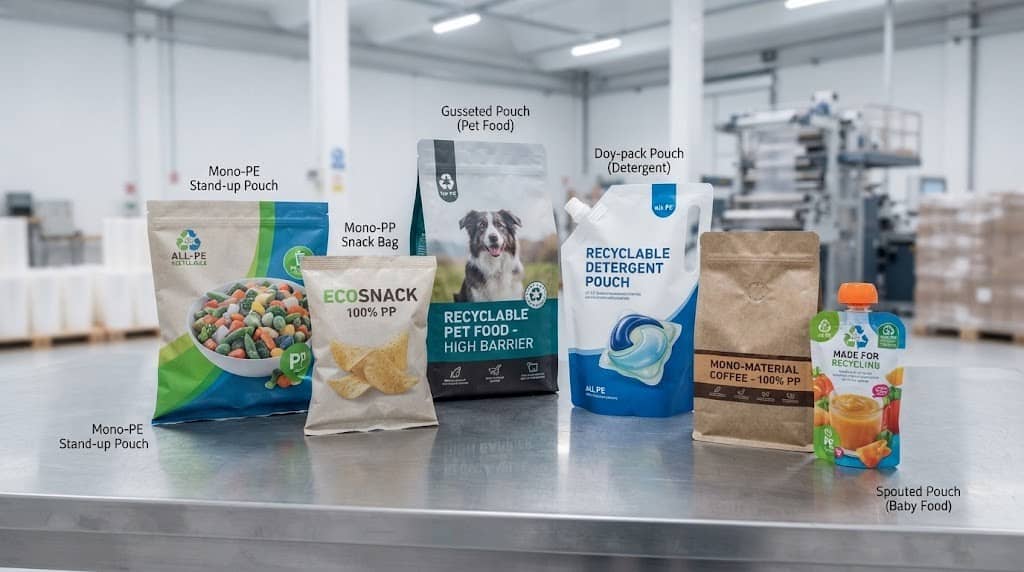
When Can Solventless Lamination Replace Traditional Multilayer Structures?
The potential for mono-material conversion is strongly application dependent.
| Flexible Packaging Application | Mono-Material Potential | Primary Consideration |
| Dry snacks | High | Moderate barrier requirements |
| Bakery packaging | High | Moisture protection and sealing |
| Frozen food | High | Flexibility and low-temperature performance |
| Detergent packaging | Medium–High | Chemical and mechanical resistance |
| Selected pet food | Medium–High | Barrier and shelf-life requirements |
| Coffee packaging | Medium | Oxygen and aroma barrier |
| Pharmaceutical packaging | Low–Medium | Strict barrier and compliance requirements |
| Retort food | Low–Medium | Thermal and barrier performance |
| High-barrier chemical packaging | Application dependent | Chemical compatibility and barrier |
Applications With Higher Conversion Potential
Mono-material structures are generally easier to evaluate when the package requires:
- moderate barrier performance
- flexible sealing
- conventional processing temperatures
- relatively simple product protection
Examples can include selected snack, bakery, frozen food, detergent, and consumer packaging applications.
Applications Requiring More Validation
Greater technical validation is generally required when the package needs:
- very high oxygen barrier
- strong aroma retention
- high puncture resistance
- retort performance
- extended shelf life
- aggressive chemical resistance
This is why mono-material packaging should be treated as a design optimization problem rather than a universal replacement strategy.
What Changes on the Laminating Line When Switching to Mono-Material?
Changing the packaging structure does not necessarily mean replacing the entire laminating machine. However, the process parameters may need to be re-established for the new substrate combination.
1. Unwinding
The new film should be evaluated for:
- thickness
- elongation
- stiffness
- roll hardness
- web width
- operating speed
The target is stable web transport without unnecessary film stretching.
2. Adhesive Coating
The adhesive system should be validated with the new substrates. Key variables include:
- adhesive viscosity
- adhesive temperature
- coating weight
- metering stability
- substrate wetting
3. Lamination Nip
The nip section controls how the coated substrates are brought together. Relevant parameters include:
- nip pressure
- roller condition
- temperature where applicable
- web alignment
- machine speed
The correct settings should be determined through trials instead of directly copying a recipe developed for PET-based laminates.
4. Rewinding
The laminated web must form a stable roll for downstream converting. Poor winding control can cause:
- telescoping
- wrinkles
- uneven roll hardness
- blocking
- poor slitting performance
For flexible PE-based structures, rewinding conditions can therefore have a significant effect on finished-roll quality.
5. Digital Process Monitoring
A modern solventless laminating machine can help operators monitor and reproduce critical process parameters. Useful production data may include:
- web tension
- adhesive temperature
- coating conditions
- line speed
- nip parameters
- production orders
- machine alarms
The purpose is not simply automation. Consistent process data allows converters to reproduce validated conditions when switching between different mono-material structures.
How to Evaluate a Mono-Material Lamination Project Before Production
Before replacing an established multilayer structure, converters should evaluate the entire packaging system.
Mono-Material Conversion Checklist
1. Polymer Selection: Which polymer family will form the primary packaging structure?
2. Barrier Requirement: What oxygen, moisture, aroma, and light protection does the product require?
3. Sealing Requirement: What seal temperature, seal strength, and hot-tack performance are required?
4. Mechanical Requirement: Does the new structure provide sufficient stiffness, tensile strength, puncture resistance, and tear performance?
5. Adhesive Compatibility: Is the solventless adhesive suitable for the selected films?
6. Surface Treatment: Do the films provide sufficient and consistent surface energy for bonding?
7. Web Handling: Can the existing laminator maintain stable tension with the new substrate?
8. Coating Control: Can the machine maintain the required adhesive coating weight at the target speed?
9. Curing: Can the production schedule accommodate the required bond-development period?
10. Recycling Compatibility: Is the complete package compatible with the intended recycling pathway?
This checklist can be used before full-scale production to identify technical risks and reduce unnecessary material trials.
What Should Be Tested Before Commercial Production?
A mono-material structure should be validated as a finished laminate rather than judged only from individual film specifications. Depending on the application, testing may include:
| Test | Why It Matters |
| Peel strength | Evaluates interlayer bonding |
| OTR | Measures oxygen barrier |
| WVTR | Measures moisture barrier |
| Seal strength | Confirms package integrity |
| Seal initiation temperature | Determines sealing process window |
| Tensile strength | Evaluates mechanical performance |
| Puncture resistance | Measures package durability |
| COF | Supports stable downstream processing |
| Blocking | Evaluates layer-to-layer surface behavior |
| Roll quality | Confirms winding and handling performance |
The testing protocol should be based on the final package application and applicable customer requirements.
Mono-Material vs Traditional Multilayer: Which Should Converters Choose?
There is no universal winner between mono-material and traditional multilayer packaging. The appropriate structure depends on the required balance between recyclability, barrier performance, mechanical properties, processing stability, and cost.
| Factor | Mono-Material Packaging | Traditional Multilayer Packaging |
| Recycling potential | High when properly designed | Highly structure dependent |
| Barrier performance | Improving but application dependent | Often stronger for demanding applications |
| Material compatibility | Higher within the selected polymer family | Allows different materials to provide specialized functions |
| Structure flexibility | More limited in some applications | High |
| Web handling | Can require tighter PE/PP process control | Mature process windows for established structures |
| High-temperature applications | More application dependent | Strong option for demanding conditions |
| Sustainability potential | High | Depends on final structure |
| Production economics | Application dependent | Mature in many existing applications |
The correct decision should therefore be based on total packaging performance, not on material count alone. A mono-material structure is attractive when it can satisfy the required product protection and production requirements while remaining compatible with the intended recycling system.
What Is the Future of Mono-Material Packaging and Solventless Lamination?
The development of recyclable flexible packaging will increasingly connect material engineering with converting technology.
1. Higher-Barrier Mono-Material Films
Future mono-material structures will need to provide higher levels of oxygen, moisture, aroma, and light protection without compromising recycling compatibility.
This could expand mono-material packaging into applications that currently depend heavily on PET, PA, aluminum foil, or other dissimilar materials.
2. More Compatible Solventless Adhesives
Adhesive development will remain important as converters adopt PE and PP structures. The challenge is to maintain:
- high bond strength
- stable coating performance
- reliable curing
- compatibility with recyclable structures
3. More Precise Tension and Coating Control
As flexible polyolefin films become more common, laminating equipment will need increasingly precise control of:
- web tension
- adhesive coating weight
- temperature
- line speed
- web alignment
- rewinding conditions
Machine stability will become increasingly important when converters move from established PET-based structures to more flexible PE-based designs.
4. Digitalization of Lamination Production
Digital laminating machines can help converters store production recipes, monitor critical parameters, and reproduce validated conditions. For multi-product factories, this can help reduce variation when changing between different:
- film structures
- adhesive systems
- coating weights
- production speeds
Digitalization therefore supports mono-material conversion by improving process repeatability rather than simply increasing automation.
5. Design for Recycling Becomes a System-Level Requirement
Future packaging development will increasingly evaluate the complete package instead of looking at individual films. Material selection, adhesive technology, printing, coatings, sealing layers, lamination, and recycling compatibility need to be considered together.
This means the role of the laminating machine is also changing. It is no longer only a machine for bonding films; it is part of a broader process for producing packaging structures that must balance performance, efficiency, material compatibility, and recyclability.
Frequently Asked Questions
Q1: Can solventless lamination be used for mono-material packaging?
Yes. Solventless lamination can bond compatible PE or PP substrates to create multi-layer mono-material structures. However, the complete package must still meet the intended recycling and performance requirements.
Q2: Is mono-material packaging always more recyclable than multilayer packaging?
No. Recyclability depends on the complete packaging structure, including polymers, coatings, adhesives, inks, and the recycling system available for the package.
Q3: Can solventless lamination replace PET/AL/PE packaging?
In selected applications, high-barrier mono-material structures can potentially replace some PET/AL/PE structures. However, applications requiring extremely high barrier, long shelf life, or retort performance may still require aluminum-based or other specialized structures.
Q4: Does mono-material packaging require a special laminating machine?
Not necessarily. However, the laminating machine should provide stable web tension, adhesive coating, nip control, and rewinding performance for the selected PE or PP substrates.
Q5: What is the biggest challenge when converting multilayer packaging to mono-material?
The main challenge is achieving the required combination of recyclability, barrier performance, mechanical strength, sealing performance, adhesive bonding, and production stability within one compatible material system.