
Aluminum Foil Lamination for High-Barrier Food Packaging

Food packaging manufacturers need reliable protection against oxygen, moisture, light, and external contamination. For products such as coffee, powdered milk, retort meals, and processed foods, aluminum foil lamination provides a strong barrier solution that helps maintain product quality during storage and distribution.
However, selecting the right aluminum foil laminate involves more than choosing a foil thickness. Material combinations, food characteristics, sealing requirements, and production conditions all affect the final packaging performance. This guide explains common aluminum foil lamination structures, their food packaging applications, and how to select suitable laminating equipment.
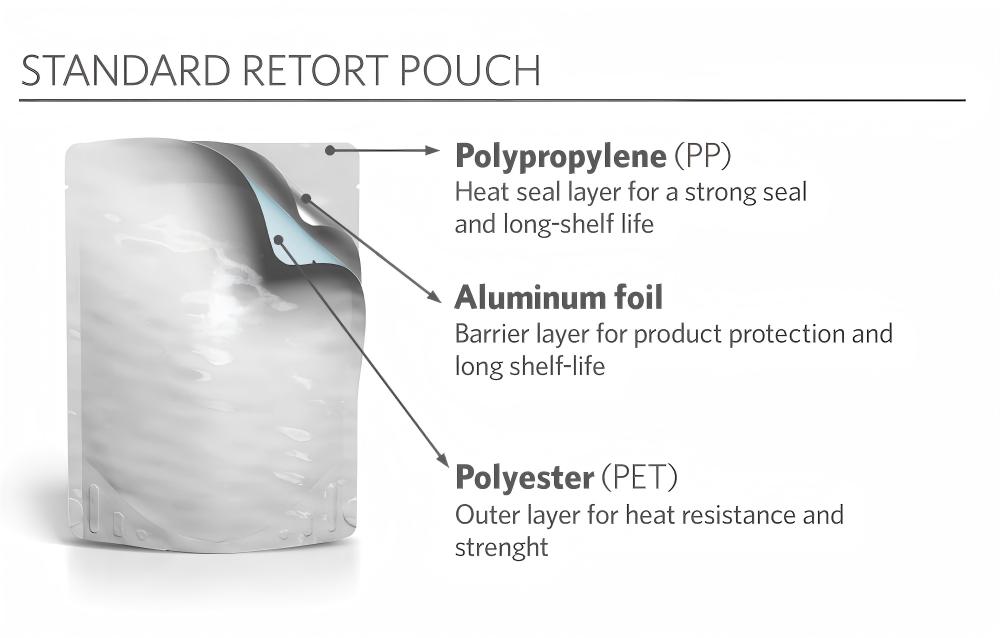
Why Aluminum Foil Is Used in High-Barrier Food Packaging
Aluminum foil is widely used in high-barrier food packaging because it provides excellent protection against several external factors.
- Oxygen barrier: Helps protect oxygen-sensitive products from oxidation.
- Moisture barrier: Limits water vapor transmission and helps maintain the quality of dry foods.
- Light protection: Blocks light that may affect sensitive ingredients.
- Aroma retention: Helps preserve the original flavor and aroma of coffee, tea, and other products.
These properties make aluminum foil suitable for packaging applications where product protection and shelf-life requirements are important. However, the final barrier performance also depends on foil integrity, laminate quality, package seals, and converting conditions.
Typical Food Packaging Aluminium Foil Lamination Structures
Different foods require different material combinations. The outer layer is heat sealable and usually mechanically protective; the inner layer is often heat sealable.
Four typical aluminium foil lamination structures are:
| Laminate Structure | Typical Applications | Main Considerations |
| PET/AL/PE | Coffee, powdered milk, dry foods | Barrier protection and heat sealing |
| PET/AL/CPP | Selected retort and processed food packaging | Thermal resistance and seal performance |
| PET/PA/AL/PE | High-performance food pouches | Mechanical strength and puncture resistance |
| Paper/AL/PE | Tea and selected dry food products | Stiffness, barrier protection, and sealing |
PET/AL/PE is a typical durable high-barrier flexible packaging when protection against oxygen and moisture is desired. Material selection is even more important for retort applications. The adhesive, sealant, and aluminium foil layer must resist sterilisation temperature and conditions.
The best structure should always be selected according to the product, filling process, storage environment, and required shelf life.
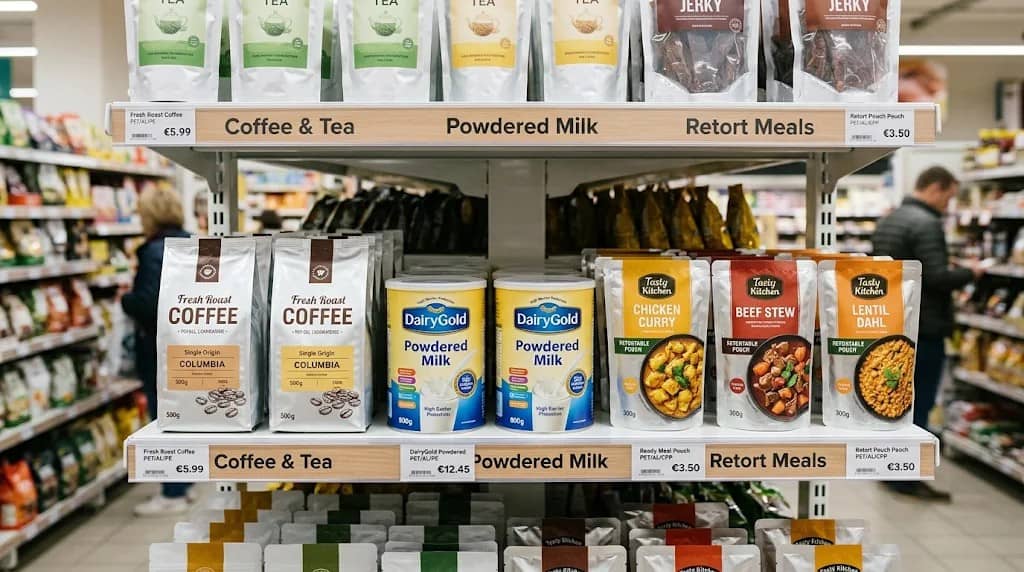
Matching Aluminum Foil Structures with Different Food Products
Choosing an appropriate laminate structure starts with understanding what the packaged product needs.
1. Coffee and Tea
Coffee and tea are sensitive to oxygen, moisture, and external odors. Aluminum foil laminates help protect aroma and product quality during storage. PET/AL/PE is one possible structure for these applications.
2. Powdered Milk and Nutritional Products
Powdered products require moisture protection to prevent quality deterioration. Packaging manufacturers should also consider filling conditions, seal reliability, and resistance to handling damage.
3. Retort Food
Retort pouches must withstand high-temperature sterilization. Structures such as PET/AL/CPP may be considered, provided that all materials and adhesives are suitable for the specified retort conditions.
4. Frozen and Processed Foods
These products may require additional mechanical protection. Nylon layers can be considered when puncture resistance and durability are important.
5. Sauces and Wet Food
For liquid and semi-liquid products, seal integrity and compatibility with the packaged contents are critical. The inner sealing layer must match the filling and processing requirements.
The right laminate is not necessarily the one with the highest barrier performance. It is the one that meets the product’s actual protection requirements without unnecessary material costs.
Key Factors Affecting Aluminum Foil Lamination Quality
Flexible packaging should be handled carefully during aluminium foil production. It has some material properties that are different from those of ordinary plastic films.
4 factors to think about:
1. Quality and thickness of foil
Foil thickness, pinholes, surface quality, and roll consistency will all affect the final laminate. Pre-production inspection of materials.
2. Adhesive application
Adhesive should be compatible with the substrates to be bonded, such as PET/AL, AL/PE. For other food packaging applications, food contact requirements in addition to recommendations by the adhesive supplier should be considered.
3. Web Tension Management
Aluminium foil does not react well to excessive stretching and deformation. Improper tension matching between foil and polymer films can result in poor web stability and poor finished roll quality.
4. Bond Strength & Cure
Follow all technical recommendations for cure conditions of the adhesive. Check bond strength and laminate integrity before forming the material into finished pouches.
These should be considered in combination and not corrected individually.
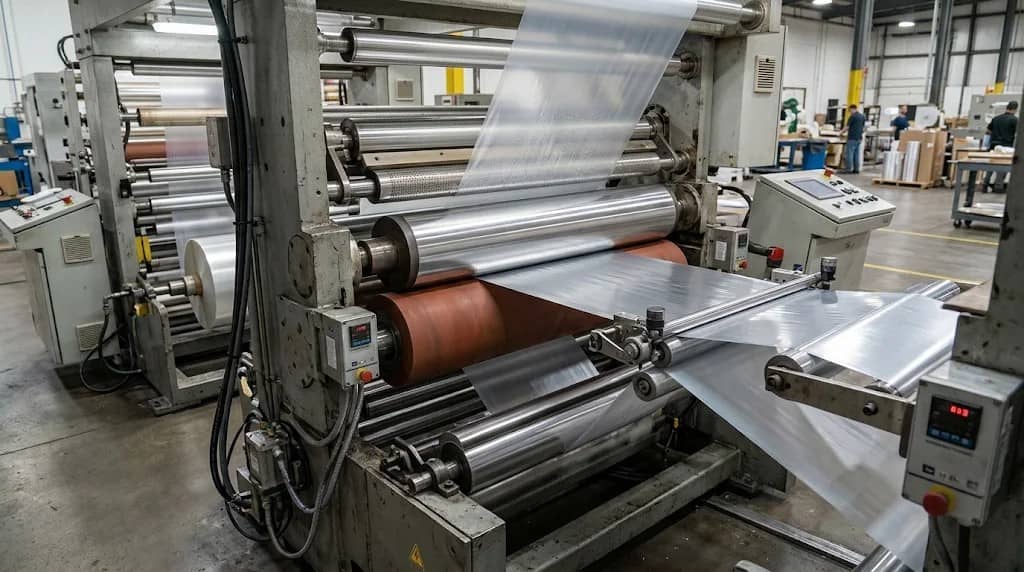
How to Choose a Laminating Machine for Aluminum Foil Food Packaging
Selecting the right aluminum foil laminating machine requires matching the equipment configuration with the material structure and production requirements.
Consider four important aspects:
- Material Compatibility: The machine should support the required substrates, including PET, BOPP, PA, aluminum foil, PE, and CPP.
- Tension Control Capability: Stable tension control is particularly important when processing aluminum foil together with flexible polymer films.
- Adhesive Application: Accurate adhesive metering and consistent coating help maintain bonding quality across different laminate structures.
- Production Configuration: Duplex, Triplex, and Quadplex machines serve different production requirements.
For example, Sinstar’s TRI-1300A Triplex Solventless Laminating Machine supports three-layer structures such as PET/AL/PE. For more complex multilayer production, the Quadplex Solventless Laminating Machine supports two-to-four-layer composite structures.
The appropriate configuration depends on the number of layers, material combinations, production volume, and required process sequence.
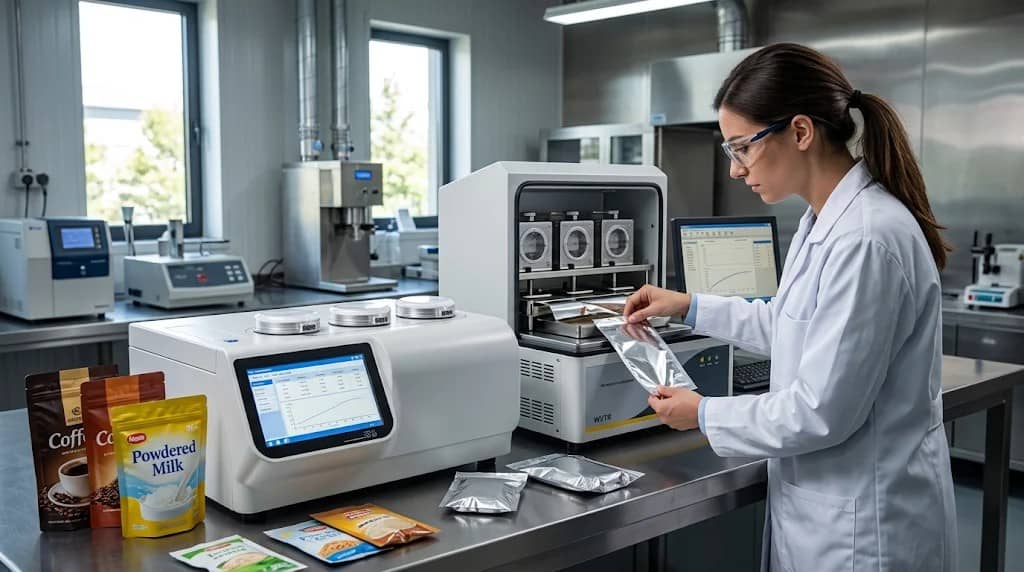
Quality Testing for High-Barrier Aluminum Foil Packaging
A good-looking laminate does not automatically guarantee reliable packaging performance. Manufacturers should verify both material properties and finished package quality.
Important testing methods include:
| Test | What It Evaluates |
| OTR Testing | Oxygen transmission rate |
| WVTR Testing | Water vapor transmission rate |
| Peel Strength Testing | Bond strength between laminate layers |
| Pinhole Inspection | Aluminum foil integrity |
| Seal Integrity Testing | Reliability of finished package seals |
Oxygen transmission rates and water vapour transmission rates, respectively (see the table above), each conform to ASTM standard test methods D3985 and F1249. OTR and WVTR results must be interpreted with the test conditions used in mind. The conditions relate to barrier performance but do not (by themselves) dictate finished food package shelf life.
Finished packaging should also undergo appropriate seal and package integrity testing.
Improving Production Efficiency in Aluminum Foil Lamination
Consistent production depends on more than machine speed. Manufacturers should establish clear procedures for each material structure and production order.
Practical measures include:
- Standardizing substrate specifications before production.
- Preparing adhesive systems and production parameters before changing orders.
- Reducing unnecessary material changes and machine interruptions.
- Monitoring adhesive consumption and material waste.
- Recording production conditions for each laminate structure.
For manufacturers processing different packaging materials, a suitable multi-layer laminating configuration can help simplify production workflows.
Learn more about Sinstar’s solventless lamination technology and its applications in flexible packaging production.
Frequently Asked Questions
Q1: The use of aluminium foils for the packaging of high-barrier food?
Aluminium foil provides good barriers to oxygen, moisture, light, and aroma. This is commonly used for coffee, powdered milk, and any products that require robust packaging protection.
Q2: What is the most common aluminium foil lamination structure for food?
PET/AL/PE is a common high-barrier flexible pack structure. For specific heat-sealing and retort requirements, other combinations such as PET/AL/CPP may be selected.
Q3: Are foil food products laminated using solventless technology?
Yes. Solvent-free laminating of aluminium foil structures can be done if properly prepared. Adhesive compatibility, tension control, curing conditions, and final packaging considerations need to be considered.
Q4: What are the important tests for aluminium foil laminated packaging?
OTR test, WVTR test, seal strength, pinhole test, package seal test, etc.
Q5: What should I look for in a laminating machine for aluminium foil packages?
Material compatibility, number of laminates, web tension controls, adhesive applicators, production speed, expected production, etc. Tune the machine to your actual production requirements.
Conclusion
Aluminium foil lamination is still a major solution for high-barrier food packaging. However, reliable packaging requires proper material structure, appropriate adhesives, stable production conditions, and proper quality testing.
Selecting the right laminating machine is equally important. Having proper packaging equipment against packaging structures and production needs will help the manufacturers to improve process consistency and produce more efficient flexible packaging productions.
If you are interested in PET/AL/PE or other aluminium foil food packaging structures, contact Sinstar for the appropriate laminating machine configuration.