
A Guide to Rollstock Packaging: Everything You Should Know

If you are new to flexible packaging, the term rollstock may sound more complicated than it is. In simple terms, rollstock is packaging material supplied in a continuous roll rather than as a finished bag or pouch.
Instead of receiving thousands of pre-made bags, a packaging operation can feed a roll of flexible film into a machine, where the film is formed, filled, sealed, and cut into individual packages. This makes rollstock packaging a common choice for food, pet food, personal care products, and other products that need flexible packaging.
But how does the process actually work, and what can rollstock be used for? Here is a simple introduction.
What Is Rollstock Packaging?
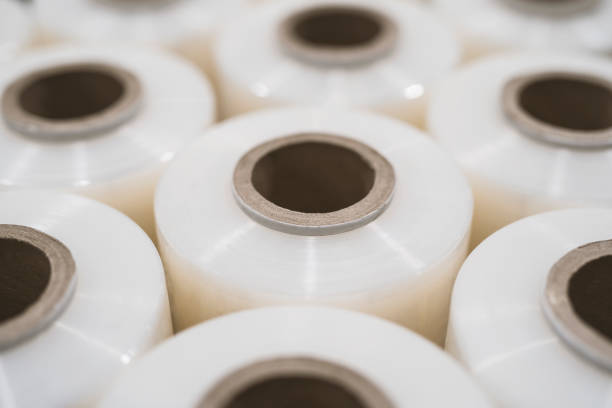
Rollstock packaging refers to flexible packaging material supplied in a continuous roll. Instead of arriving as a finished bag or pouch, the film is fed into packaging equipment, where it is formed, filled, and sealed during production.
This is essentially what the rollstock definition refers to. Rollstock is a continuous sheet or web of packaging film that can be processed by a packaging machine and turned into individual packages.
You may also see the term written as “roll stock.” In flexible packaging, rollstock and roll stock generally refer to the same type of packaging material.
One of the main differences between rollstock and premade pouches is when the package is formed. A premade pouch is already shaped and sealed on three sides before it reaches the filling line. Rollstock, on the other hand, is formed into a pouch or other package during the packaging process.
This makes rollstock a practical option for automated packaging lines, especially when a manufacturer needs to produce a large volume of packages from a continuous supply of film.
How Does Rollstock Packaging Work?
The basic rollstock packaging process is relatively straightforward. A typical form-fill-seal system moves the film through several stages.
1. Film Unwinding
The roll of packaging film is mounted on the machine and gradually unwound. The film moves through the packaging line at a controlled speed.
2. Forming
The flat film is shaped into the required package format. Depending on the machine and product, this may result in a pillow bag, pouch, sachet, or another flexible package.
3. Filling
Once the package has been formed, the product is placed inside. The filling system depends on what is being packaged. Powders, liquids, snacks, and other products require different filling methods.
4. Sealing and Cutting
The package is sealed to protect the contents, and the continuous film is cut into individual packages.
The whole process can happen automatically and continuously. This is one of the main reasons rollstock is widely used on high-volume packaging lines.
Where Does Rollstock Film Come From?
A roll of film usually goes through several steps before it is ready for use on a packaging machine. The exact process depends on what the film will be used for and what properties the finished package needs.
Some rollstock films are printed, while others are coated or built from several layers. Different layers can provide different functions. One layer may provide strength, another may improve barrier performance, while another may provide a surface suitable for printing or heat sealing.
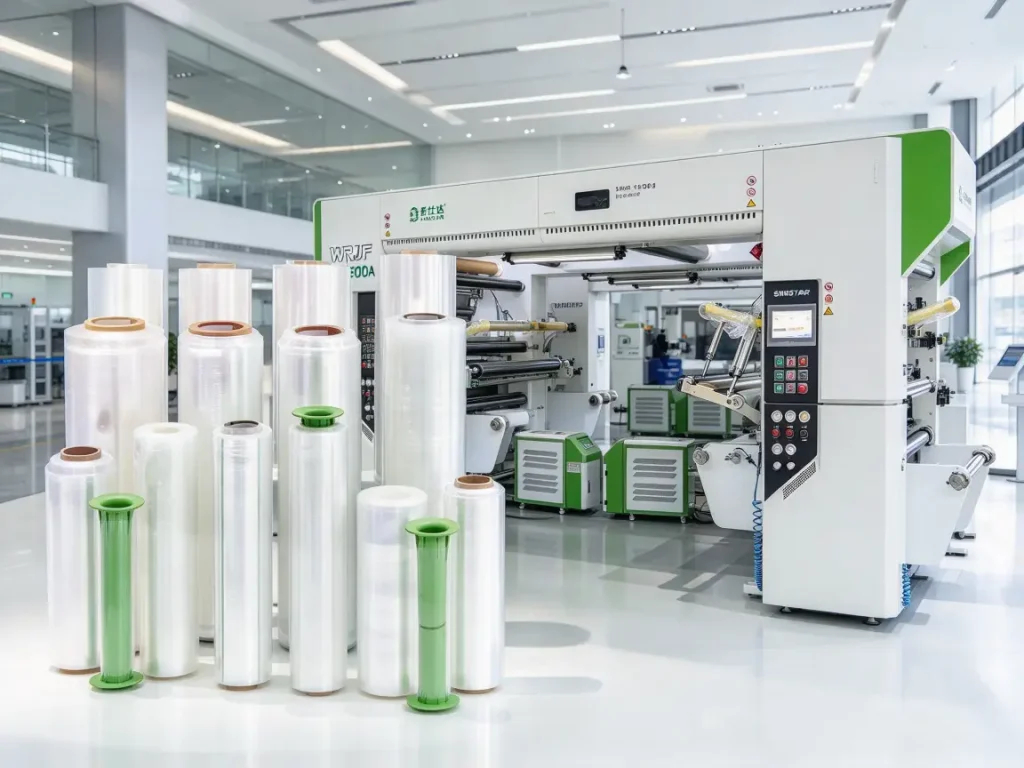
Lamination is commonly used when two or more film substrates need to be combined. In solventless lamination, a solvent-free adhesive is used to bond the materials together. The result is a multilayer film with the properties needed for a specific packaging application.
This step takes place before the film becomes rollstock for the packaging line. Sinstar provides solventless laminating machines for producing these multilayer film structures, which can later be converted into finished packaging.
The final film structure can vary considerably depending on the product, filling method, shelf-life requirements, and packaging equipment. For this reason, rollstock is not a single type of film. It is a packaging format that can be produced from different film structures to meet different applications.
What Types of Packaging Can Rollstock Produce?
One advantage of rollstock is that the same basic concept can be used to produce different package formats.
Pouches
Rollstock can be converted into flexible pouches for products such as snacks, pet food, coffee, and personal care products.
Sachets
Small sachets are commonly used for single-use products, including powders, sauces, samples, and personal care products.
Stick Packs
Stick packs use narrow sections of film to create small, elongated packages. They are often used for drink powders, instant products, and other single-serving applications.
Flow Packs
Flow packs are made from a continuous film web and are commonly used for individual food products, bakery items, household products, and other products that need a sealed flexible wrapper.
The final package depends on the product, required package size, filling method, and packaging equipment.
Where Is Rollstock Packaging Used?
Rollstock is used in many areas of flexible packaging, particularly where products need to be packed in a continuous and automated process.
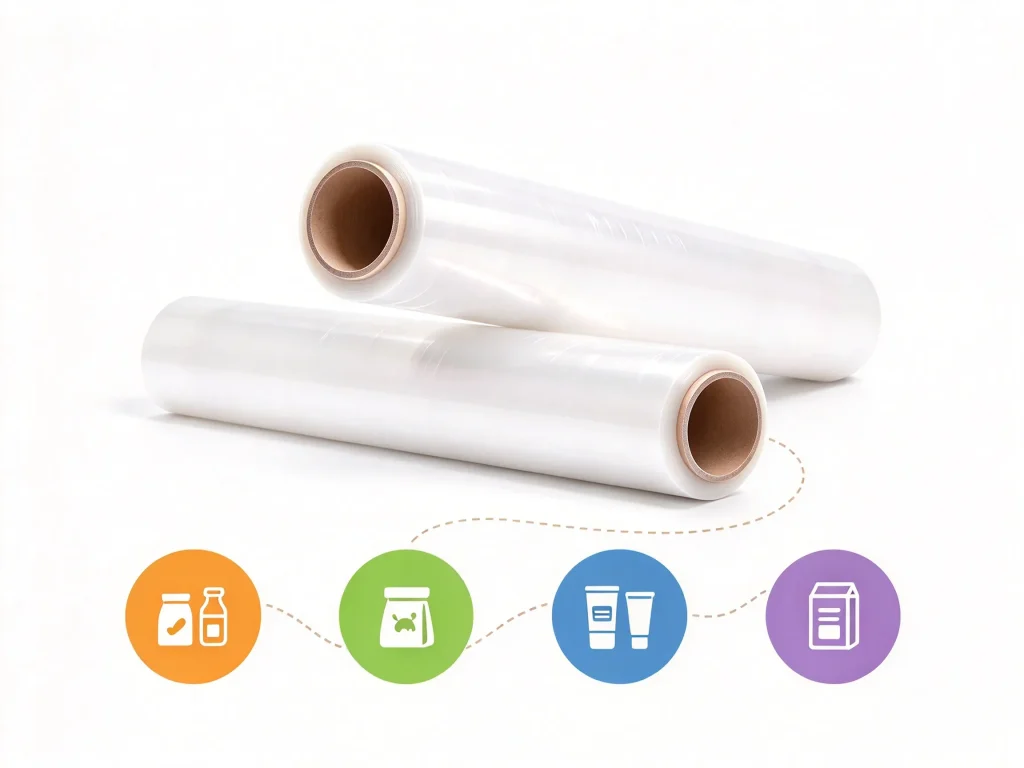
Food and beverage is one of the largest application areas. Flexible rollstock can be converted into packaging for snacks, coffee, frozen foods, sauces, and many other products. Depending on the product, the film may need to provide moisture, oxygen, or light protection in addition to basic sealing performance.
Pet food is another common application. Rollstock can be converted into packages in different sizes, making it suitable for everything from small portions to larger packs.
In personal care, rollstock is often used for wipes, samples, and other products that are suited to lightweight flexible packaging. The film structure can be selected based on the product and the way the package will be opened, sealed, or stored.
There are also applications in pharmaceuticals, healthcare, and industrial packaging. In these areas, the packaging may need stronger barrier properties, reliable seals, or additional protection against moisture and contamination.
The film structure is not the same for every application. A package for a dry snack may have different requirements from one used for a liquid product, a medical item, or a food that is sensitive to oxygen. The product, filling process, storage conditions, and required shelf life all affect the choice of rollstock film.
Why Is Rollstock Packaging Widely Used?
One of the main reasons rollstock is widely used is its compatibility with automated packaging equipment.
The film is supplied in a continuous roll, so it can be stored and transported before it reaches the packaging line. Once production starts, the machine feeds the film through the line and forms it into individual packages as the product is filled and sealed. There is no need to keep a large quantity of premade bags ready for the filling process.
Rollstock also gives manufacturers more options when it comes to package size, printed graphics, and package format. The same packaging line can often be adjusted for different film widths and package specifications.
For high-volume production, form-fill-seal equipment can run the film continuously, with the machine handling forming, filling, sealing, and cutting in sequence. This helps keep the production process consistent and reduces the amount of manual handling involved.
For manufacturers producing flexible packaging at scale, these characteristics make rollstock a practical choice when packaging speed, consistent quality, and efficient use of packaging materials are important.
Why Partner With Sinstar
If you are producing multilayer flexible packaging films for rollstock applications, Sinstar can help you find a suitable solventless lamination solution for your production needs. Our solventless laminating machines are designed for different film structures and packaging applications, helping manufacturers achieve consistent bonding quality while keeping production efficient and reliable.
Whether you are developing a new multilayer film structure, upgrading existing lamination equipment, or looking for a more efficient production setup, the Sinstar team can discuss your requirements and recommend a suitable machine configuration. Contact Sinstar to learn more about our solventless laminating machines and find the right solution for your flexible packaging production.