
Aluminum-Plastic Film for Lithium Batteries: How It’s Laminated

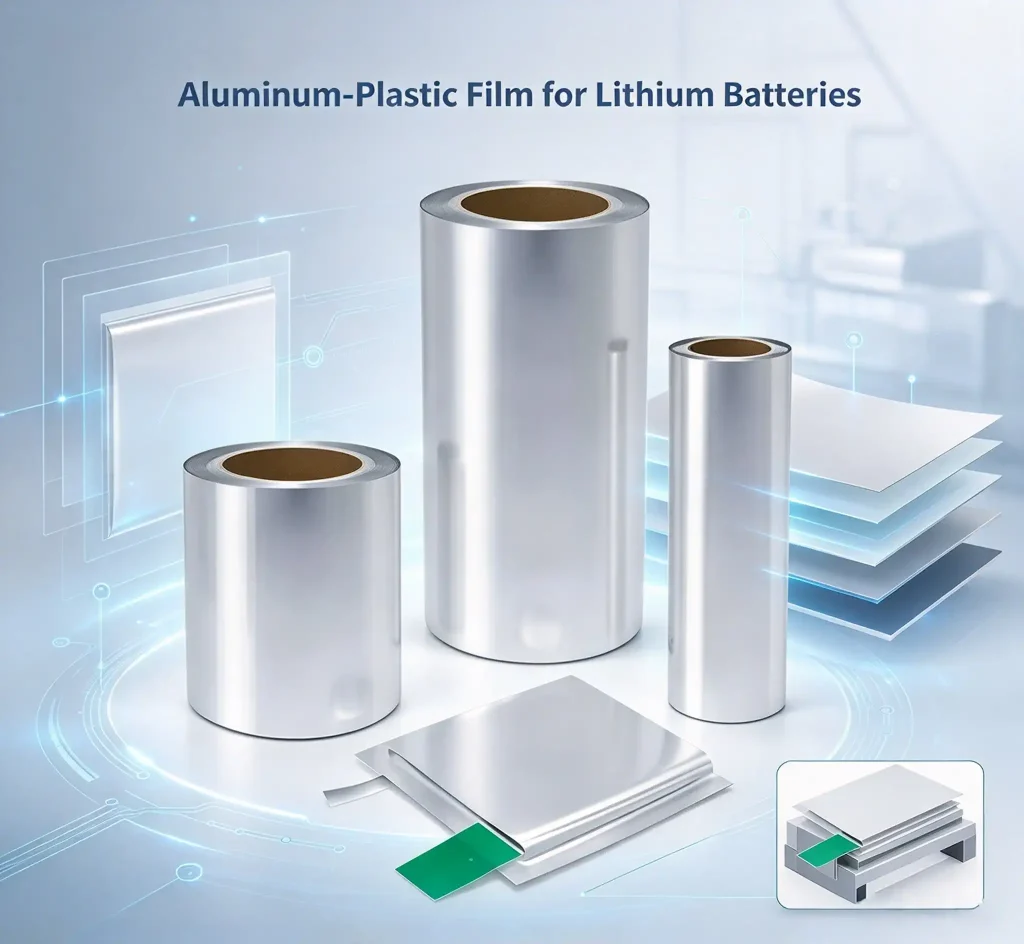
Aluminum-plastic film used for lithium battery pouches is built by bonding aluminum foil with polymer films on both sides. A typical structure includes an outer nylon or PET layer, aluminum foil in the middle, and a PP or CPP sealant layer on the inside.
These layers are not simply stacked and pressed together in one operation. The aluminum surface is first prepared, then the outer and inner layers are laminated in separate stages. Dry lamination is commonly used for the outer side, while the inner sealant layer may be applied by dry lamination, thermal lamination, or extrusion lamination.
Following the aluminum foil through the production line makes these different routes much easier to understand.
Before Lamination: The Three-Layer Structure
Before looking at the process, it helps to identify the three main parts of the film:
Outer protective layer → Aluminum foil → Inner sealant layer
The outer layer is commonly nylon (PA), PET, or a multilayer polymer structure. It protects the aluminum and provides the mechanical properties needed for later processing.
Aluminum foil forms the middle barrier layer. Before lamination, its surface is usually treated to improve adhesion and corrosion resistance.
On the other side is the inner sealant layer, commonly based on PP or CPP. This layer eventually faces the inside of the battery pouch, so its bond with the aluminum has different requirements from the outer interface.
This creates two separate bonding interfaces. Production therefore usually proceeds from aluminum surface preparation to outer-layer lamination and then to inner-layer lamination, although the exact line arrangement varies between manufacturers.
Step 1: Preparing the Aluminum Foil
The process starts with the aluminum foil rather than the plastic layers.
Before lamination, the aluminum surface may receive a chemical treatment or coating designed to improve adhesion and corrosion resistance. The treatment agent is applied to the foil and then dried before the aluminum moves into the next process.
Drying is an important part of this step. Research published in Batteries in 2024 found that insufficient drying can leave residual moisture on the treated aluminum surface and affect subsequent adhesion and electrolyte resistance. The exact drying conditions depend on the surface treatment and film system, so temperatures reported in individual studies should not be treated as universal production settings.
In a continuous production setup, surface treatment and drying can be arranged before the laminating section, allowing the prepared aluminum web to move directly into the first bonding stage.
Once the surface is treated and sufficiently dried, the foil is ready for the outer protective film.
Step 2: Laminating the Outer Film to Aluminum
The outer side of aluminum-plastic film is commonly produced through dry lamination.
The basic process is:
Adhesive coating → Drying → Heated nip lamination
First, an adhesive is coated onto one of the substrates. The coated web then passes through a drying section, where the solvent is removed. After drying, the outer polymer film and aluminum foil meet at the laminating nip, where heat and pressure bring the two webs together.
Published pouch-film manufacturing examples describe this type of process using polyurethane or urethane-based adhesives. For example, US12603361 describes PET and nylon films being dry-laminated with aluminum foil using a urethane adhesive.
The outer polymer structure itself can vary. Nylon is widely used because of its mechanical properties and suitability for later forming, while PET may also be included where additional strength or protection is required. For the lamination process, however, the important point is that the outer film and aluminum need a stable, continuous bond across the web.
After passing through the laminating rollers, the material now has its outer protective structure bonded to one side of the aluminum.
The other side still needs the sealant layer. This is where aluminum-plastic film production can follow more than one process route.
Step 3: Laminating the Inner Sealant Layer
The inner PP or CPP layer can be joined to the aluminum in several ways. This is the main difference between dry-process and thermal-process aluminum-plastic film production.
Route 1: Dry Lamination
The first option follows a process similar to the outer-layer lamination.
An adhesive is coated onto the appropriate surface and dried before the PP or CPP film is brought together with the aluminum under heat and pressure.
The sequence is again:
Adhesive coating → Drying → Lamination
Although the mechanical sequence looks similar to ordinary flexible packaging lamination, the adhesive system used for this interface needs to suit the intended pouch-film structure. Because this layer is on the inner side, chemical resistance is an important consideration when the adhesive and surface treatment are selected.
With this route, both sides of the aluminum can therefore be produced mainly through adhesive-based dry lamination.
Route 2: Thermal Lamination
The second route uses heat and pressure to bond the inner polymer structure to the aluminum.
Rather than relying on the same dry-lamination sequence for both interfaces, the prepared polymer film and treated aluminum are brought together under controlled thermal conditions. Heat softens or activates the bonding layer, while the laminating rollers apply the pressure needed to create a continuous interface.
This route requires a different temperature window from conventional adhesive dry lamination. The exact conditions depend on the polymer structure and surface treatment rather than on one fixed temperature that applies to all aluminum-plastic films.
Route 3: Extrusion Lamination
Another thermal route is extrusion lamination.
Here, the polymer is introduced during the laminating process rather than only being supplied as a finished film. Molten polymer is extruded toward the aluminum or between the materials, after which the layers pass through a nip and cooling section.
Patent literature describes aluminum-plastic film structures in which the outer layers are first produced through dry lamination and the CPP side is subsequently formed through a co-extrusion or extrusion-based process.
The resulting production sequence can therefore look like this:
Aluminum treatment → Outer-layer dry lamination → Inner-layer extrusion lamination
This is why the terms dry process and thermal process should not always be interpreted as two completely separate production lines. A manufacturer may combine different bonding methods within the same overall film structure.
For example, the outer nylon or PET side can be dry-laminated while the inner PP-based side is produced through a thermal or extrusion process.
Step 4: Aging or Heat Treatment
After the layers have been joined, the laminate may still need time or additional thermal treatment before the bonding process is complete.
For adhesive-based dry lamination, the laminate can go through an aging or curing stage. During this period, the adhesive continues to develop its final bonding properties.
The required aging conditions depend heavily on the adhesive formulation and film structure. Some processes use dedicated aging conditions after lamination, while other material systems and thermal routes may follow different post-lamination treatment sequences.
For this reason, there is no single aging temperature or curing time that can be applied to every aluminum-plastic film.
The important point in the production sequence is that leaving the laminating nip does not necessarily mean the bonding process has finished. The laminate may need to remain under specified conditions before it is ready for the next manufacturing stage.
Step 5: Cooling and Winding the Laminated Film
Once the required lamination and post-treatment stages are complete, the finished web needs to return to a stable condition before winding.
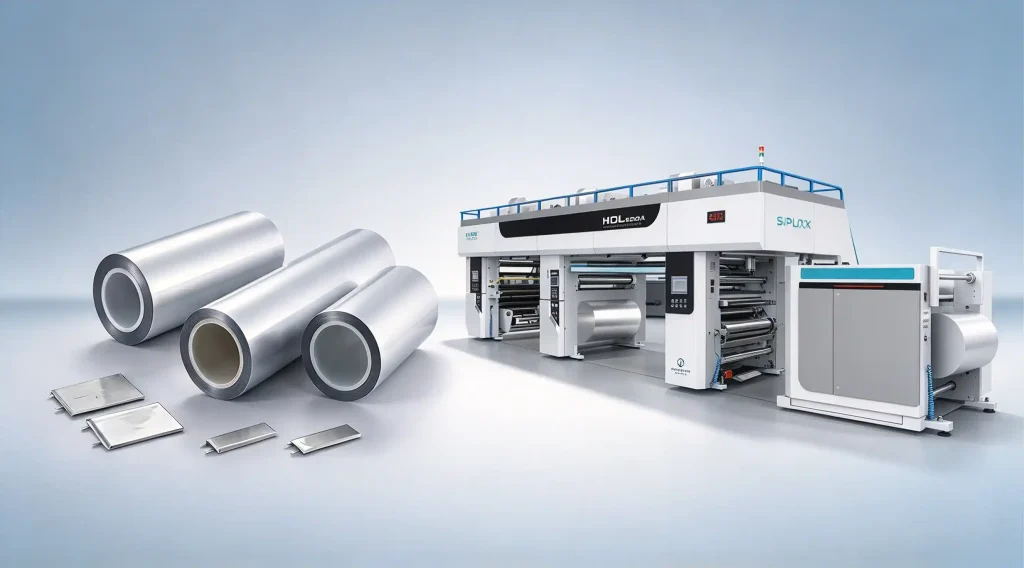
In thermal processes, cooling helps stabilize the laminated structure after exposure to elevated temperatures. The web is then guided toward the winding section and collected into rolls for subsequent processing.
Depending on the production arrangement, the master rolls may later be slit into the required widths. These rolls can then move to downstream pouch-film processing, but those operations are separate from the lamination process itself.
From start to finish, the main production path can therefore be summarized as:
Aluminum surface treatment and drying → Outer-layer lamination → Inner-layer dry, thermal, or extrusion lamination → Aging or heat treatment → Cooling and winding
The key difference between production routes lies mainly in how the inner sealant layer is joined to the aluminum. Dry lamination uses an adhesive coating and drying stage before bonding, while thermal and extrusion routes use different combinations of polymer layers, heat, pressure, and extrusion.
Once these stages are separated, the manufacturing process becomes much easier to follow. Aluminum-plastic film is not produced through one laminating operation, but through a sequence of surface preparation and bonding steps, with each interface handled according to the selected film structure and process route.