
Rollstock Film Packaging: Materials, Structures, and Applications

The performance of rollstock film packaging depends largely on the materials used and how they are combined. Some packaging films need to keep moisture out, while others must protect products from oxygen, light or physical damage. The right material structure also needs to provide reliable sealing and run smoothly on packaging equipment.
This is why rollstock films are made from different plastic materials and barrier layers rather than relying on one type of film for every application. Understanding their properties and common combinations can help packaging converters select a suitable structure for each product.
What Materials Are Used in Rollstock Film Packaging?
Several materials are commonly used in flexible packaging films. Each offers different properties, and some are combined to achieve a balance between strength, appearance, protection and sealing performance.
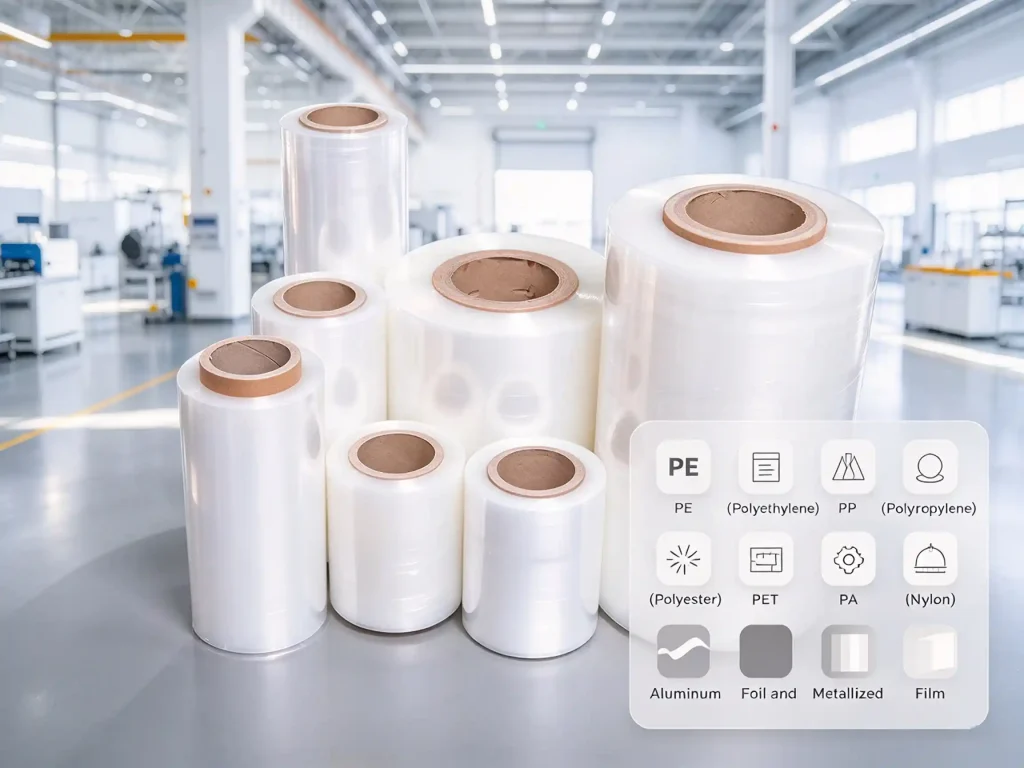
PE (Polyethylene)
Polyethylene (PE) is widely used in flexible packaging because it is flexible, durable and offers good moisture resistance. It is also commonly selected for the inner sealing layer of laminated films.
Different PE grades have different characteristics. For example, linear low-density polyethylene (LLDPE) is often used where flexibility, toughness and reliable heat sealing are important. The specific grade and film thickness affect the final performance.
PP (Polypropylene)
Polypropylene (PP) is available in several forms, with BOPP and CPP being common choices for flexible packaging.
Biaxially oriented polypropylene (BOPP) is stretched in two directions during production. This gives it good clarity, stiffness and printability, making it suitable for outer layers and printed packaging films.
Cast polypropylene (CPP), on the other hand, is produced through a casting process. It is generally more flexible than BOPP and is often used as a heat-sealing layer in laminated structures.
BOPP and CPP can be combined to provide a printable outer surface and a suitable inner sealing layer.
PET (Polyester)
PET film is known for its strength, dimensional stability and good printing performance. It is often used as the outer layer of laminated packaging films, where it supports the printed design and helps the film maintain its shape during converting and packaging.
PET can also be combined with PE, aluminum foil or metallized films to create structures with different levels of protection and sealing performance.
PA (Nylon)
Polyamide (PA), commonly called nylon, is used when packaging requires additional toughness and resistance to punctures. It can help protect products with sharp edges or those that may place greater stress on the packaging during handling and transportation.
PA is often found in vacuum packaging and selected frozen food applications. It is usually combined with a sealant material such as PE to provide the required sealing performance.
Aluminum Foil and Metallized Film
Aluminum foil and metallized film are both used to improve the barrier performance of flexible packaging, but they are not the same material.
Aluminum foil provides a strong barrier against light, oxygen and moisture. It is often selected for products that require a high level of protection during storage.
Metallized film is a plastic film, such as PET or BOPP, coated with a very thin layer of metal. It can improve barrier performance while providing a metallic appearance. However, its barrier properties are generally different from those of a continuous aluminum foil layer.
EVOH (Ethylene Vinyl Alcohol)
EVOH is a material commonly used to provide oxygen barrier protection. It is often incorporated into multilayer films, particularly when the packaged product is sensitive to oxygen exposure.
Because EVOH is affected by moisture, it is usually protected by surrounding layers in the film structure. Its performance depends on the grade, thickness and overall construction.
Common Rollstock Film Structures
A rollstock film does not always consist of several bonded materials. Depending on the packaging requirements, it may be made from a single film, multiple layers formed through co-extrusion or separate films joined through lamination.
Single-layer film uses one main film layer. It may be suitable for applications where the material already provides the required flexibility, strength and sealing properties. However, a single material may not meet every barrier or mechanical requirement.
Co-extruded film is produced by combining different polymer materials during the extrusion process. Multiple layers are formed together, with each material contributing specific properties. For example, a co-extruded film may combine PE layers with an EVOH barrier layer to improve oxygen protection while retaining sealing performance.
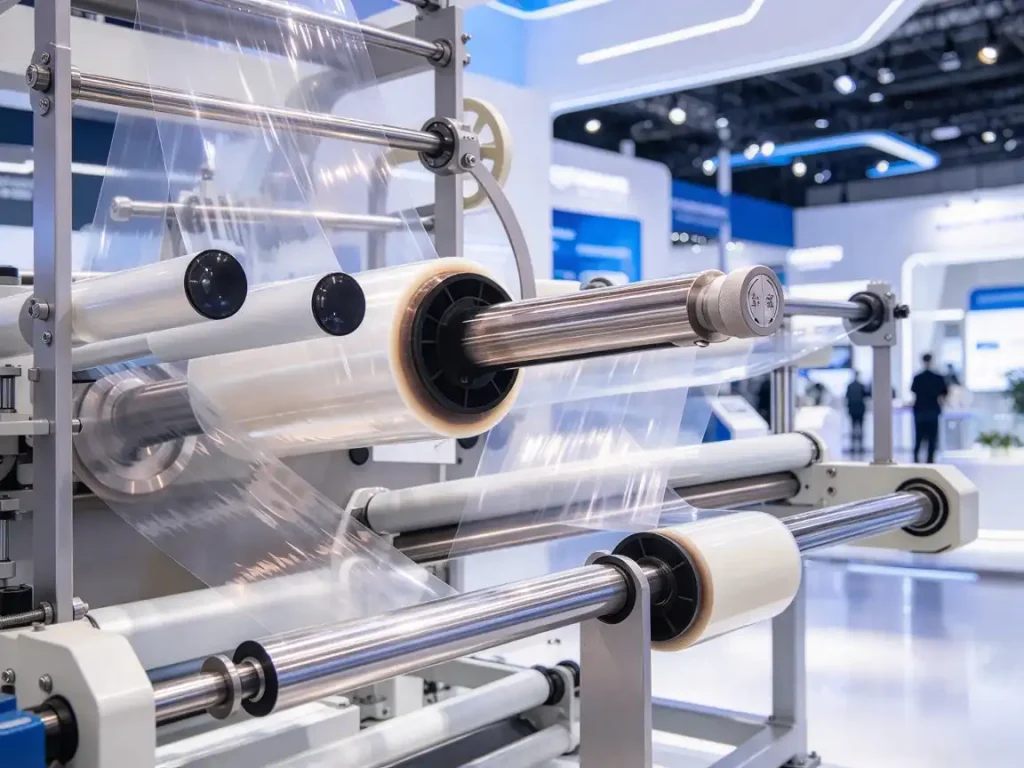
Laminated film is made by bonding two or more separately produced film substrates together, usually with an adhesive. This allows converters to combine materials that offer different advantages. A printed PET layer, for example, can be bonded to a PE layer that provides heat sealing.
These production methods serve different purposes. Co-extrusion forms multiple layers together during film production, while lamination joins separate film webs in a converting process.
Common laminated structures include PET/PE, BOPP/CPP, PET/VMPET/PE, PET/AL/PE and PA/PE. Each combination offers different properties for specific packaging needs. For example, PET and BOPP provide strength, clarity and printability, while PE and CPP offer heat-sealing properties. Metallized PET and aluminum foil improve barrier protection against light, oxygen and moisture, while PA adds toughness and puncture resistance.
Applications of Different Rollstock Film Structures
PET/PE for General Food Packaging
PET/PE is commonly used in flexible food packaging where a printable outer surface and reliable heat sealing are required. PET supports printing and provides mechanical strength, while PE serves as the sealing layer. It can be considered for products such as dry food, snacks and other packaged goods, depending on the required barrier performance.
BOPP/CPP for Snack and Confectionery Packaging
BOPP/CPP is often used for snack and confectionery packaging. BOPP provides a clear, printable outer surface, while CPP offers heat-sealing properties. The combination is suitable for packaging applications that require good appearance and efficient sealing.
PET/VMPET/PE for Products Requiring Additional Barrier Protection
PET/VMPET/PE combines a printable PET layer with a metallized barrier layer and a PE sealing layer. It is used for products that need additional protection from moisture and light, such as certain snacks, powdered foods and dry food products. The actual barrier performance depends on the film specifications.
PET/AL/PE for High-Barrier Packaging
PET/AL/PE incorporates an aluminum foil layer to provide strong protection against light, oxygen and moisture. It may be selected for products with more demanding storage requirements, including coffee, powdered products and other light- or oxygen-sensitive goods.
PA/PE for Vacuum and Frozen Food Packaging
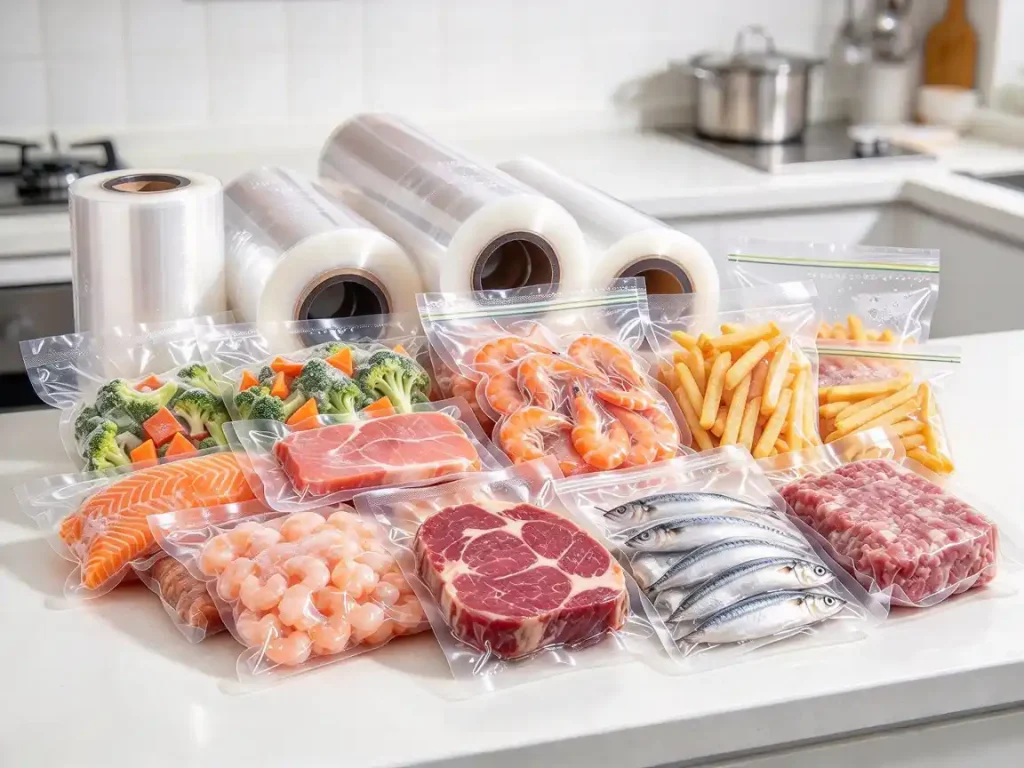
PA/PE is suitable for applications where puncture resistance and sealing performance are important. PA helps improve the film’s toughness, while PE provides the sealing layer. This structure is commonly considered for vacuum-packed meat, seafood and selected frozen food products.
How to Choose the Right Rollstock Film Structure?
Choosing a suitable film structure starts with understanding the product and its packaging requirements. A structure that works well for dry snacks may not provide enough protection for liquid products or goods that are sensitive to oxygen.
Several factors should be considered:
- Barrier requirements: Determine whether the product needs protection from moisture, oxygen, light or external odors.
- Sealing performance: Consider the required sealing strength, sealing temperature and filling conditions.
- Mechanical properties: Check whether the film needs additional strength, flexibility or puncture resistance during handling and transportation.
- Packaging equipment compatibility: The selected film must run properly on the intended packaging line, including its forming, web-handling and sealing systems.
More layers do not automatically mean better packaging. The goal is to select a structure that meets the product’s protection and processing requirements without adding unnecessary complexity.
The Role of Lamination in Rollstock Film Production
For multilayer rollstock films, lamination is an important converting process. It allows manufacturers to bond different film substrates together, combining properties such as printability, mechanical strength, barrier protection and heat sealing in one structure.
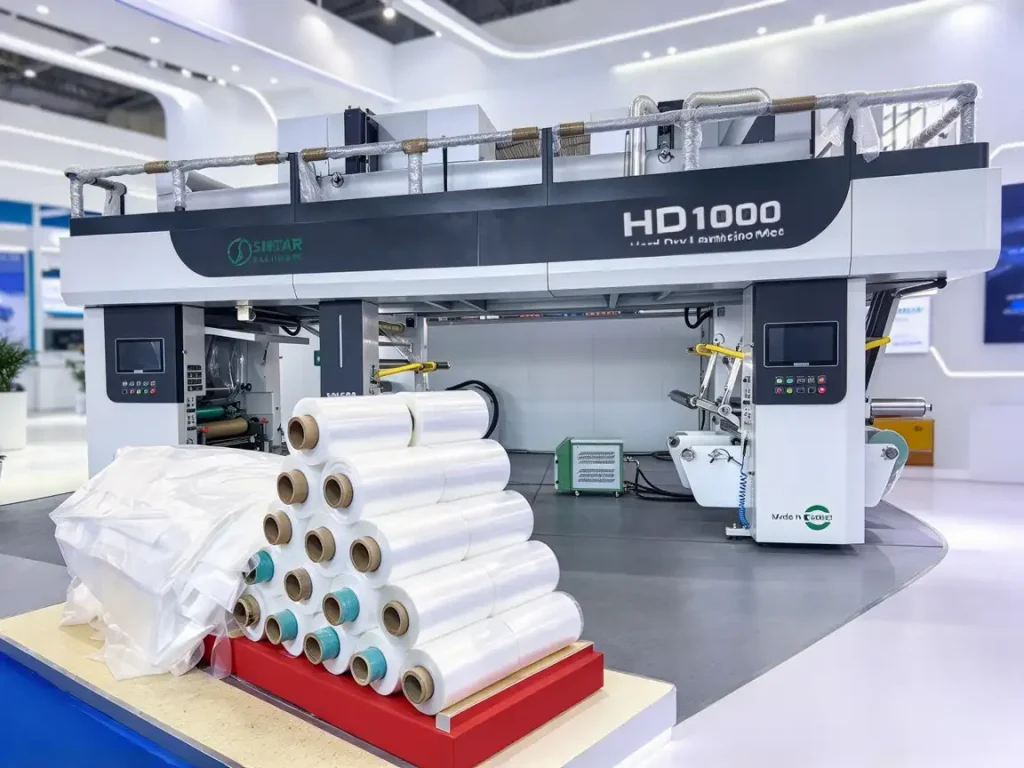
Solventless lamination uses a solvent-free adhesive system to bond separate film webs. Compared with solvent-based lamination, it does not require solvents to be evaporated during the bonding process. The suitability of this method depends on the substrates, adhesive system, production conditions and final packaging requirements.
For converters producing laminated rollstock films, choosing suitable equipment is an important part of maintaining consistent production quality. Sinstar provides solventless laminating machines for flexible packaging applications, supporting the production of different multilayer film structures.