Dry Lamination vs Extrusion Lamination: Which Process Is Right for Your Packaging?

If you’ve spent any time sourcing flexible packaging, you’ve probably run into this question: should we go with dry lamination or extrusion lamination? On the surface, both processes bond layers of film together. But the differences in how they work and when to use each one can significantly affect your product quality, production cost, and even your compliance with environmental regulations.
This guide breaks down both processes in plain terms, compares them side by side, and helps you figure out which one actually fits your application.
What Is Dry Lamination?
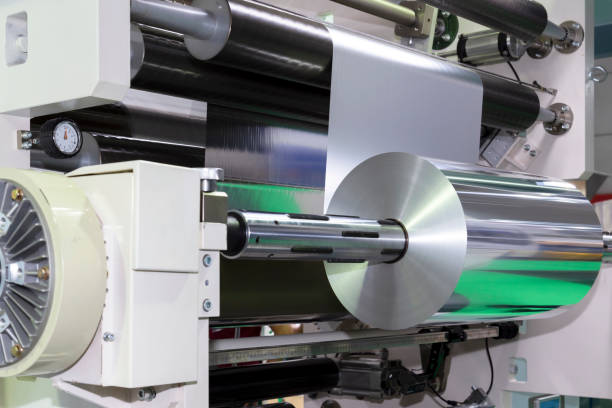
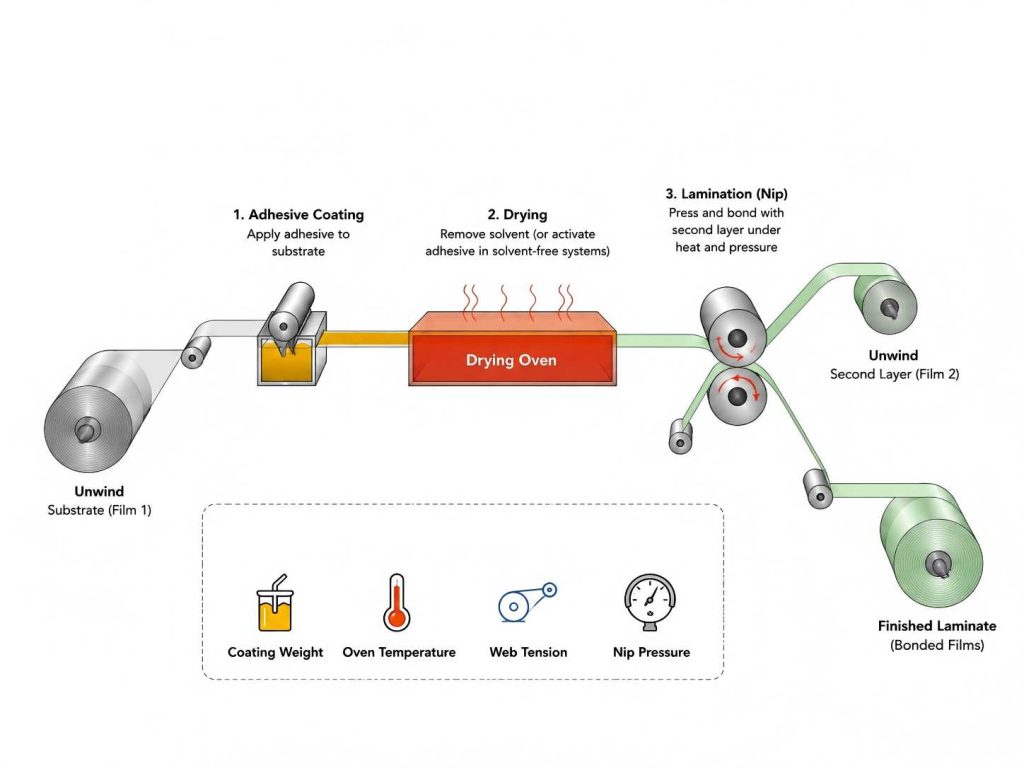
Dry lamination bonds two or more film layers using an adhesive. The substrate is coated with adhesive, passed through a drying oven to remove the solvent (or, in solvent-free systems, to activate the adhesive), and then pressed together with a second layer under heat and pressure.
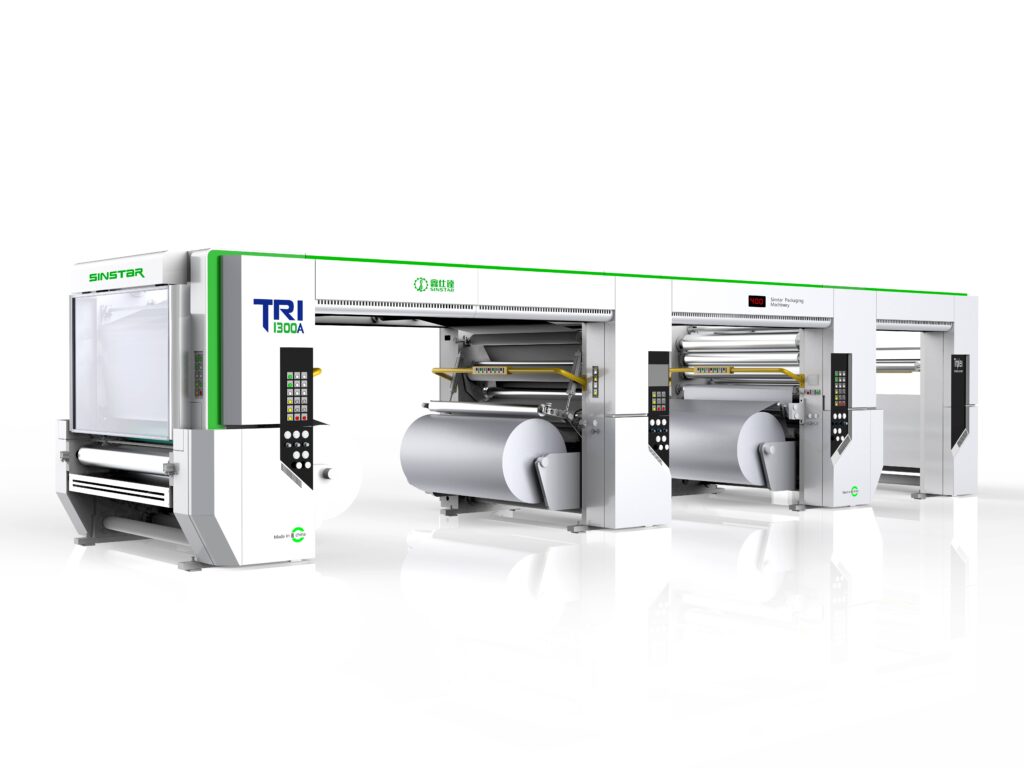
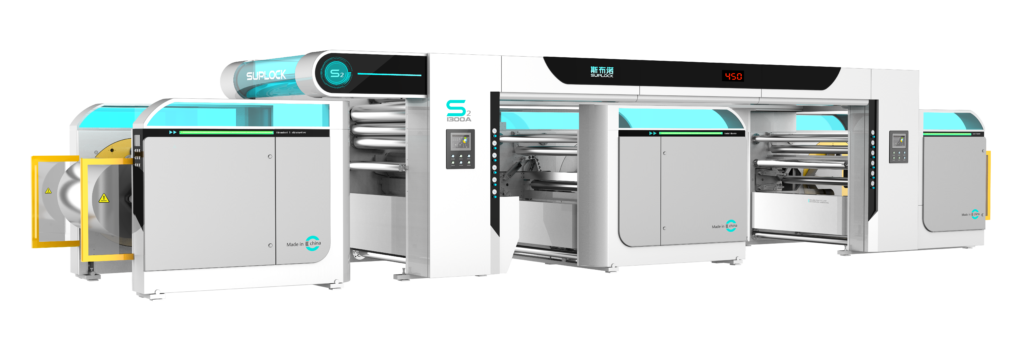
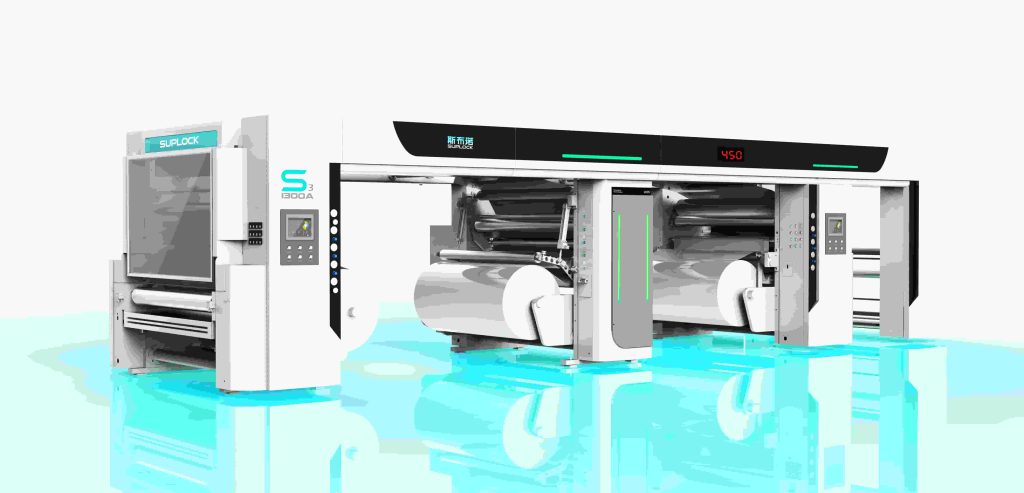
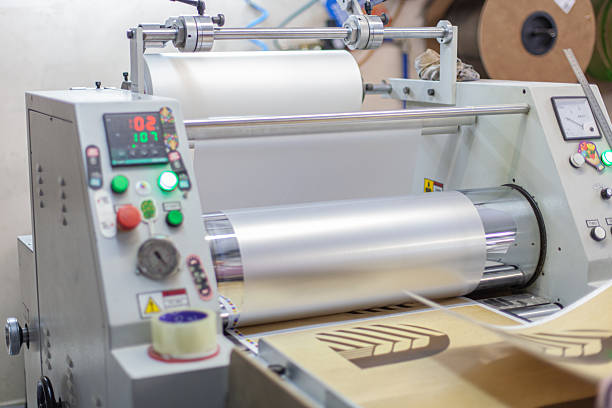
The equipment used commonly called a dry film laminator controls several variables at once: coating weight, oven temperature, web tension, and nip pressure. Getting these parameters right is what separates a clean, strong laminate from one with bubbles, delamination, or poor clarity.
Two main adhesive types are used in dry lamination:
- Solvent-based adhesives — higher bond strength, but require careful management of VOC emissions and residual solvent levels, especially for food packaging.
- Solvent-free adhesives — cleaner process with no drying oven required, increasingly preferred for sustainability reasons. According to the Flexible Packaging Association, solvent-free lamination has seen steady adoption growth across North America and Europe over the past decade.
Typical structures produced by dry lamination include PET/AL/PE, BOPP/CPP, and NY/PE, all commonly found in food pouches, pharmaceutical blister backing, and vacuum-sealed products where barrier performance and clarity matter.
What Is Extrusion Lamination?
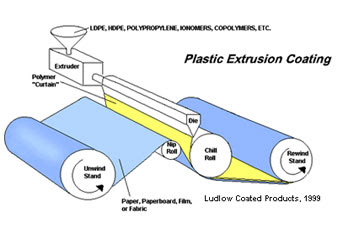
Extrusion lamination takes a different approach. Instead of applying a separate adhesive, it melts a thermoplastic resin (usually polyethylene or polypropylene) and extrudes it directly between two substrates as a thin, molten layer. As the resin cools, it bonds the layers together.
The extrusion coating lamination process runs at high speeds and is well-suited for high-volume production. Common resins include LDPE, LLDPE, EAA, and ionomer resins, each chosen based on the required seal strength, flexibility, and heat resistance.
This process is widely used in extrusion lamination for flexible packaging applications such as:
- Liquid paperboard cartons (think juice boxes or milk cartons)
- Heavy-duty industrial bags
- Foil-based laminates for retort pouches
- Kraft paper/PE structures for food service packaging
One important thing to note: because molten resin alone doesn’t always adhere well to low-surface-energy substrates, corona treatment or primer coating is usually applied before lamination. This step adds a small amount of complexity but is standard practice in most facilities.
Dry Lamination vs Extrusion Lamination: The Core Differences
Now for the part that actually matters for your decision.
| Dry Lamination | Extrusion Lamination | |
| Bond Mechanism | Adhesive (solvent or solvent-free) | Molten resin |
| Bond Strength | High (typically ≥3 N/15mm) | Moderate (depends on surface treatment) |
| Line Speed | 100–200 m/min | 200–400 m/min |
| Material Cost | Higher (adhesive cost) | Lower (resin is relatively cheap) |
| VOC Emissions | Yes (solvent-based systems) | None |
| Optical Clarity | Excellent | Slightly lower |
| Substrate Flexibility | Wide range | Limited; surface prep often required |
| Best For | High-barrier, precision packaging | High-volume, cost-sensitive applications |
Bond Strength and Barrier Performance
Dry lamination generally produces stronger interlayer bonds, which is why it’s the go-to choice for packaging that needs to survive harsh conditions, freezing temperatures, extended shelf life, or aggressive product chemistries. Extrusion lamination can achieve adequate bond strength for many applications, but it typically requires surface pretreatment, and there’s less room for error if the process drifts.
For high-barrier structures that include aluminum foil or metallized film, dry lamination is usually the safer choice. The ASTM F88 standard for seal strength testing is a useful reference if you’re evaluating laminates in this category.
Production Speed and Cost
This is where extrusion lamination has a clear edge. Running at twice the speed of most dry laminators, extrusion lines are better suited to large production volumes where per-unit cost is the primary driver. If you’re producing millions of square meters of liquid packaging board or agricultural film, the economics strongly favor extrusion.
Dry lamination involves adhesive cost on top of the substrate cost, and the drying oven adds energy consumption and time. That said, modern solvent-free dry laminators have closed the speed gap somewhat, and the adhesive cost is often justified by the superior bond quality.
Environmental Considerations
Solvent-based dry lamination comes with regulatory obligations around VOC emissions, ventilation systems, solvent recovery units, and worker safety protocols all add overhead. This has pushed many converters toward solvent-free systems, which eliminate these issues while maintaining comparable performance.
Extrusion lamination, by nature, involves no solvents at all, making it inherently cleaner from an emissions standpoint. However, the resins used (primarily polyolefins) still contribute to plastic waste, which is a growing concern for brands with sustainability targets. The Sustainable Packaging Coalition provides useful frameworks for evaluating the full lifecycle impact of different lamination choices.
Dry Lamination vs Extrusion Lamination: How to Choose
Rather than declaring one process universally better, here’s a straightforward way to think about it.
Choose dry lamination:
- Your packaging requires high barrier properties (oxygen, moisture, or light)
- The structure includes foil, metallized film, or specialty substrates
- Optical clarity is important (transparent pouches, display windows)
- You’re producing pharmaceutical, medical, or premium food packaging
Choose extrusion lamination:
- You’re running large volumes with cost pressure as the main constraint
- The end application is industrial, agricultural, or liquid packaging
- Your structure is paper-based (kraft, board) rather than film-based
- Sustainability goals are a priority and solvent use is a concern
Consider both or a hybrid approach:
- Your product line covers multiple packaging formats with different requirements
- You’re transitioning from solvent-based dry lamination and evaluating alternatives
- You want to test extrusion lamination on lower-spec SKUs while keeping dry lam for flagship products
Where the Industry Is Heading
A few trends are worth paying attention to if you’re planning capital investment or long-term supplier partnerships.
First, solvent-free dry lamination is growing fast. It’s effectively narrowing the environmental gap between dry and extrusion processes, and equipment from manufacturers like Nordmeccanica and Sinstar has made solvent-free systems more accessible for mid-sized converters.
Second, the push toward mono-material recyclable structures is forcing both processes to evolve. All-PE or all-PP laminates, designed to be recycled in a single stream, require precise control of interlayer adhesion, which is challenging for both process types but solvable with the right materials and equipment.
Third, brand owners are increasingly asking converters to document their process inputs, emissions, and material sources. Whichever lamination process you use, expect more scrutiny on the documentation side in the next few years.
FAQs
What is the main difference between dry lamination and extrusion lamination?
Dry lamination uses an adhesive to bond film layers, while extrusion lamination uses a molten plastic resin extruded directly between substrates. Dry lamination typically offers higher bond strength and better clarity; extrusion lamination offers higher speed and lower material cost.
Which process is better for food packaging?
It depends on the barrier requirement. High-barrier food packaging (retort, vacuum, extended shelf life) generally calls for dry lamination. Standard food service or liquid packaging applications often use extrusion lamination successfully.
Is extrusion lamination environmentally friendlier?
It produces no VOC emissions, which is a real advantage over solvent-based dry lamination. However, solvent-free dry lamination largely eliminates this gap. Neither process is without environmental considerations — both involve plastics.
Can you combine dry and extrusion lamination in one structure?
Yes. Multi-layer structures often use both processes at different bonding steps. This is common in complex barrier films that include foil, paper, and multiple film layers.