How to Choose the Right Width and Configuration for a Solventless Laminating Machine Based on Daily Output?

When investing in a solventless laminating machine, it’s easy to pay attention to the headline specifications—maximum speed of 500 m/min, a 1350 mm working width, or advanced automation features. While these figures are important, they don’t always indicate whether the machine is the best fit for your production requirements.
In reality, the best solventless laminating machine selection starts with a much simpler question:
How many square meters do you need to produce each day?
Choosing a machine with significantly more capacity than your actual demand can increase equipment investment, energy consumption, and maintenance costs without improving productivity. Conversely, selecting a machine that cannot meet production requirements may lead to capacity constraints, longer lead times, overtime, and higher operating costs.
The most effective machine selection begins with your daily production target. Once you know the required output, you can determine the appropriate machine width, operating speed, and configuration that best match your manufacturing needs.
Why Daily Production Capacity Matters More Than Maximum Machine Speed
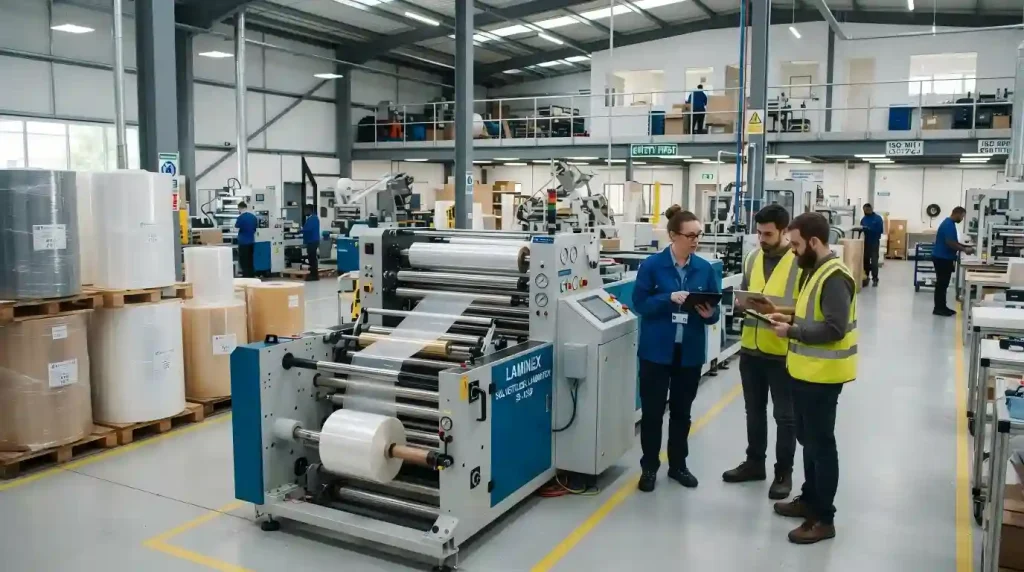
Every flexible packaging manufacturer operates under different production conditions. Some handle frequent short-run orders with multiple product changes, while others focus on high-volume production for food packaging, beverage pouches, or other standardized applications.
Selecting a laminating machine based only on maximum speed or other headline specifications often results in one of two situations:
- The machine offers far more capacity than the factory actually needs, leaving production capacity underutilized and increasing the initial investment.
- The machine reaches its production limit as order volumes grow, creating bottlenecks that affect delivery schedules and overall efficiency.
A more reliable approach is to calculate the required daily production first, then select a machine with the appropriate width, speed, and configuration to meet that target. This approach helps improve equipment utilization, supports stable production planning, and provides sufficient capacity for future business growth without unnecessary overspending.
How to Calculate Solventless Laminating Machine Production Capacity
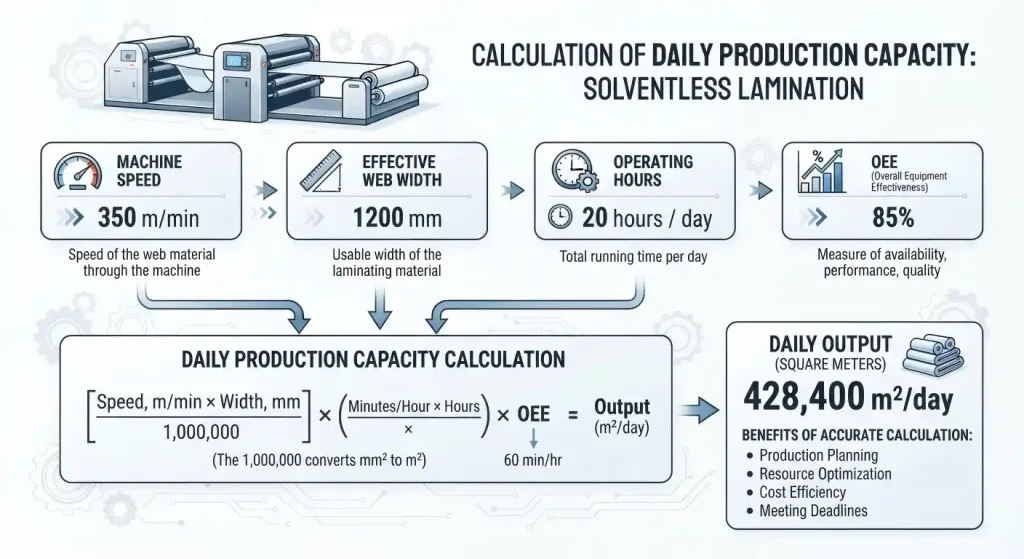
A practical way to estimate daily production is to use the following formula:
Daily Production (㎡) = Machine Speed (m/min) × Effective Web Width (m) × Effective Running Time (min/day) × OEE
Each parameter represents the actual production conditions rather than the machine’s theoretical specifications.
- Machine Speed – The average operating speed during normal production, not the maximum speed listed in the machine specifications.
- Effective Web Width – The usable laminating width after allowing for edge trimming, typically about 90–95% of the machine’s nominal width.
- Effective Running Time – Actual production time after deducting roll changes, cleaning, maintenance, setup, and other planned downtime.
- OEE (Overall Equipment Effectiveness) – A measure of real production efficiency that combines machine availability, operating performance, and product quality. In most flexible packaging plants, typical OEE values are: Single-station solventless laminating machines: 70–80% and Dual-station non-stop solventless laminating machines: 85–92%
A Faster Method for Capacity Estimation
For preliminary machine selection, a simplified calculation is usually sufficient.
Assuming:
- 20 hours of production per day
- 80% OEE
The formula can be simplified to:
Daily Production (㎡) ≈ Machine Speed × Effective Width (m) × 960
This method makes it easier to compare different machine specifications and estimate whether a particular model can meet your daily production target. It is well suited for equipment selection in the early planning stage, while detailed production calculations can be completed later using your actual operating conditions.
Recommended Machine Width Based on Daily Production Capacity
The table below provides general recommendations based on typical flexible packaging production requirements and standard Sinstar solventless laminating machine configurations.
| Daily Production Target | Recommended Machine Width | Recommended Operating Speed | Suggested Configuration | Typical Machine |
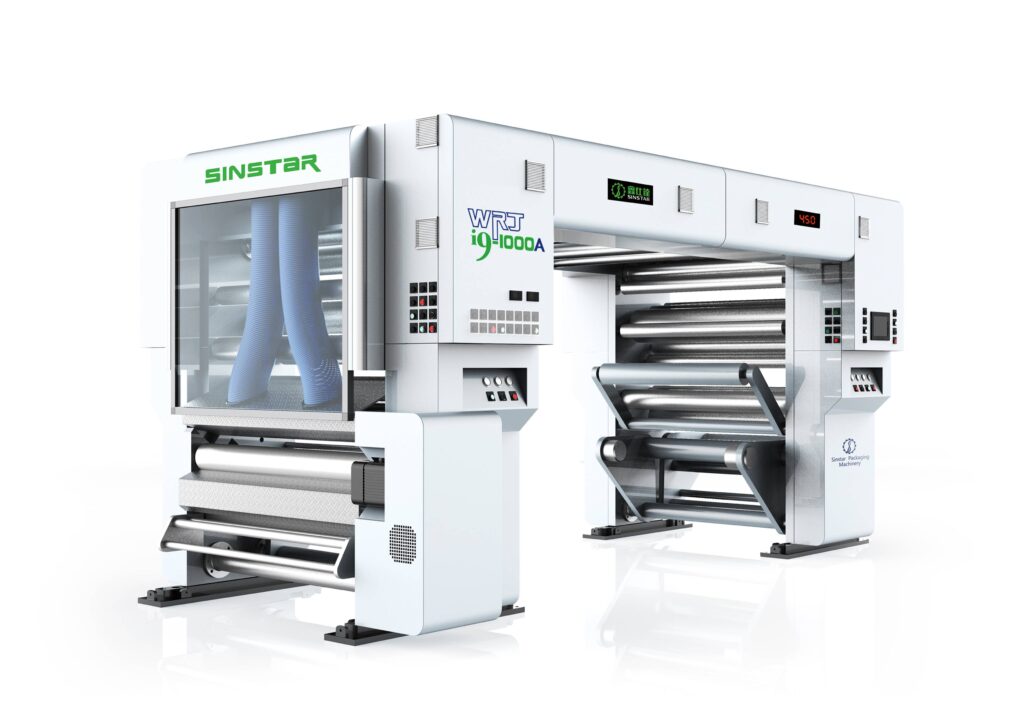
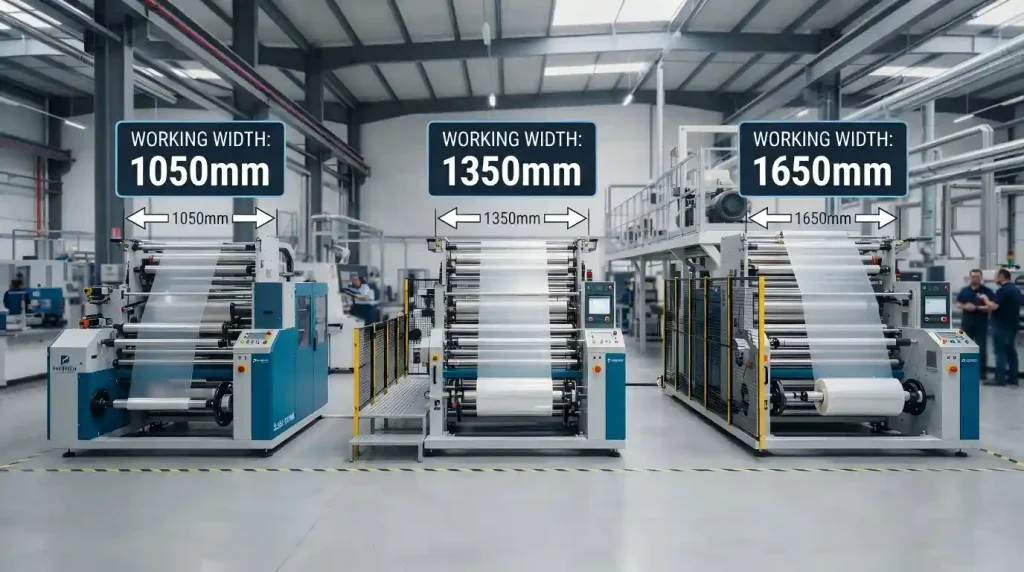
| 15,000–30,000 ㎡ | 1050 mm | Around 400 m/min | Single-Station, 2-Layer | WRJ i9 / Fi9-1050 |
| 30,000–60,000 ㎡ | 1350 mm | 400–450 m/min | Single-Station, 2-Layer | WRJ i9 / Fi9-1300 |
| 50,000–80,000 ㎡ | 1350 mm | 450–500 m/min | Dual-Station, 2-Layer | S2 Series |
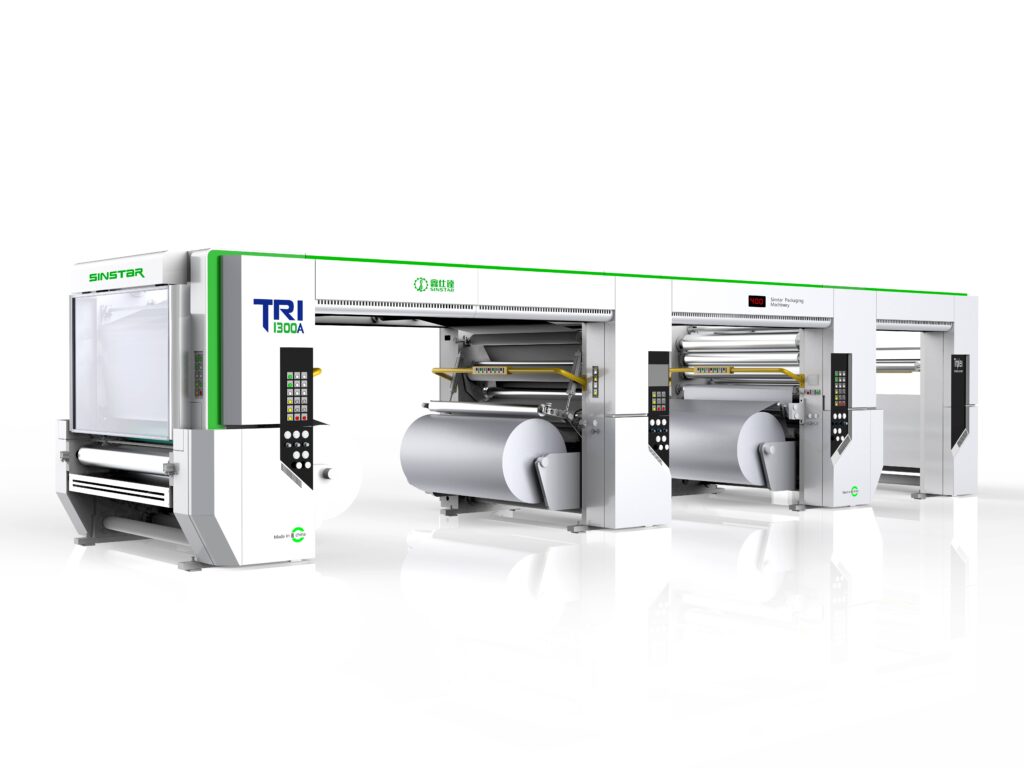
| 60,000–100,000 ㎡+ | 1350 or 1650 mm | 450–500 m/min | Dual-Station or 3-Layer | S2 / S3 / TRI-1300 |
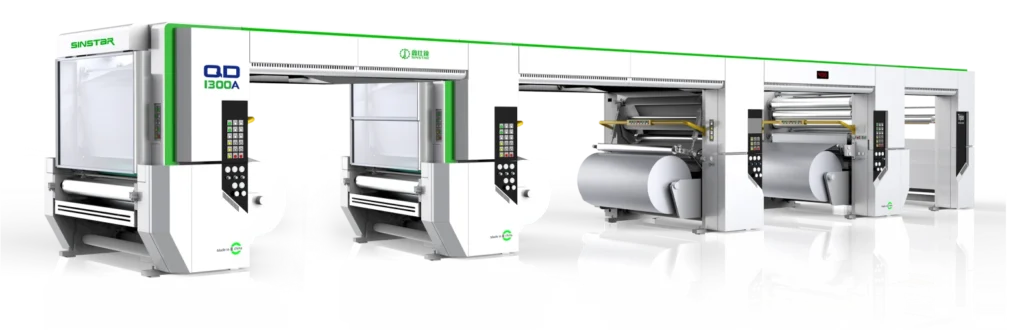
| 80,000–150,000 ㎡+ | 1650 mm | 450–500 m/min | Dual-Station, 3-Layer or 4-Layer | Quadplex Series |
These recommendations are intended as a starting point for equipment selection rather than fixed standards. The most suitable machine depends not only on daily output but also on factors such as laminate structure, order mix, shift arrangements, and future production plans.
For example, a plant processing mainly standard two-layer food packaging may achieve its production targets with a single-station machine. In contrast, manufacturers producing multiple laminate structures or handling continuous high-volume orders often benefit from dual-station or multi-layer models that reduce downtime and improve overall production efficiency.
Other Factors That Affect Machine Selection
Daily production capacity is an important starting point, but it is not the only factor to consider. Laminate structure, production schedule, material characteristics, and future expansion all influence which machine configuration will deliver the best long-term value.
Laminate Structure
If most of your production consists of two-layer laminates such as BOPP/PE or PET/PE, a standard two-layer solventless laminating machine is typically sufficient.
However, manufacturers that frequently produce PET/VMPET/PE, PET/AL/PE, or other three-layer structures should consider a dedicated three-layer laminating machine. Completing the lamination process in a single pass improves production efficiency while reducing the risk of defects such as pinholes, adhesive bleed-through, and inconsistent bonding, which are more common in foil-based laminates.
Production Schedule and Roll Changes
Production efficiency is influenced not only by machine speed but also by how often production must stop.
For long production runs with relatively few roll changes, a single-station machine usually provides adequate productivity. In contrast, plants processing multiple short-run orders often spend a considerable amount of time on roll replacement and setup, reducing effective operating time and lowering overall equipment effectiveness (OEE).
Dual-station non-stop machines minimize these interruptions by allowing roll changes during operation. This helps maintain stable production, increases equipment utilization, and brings actual output closer to the planned production capacity.
Material Characteristics
Different substrates place different demands on laminating equipment.
Thin plastic films, aluminum foil, and other tension-sensitive materials require more precise web control than standard packaging films. Machines equipped with digital tension control systems and low-position unwind configurations—such as Sinstar’s higher-end S1 and S3 series—provide more stable web handling, improve registration accuracy, and reduce material waste during production.
Future Production Growth
Machine selection should consider not only current production requirements but also expected business growth.
A common practice is to reserve approximately 20–30% additional production capacity beyond current daily demand. This provides flexibility as order volumes increase and helps avoid premature equipment upgrades or the need to install a second production line sooner than expected. Planning with reasonable capacity reserves also supports more stable production scheduling and future expansion without significantly increasing operating costs.
Three Typical Machine Selection Scenarios
The following examples illustrate how production requirements influence machine selection in different manufacturing environments.
Example 1: Medium-Volume Two-Layer Packaging Production
A flexible packaging manufacturer producing approximately 40,000 m² per day mainly processes two-layer laminates with relatively long production runs.
In this case, a 1350 mm single-station solventless laminating machine operating at 400–450 m/min provides sufficient production capacity while keeping equipment investment under control. For manufacturers that prioritize stable operation and lower energy consumption, the WRJ Fi9 series is a suitable option.
Example 2: High-Volume Three-Layer Packaging Production
A converter producing around 70,000 m² per day regularly laminates PET/VMPET/PE and other three-layer structures.
A 1350 mm dual-station machine or a dedicated three-layer laminating machine is generally a better match for this type of production. Continuous operation reduces downtime caused by roll changes, while single-pass lamination improves production efficiency and helps maintain consistent product quality for complex laminate structures.
Example 3: Large-Scale Mixed Production
A larger packaging plant with a daily production target exceeding 100,000 m² manufactures a combination of two-layer, three-layer, and occasional four-layer laminates.
For this production profile, a 1650 mm dual-station platform or a multi-layer system such as the Quadplex Series offers greater production flexibility. The wider web width and higher effective operating time support large production volumes while reducing the need for overtime during peak demand periods.
A Simple Machine Selection Checklist
Before comparing machine models or requesting quotations, it helps to prepare the following information:
- Your target daily production capacity (㎡) and the proportion of two-layer and three-layer laminates.
- Average production run length and the typical number of roll changes per shift.
- Available installation space and plant power requirements.
- Estimated production capacity with approximately 20% additional capacity for future growth.
- A comparison of the total cost of ownership for single-station and dual-station machines, including investment, labor, energy consumption, and maintenance costs.
- The main packaging materials you process and any specific requirements for tension control or coating performance.
Having this information available makes it easier to compare different machine configurations and identify the option that best matches your production requirements.
Conclusion
Selecting a solventless laminating machine is not simply a matter of choosing the widest machine or the highest operating speed. The most suitable solution is the one that matches your production volume, laminate structures, production workflow, and future expansion plans.
When machine capacity is aligned with actual manufacturing requirements, production becomes more stable, equipment utilization improves, and operating costs remain easier to control. At the same time, the business is better prepared to handle future increases in order volume without creating unnecessary production bottlenecks.
If you are evaluating a new solventless laminating machine and are unsure which configuration is appropriate, Sinstar can help. By reviewing your daily production target, laminate structures, shift arrangement, and typical order profile, our engineering team can estimate the required production capacity and recommend a machine configuration that supports both your current production needs and future business growth.