Why Aluminum Foil Causes Bubbling in 3-Layer Lamination

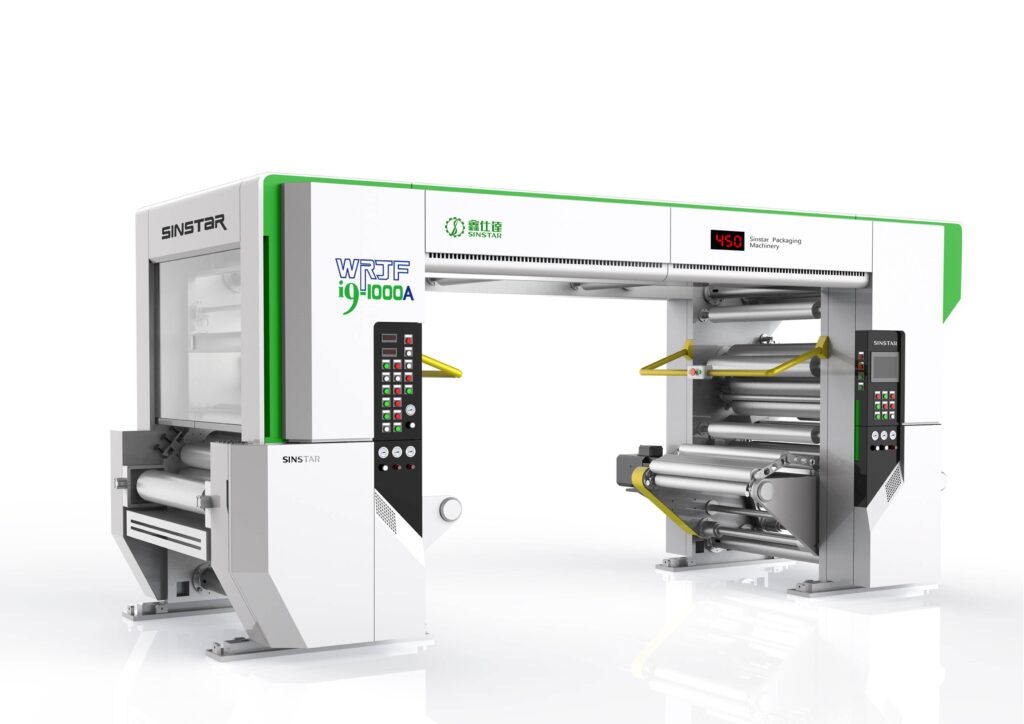
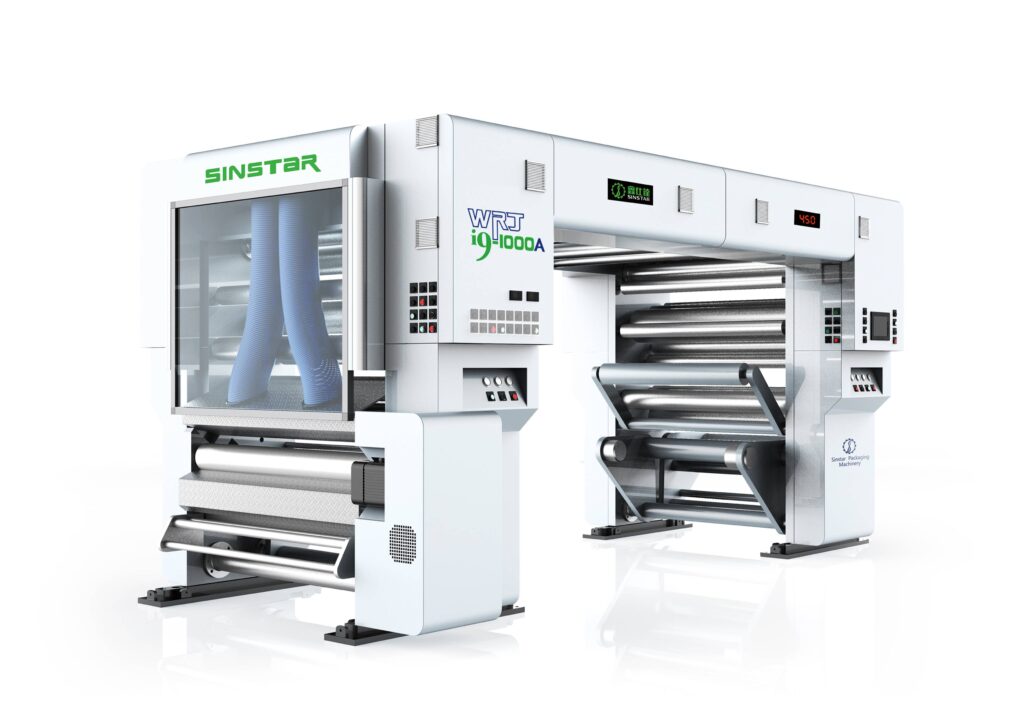
Flexible packaging manufacturing presents several technical challenges when using a solventless lamination machine to implement a 3-layer lamination structure involving PET/AL/PE or BOPP/AL/PE material layers, like PET/AL/PE or BOPP/AL/PE, such as PET/AL/PE. Though solventless lamination eliminates organic solvents and reduces energy costs, without drying oven stages found in dry lamination, this requires exact mechanical control, chemical balancing, substrate preparation, and precise mechanical balancing to be successful.
Among all substrates, aluminum foil (AL) is highly susceptible to defects like bubbling, tunneling, and delamination. This article provides a technical analysis from a factory floor perspective to explain why aluminum foil causes bubbling in a solventless laminating machine and details the steps required to resolve these issues.
Substrate Properties: Surface Defects of Aluminum Foil
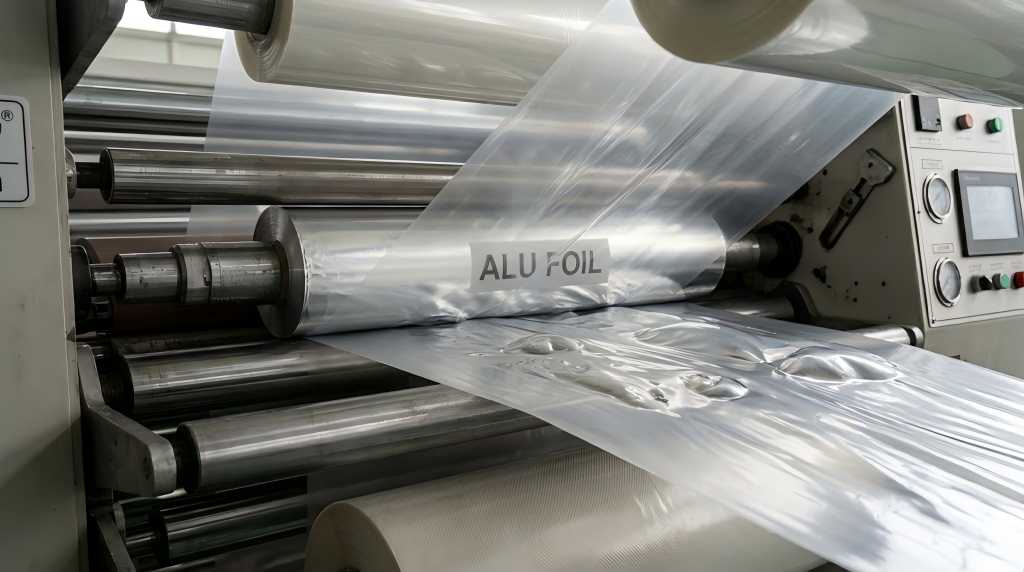
Aluminum foil is a metallic barrier substrate. Unlike plastic films such as PET or PE, its physical surface properties are non-porous and rigid, making it highly sensitive to surface contamination and low surface energy.
1. Residual Rolling Oil Concentration
During the industrial rolling process of manufacturing thin aluminum foil, rolling oils are used to lubricate and cool the metal. These oils must be completely removed via a thermal annealing process. If the annealing process is incomplete, microscopic rolling oil residues remain on the foil surface.
Solventless polyurethane adhesives tend to have poor tolerance of surface oils, with residual oil acting as a barrier that prevents them from spreading uniformly across a substrate and thus prompting a repelling effect that causes small, localized, and dense patterns of aluminum foil bubbling immediately after leaving nip rollers.
2. Low Surface Tension and Wettability
Solventless adhesives require that substrate surface energy exceed the surface tension of their liquid adhesive to form a secure bond, with aluminum foil used in solventless laminating machines usually meeting this minimum standard for surface tension (50mN/m).
Stored for extended periods or exposed to high humidity, aluminum foil surfaces undergo oxidation that significantly lowers their surface energy below 50 mN/m. When adhesives are applied onto this low-energy foil surface, reticulation or “beading” occurs and leaves microscopic dry spots, which manifest themselves post-lamination as air bubbles.
3. Pinholes and Micro-Creases
Thin aluminum foils (typically 6.5μm to 7μm) usually contain mechanical pinholes. Furthermore, during web handling across web-guiding rollers, the structural rigidity of the foil may cause micro-creases if the planarity of the web is uneven, causing pinholes and micro-creases that trap air, resulting in permanent bubbles that cannot be squeezed out with mechanical pressure alone.
Adhesive Dynamics and Coating Output Faults
Solventless adhesives rely on mechanical pressure and initial fluid wetting to achieve uniform coverage without the aid of solvent evaporation.
1. Low Initial Green Tack vs. Foil Stiffness
Solventless two-component polyurethane adhesives possess low initial molecular weight before curing, resulting in low green tack. Conversely, aluminum foil exhibits high structural rigidity and a tendency to return to its flat state (memory effect).
In a 3-layer lamination process, if the adhesive has not developed sufficient cohesive strength, the spring-back force of the rigid aluminum foil will pull it apart from the adjacent plastic film. This mechanical separation sucks air into the layer interface, causing immediate tunneling or bubbling.
2. Insufficient or Uneven Coating Weight
The microscopic topography of aluminum foil is not perfectly smooth; it consists of peaks and valleys from the rolling mill blocks. Plastic films can deform under nip pressure to accommodate adhesive distribution, but aluminum foil cannot.
Applied at low levels–for instance, 1.2 g/m2–-the adhesive may not completely fill all the microscopic voids within aluminum foil structures. When packaging aluminum foil products, the standard recommended coating weight must increase from 1.5 to 2.5 g/m², depending on gauge and final packaging application requirements; otherwise, air pockets are left beneath the adhesive layer that result from insufficient application.
3. Rapid Viscosity Build-Up (Short Pot Life)
If the mixing ratio of the two-component mixer is incorrect, or if the temperature of the coating rollers is set too high, the chemical cross-linking reaction accelerates prematurely. This causes the adhesive viscosity to increase rapidly on the coating rollers before transfer. The high-viscosity adhesive loses its fluid leveling capability, preventing it from wetting the aluminum foil surface and trapping air bubbles within the adhesive layer.
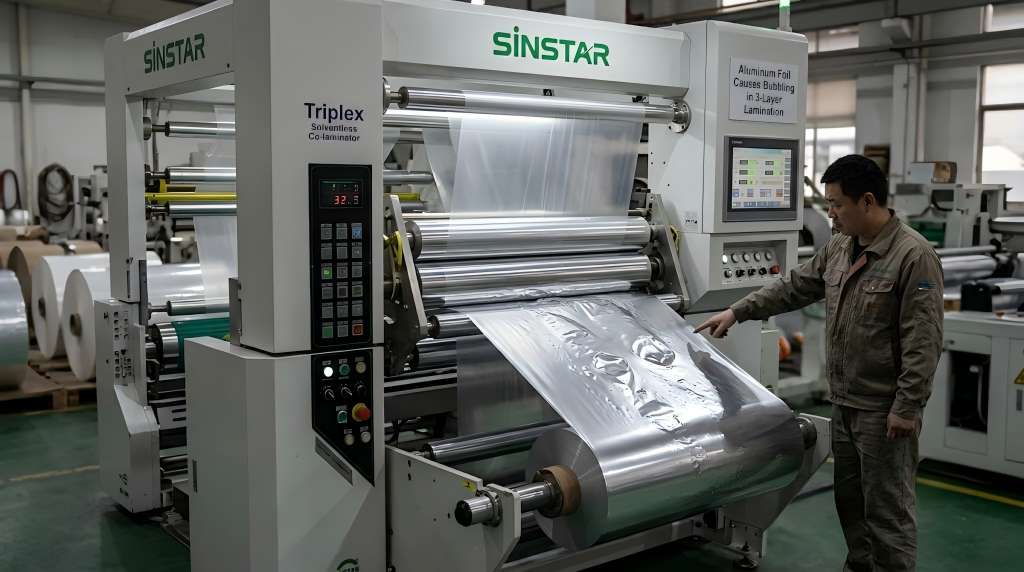
Tension Control and Mechanical Calibration
Managing web tension profiles across multiple unwinds is a critical factor when using a solventless laminating machine for multi-layer configurations.
1. Tension Mismatch in Second-Pass Lamination
During the secondary pass of a 3-layer lamination process (for example, laminating a pre-combined PET/AL web to a PE film), the primary combined web (PET/AL) exhibits significantly higher structural stiffness than a single film layer.
If the tension of the PET/AL web is set too high, or if the tension of the incoming PE film is insufficient, the different layers undergo unequal elastic elongation. Once the laminated structure is wound onto the rewind reel, the internal mechanical stresses begin to equalize. As the PET/AL web attempts to retract, the mismatch in structural relaxation causes shear stress at the interface, generating tunneling and structural wrinkling bubbles.
2. Inadequate Nip Pressure and Roller Hardness
Solventless lamination relies entirely on the mechanical compression of the nip rollers to displace air from the web interface. If the pneumatic pressure applied to the lamination steel roller is insufficient, or if the durometer hardness of the rubber backing roller is incorrect, the compression across the web width will be uneven. Air displacement will fail, particularly near the margins of the aluminum foil web, leaving edge bubbles along the entire roll length.
Environmental Humidity and Curing Room Protocols
Polyurethane chemistry is highly reactive to environmental factors and thermal gradients during the post-lamination curing phase.
1. High Ambient Humidity and CO2 Generation
Two-component solventless polyurethane adhesives contain reactive isocyanate (NCO) groups. Isocyanate groups react preferentially with water molecules over hydroxyl (OH) groups. If the relative humidity within the production plant is unmonitored, or if the substrates carry moisture on their surface, the NCO groups react with water:
- NCO+H2O→R-NH2+CO2↑
Chemical side-reactions often release carbon dioxide (CO2) gas during curing processes, but since aluminum foil acts as an absolute barrier film, any generated CO2 cannot permeate out. Instead, it accumulates between layers during curing processes to form dense and clear bubbles known as chemical curing bubbles.
2. Rapid Thermal Shock in the Curing Room
When the finished film roll is moved to the curing room, care must be taken in managing the heating profile. If the curing room temperature is immediately increased to 50°C without a pre-heating phase, thermal shock will occur.
Aluminum foil is different from PET and PE films in thermal expansion coefficient. The metal and plastic layers expand at different rates when the temperature changes quickly. The adhesive has a low viscosity and is not yet cured. This structural change leads to delamination and thermal bubbling.
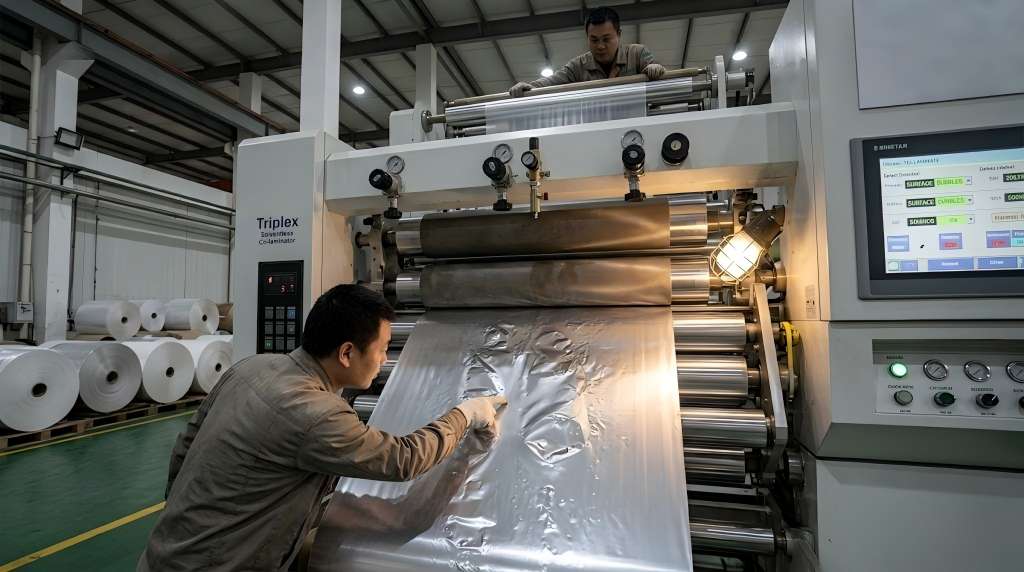
Industrial Quality Control Checklist for Plant Operators
To minimize defect rates when processing aluminum foil on a solventless laminating machine, operators should follow the standard verification parameters outlined below:
| Inspection Point | Technical Target Standard | Practical Corrective Action |
| Foil Surface Energy | ≥50 mN/m | Conduct dyne pen testing before loading the roll. Reject or re-allocate rolls below standard. |
| Coating Weight Output | 1.8−2.2 g/m2 | Increase adhesive dosage by 0.2 – 0.4 g/m² relative to standard film-to-film setups. |
| Relative Plant Humidity | <60% | Deploy industrial dehumidification units around the coating section during high-humidity seasons. |
| Curing Temperature Profile | Graduated Heating Plan | Maintain at 35°C for 3 hours for initial adhesive leveling, then increase to 45°C–50°C for final cross-linking. |
By controlling substrate cleanlines, adjusting adhesive delivery, standardizing multi-web tension steps, and controlling ambient humidity levels in packaging plants, aluminum foil bubbling defects during 3-layer lamination processes can be eliminated.