
Is Kraft Paper Recyclable? Uncoated vs. Coated
Kraft paper is often seen as an eco-friendly alternative to plastic. So, when you receive a brown paper mailer or pick up a kraft paper bag, you probably assume it can go straight into the paper recycling bin. After all, it’s paper, right?
But not all kraft paper is as environmentally friendly as it looks. Uncoated kraft paper is highly recyclable and is accepted in most paper recycling programs. Once it is coated or laminated with plastic, however, recycling becomes much more complicated, and it may no longer be accepted in your regular paper recycling bin.
In this guide, we’ll look at the different types of kraft paper and show you how to tell in just 10 seconds whether it can be recycled.
What Is Kraft Paper?
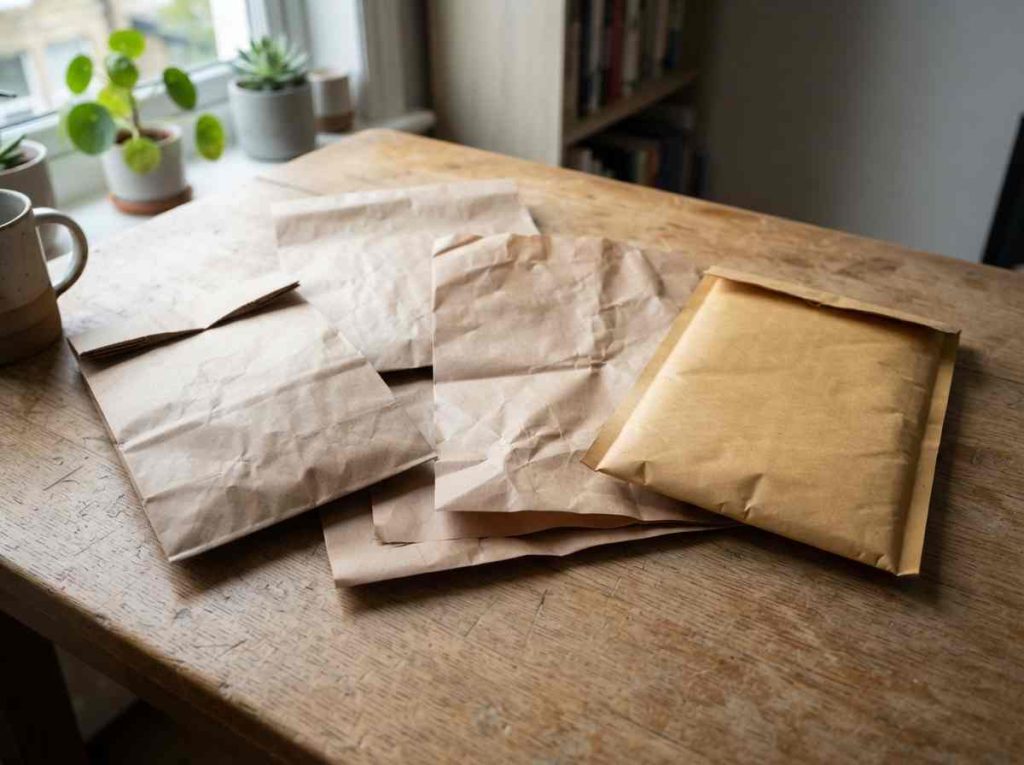
The word “kraft” comes from German and means “strength.” Kraft paper is made from wood chips that are processed to keep the paper’s fibres strong and flexible. This is why it is often used for paper bags, shipping mailers, heavy-duty sacks, mailing tubes, and the outer layers of corrugated boxes.
These long fibres also help kraft paper recycle well. They can be used again through several recycling cycles, although the fibres gradually become shorter and weaker over time.
So, what makes one piece of kraft paper recyclable while another may not be? It mainly comes down to two things:
- The type of pulp: Kraft paper can be made from virgin or recycled fibres. Both can be recycled, although the quality of the fibres may differ.
- The surface treatment: This is the more important factor. Plain, uncoated kraft paper is usually easy to recycle, while plastic coatings or laminations can make recycling more difficult.
Here’s a quick guide to the types of kraft paper you may come across.
| Label on the product | What it usually means |
| Coated unbleached kraft | Often a clay or pigment coating that improves printing |
| Poly coated or PE coated | A thin layer of polyethylene plastic on one or both sides |
| Wax coated | Paper treated with wax, such as paraffin |
| Film laminated | A separate plastic film bonded to the paper |
| Dispersion or water-based barrier | A water-applied coating, often designed to break down during repulping |
Can Uncoated Kraft Paper Be Recycled?
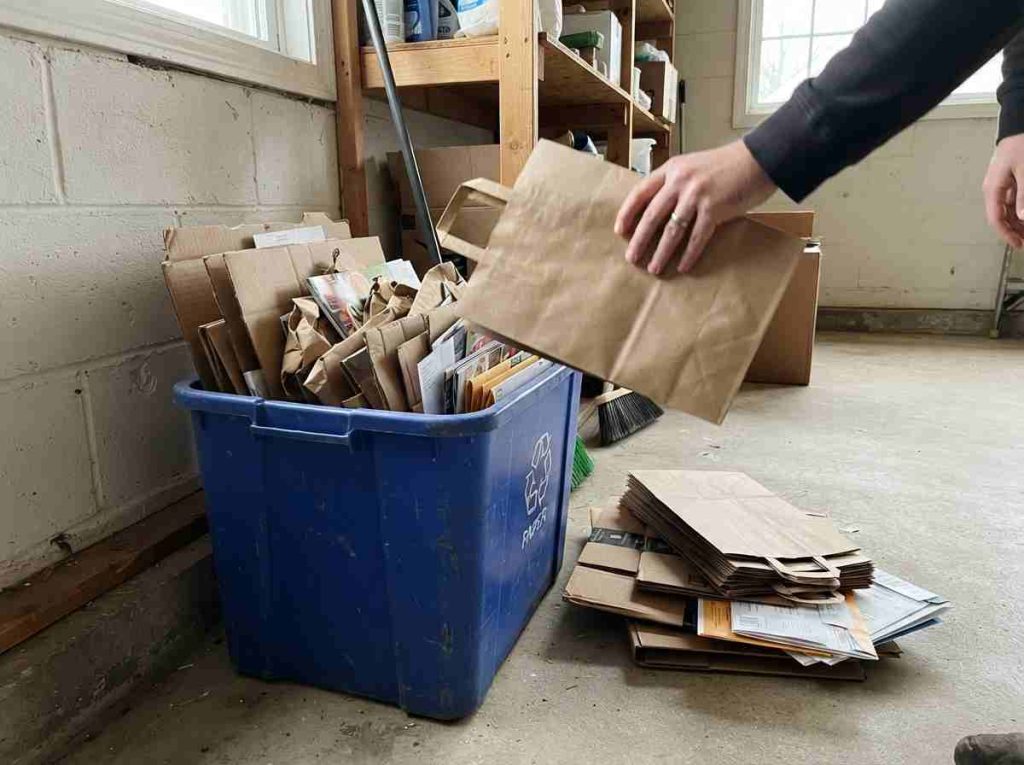
Yes. Uncoated kraft paper is generally easy to recycle and is accepted by many paper recycling programs. You can usually recycle it along with cardboard and other paper products.
This includes many everyday kraft paper items, such as paper shopping bags, large paper sacks, all-paper mailers, paper food trays, and kraft shipping tubes. The Fibre Box Association also lists these types of kraft products as materials that can be collected and recycled with old corrugated cardboard.
Before putting kraft paper in the recycling bin:
- Remove what you can: Take off tape, plastic windows, bubble wrap, and shipping labels where possible.
- Keep it clean and dry: Paper covered in grease or food remains may not be suitable for recycling. Some areas accept paper food packaging in compost collections, so check your local rules.
- Don’t worry about small bits of glue or staples: These are usually removed during the recycling process.
- Check before shredding: Some recycling programs accept shredded paper, while others require it to be kept flat.
You may also have heard that “Brown paper isn’t recyclable because of the colour or dye.”. That’s not true. The brown color of kraft paper does not prevent it from being recycled. In fact, unbleached kraft paper generally requires less processing than white paper.
Can Coated or Laminated Kraft Paper Be Recycled?
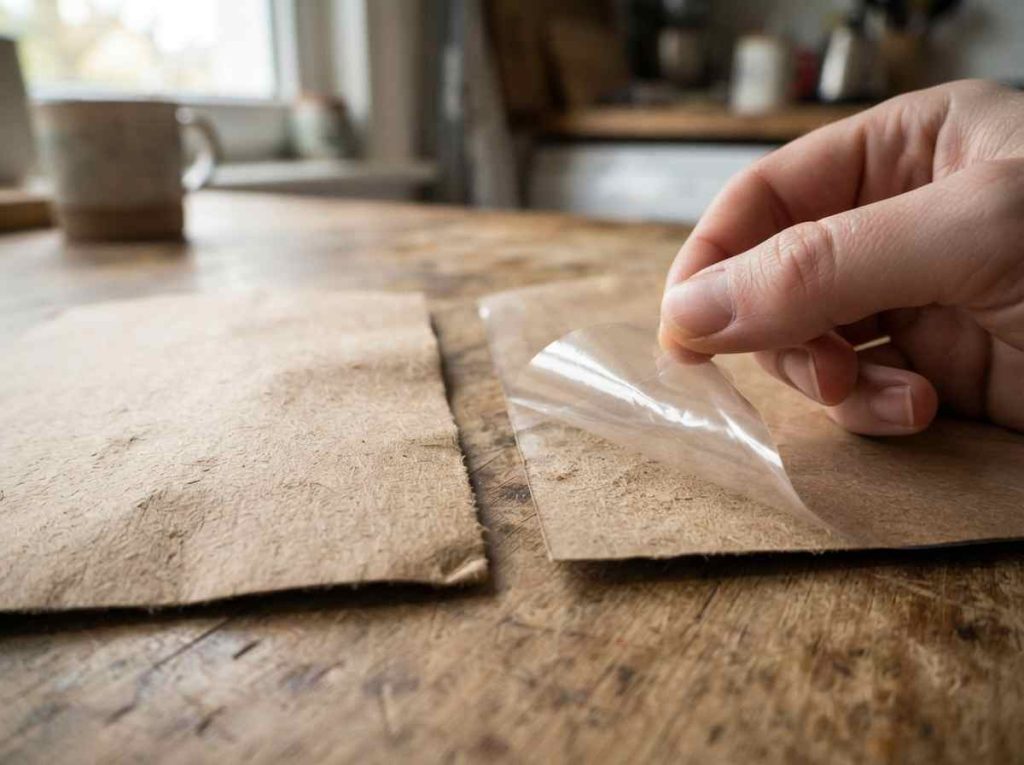
Unlike plain kraft paper, coated or laminated kraft paper is not always easy to recycle. It depends on the type of coating and whether local recycling facilities can handle it. Some coatings can be separated during recycling, while others make it difficult to recover the paper fibres.
1. Repulpable Coatings: Generally Recyclable
Some kraft paper uses thin water-based or other specially designed coatings to improve its resistance to moisture and grease. These coatings are made to break down during the paper recycling process, allowing the fibres to be recovered.
Testing under the Fibre Box Association and AF&PA guidelines has shown that some coated papers can meet the required fibre recovery levels. In other words, a coating does not automatically make kraft paper unrecyclable. If it is designed to break down in water and has passed the relevant recycling tests, the paper may still be accepted in regular recycling programs.
2. PE-Coated Kraft Paper: Depends on Local Facilities
PE-coated kraft paper has a thin layer of polyethylene (PE) added to its surface, often to keep out moisture. You may find it in takeaway food packaging, paper cups, and some shipping materials.
During recycling, the paper fibres can be separated from the plastic layer. The fibres may then be reused, while the plastic is removed during processing. However, not every recycling facility has the equipment to handle this type of material.
Whether PE-coated kraft paper can be recycled depends on a few things:
- Local recycling rules: Some areas accept PE-coated paper, while others do not. Check your local recycling guidelines before putting it in the bin.
- Thickness of the coating: A thin PE layer is generally easier to separate than a thicker one.
- Recycling equipment: Some paper mills have the right screening equipment to remove plastic, while others may not.
So, PE-coated kraft paper is not necessarily impossible to recycle, but you cannot assume it will be accepted everywhere. If your local recycling guidelines do not mention it, put it in general waste rather than mixing it with regular paper recycling.
3. Wax-Coated and Film-Laminated Kraft Paper: Usually Not Recyclable with Regular Paper
Wax-coated kraft paper is difficult to recycle because the wax does not separate easily during normal paper recycling. It can interfere with the process, so items such as waxed butcher paper and some food packaging are generally not accepted in regular paper recycling.
Film-laminated kraft paper is another challenge. It has a layer of plastic film or aluminum foil bonded to the paper. Because these materials are tightly attached, ordinary paper recycling facilities cannot easily separate them and recover the fibres.
You may come across this type of packaging in frozen food bags, foil-lined paper pouches, and moisture-resistant shipping materials. Although the outside looks like ordinary brown paper, the extra layers make a big difference.
These products should generally go into general waste unless a local recycling program specifically accepts them. The same applies to heavily soiled packaging, which may not be suitable for paper recycling even if its material is otherwise recyclable.
10 Seconds to Check Kraft Paper
Not sure whether your kraft paper has a plastic or wax coating? You can do a few quick checks at home.
- Tear it: Tear a small corner and look at the edge. If you see a thin, stretchy layer that looks like plastic, the paper may have a film coating.
- Try to peel it: See if you can lift a thin layer from the paper surface. If it feels like plastic, it may be a PE coating or laminated film.
- Scratch the surface: Run your fingernail over the paper. If you notice a waxy feel or residue, it may have a wax coating.
- Add a drop of water: Put a small drop of water on the surface. If the water stays on top instead of soaking in, the paper may have a water-resistant coating. Try both sides, as they may be different.
- Scrunch it up: Crumple the paper into a ball and let go. If it quickly springs back, it may contain a plastic or foil layer.
Conclusion
As more brands switch to paper-based packaging, coated and laminated kraft paper is becoming increasingly common. But paper does not automatically mean recyclable. Updated industry standards, including the Fibre Box Association’s 2025 guidelines, make it clear that recyclability needs to be proven through proper testing.
If kraft paper is laminated with PE or other plastic films, brands should be careful about claiming that the finished packaging is 100% recyclable. Although some paper fibres may be recovered, local recycling facilities may not be able to process the entire structure.
For brands looking to make more recyclable packaging, uncoated kraft or specially designed, tested barrier coatings may be better options, depending on the product. The goal is to find the right balance between packaging performance and what can actually be recycled after use.
Lamination is still useful for many types of packaging. It helps protect products from moisture, grease, and damage during storage and transportation. The important thing is to choose the right materials for your packaging needs and understand whether they can be recycled after use.
If you are planning a coating or lamination project for kraft paper or other paper-based packaging, feel free to contact Sinstar. We’d be happy to discuss your needs and help you explore suitable equipment and production options.
FAQ
Is kraft paper recyclable?
Yes when it is uncoated. If it has a barrier layer, identify the coating type and check your local programme.
Can you recycle brown kraft paper with tape on it?
Remove tape and plastic windows when easy. Small residues of adhesive are usually tolerated by mills.
Is poly-coated kraft paper recyclable?
The fibre can be recovered in a properly equipped mill, but collection depends on your local programme. Check the accepted-materials list.
Is waxed kraft paper recyclable?
No, not in standard paper recycling streams. The wax fouls the process.
Is kraft paper biodegradable?
Uncoated kraft is biodegradable and compostable under the right conditions. Plastic-coated versions do not fully break down in the same way.
Is kraft paper better than plastic?
It depends on the coating, the basis weight and the actual end-of-life route available. Avoid blanket claims either way.