
The Applications Best Suited for Solventless Lamination
Solventless lamination works well for many types of packaging, but some applications are a better fit than others. It is commonly used for food packaging, pharmaceutical products, personal care items, and aluminum foil packaging. It is also suitable for certain specialty materials, including breathable films and electrical insulation. Retort packaging can use solventless lamination too, as long as the adhesive can handle the high temperatures used during sterilization.
So, which applications are the best fit, and why? Let’s take a closer look.
1. Food Packaging
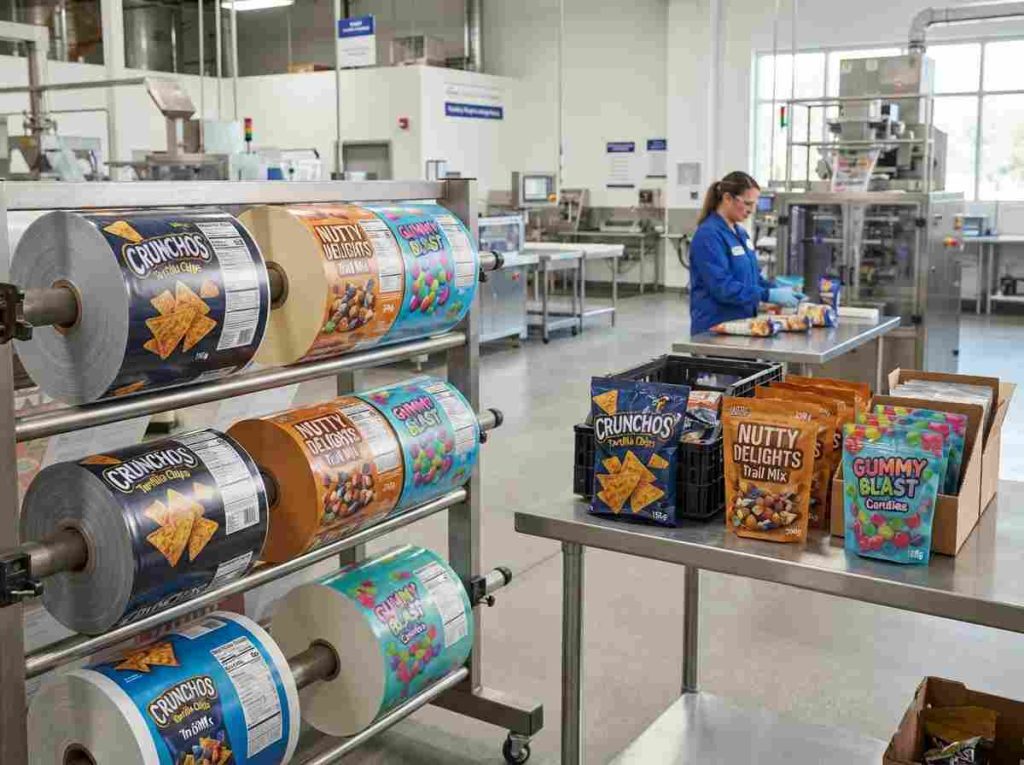
Food packaging is probably where solventless lamination shows up the most. Think snacks, coffee, frozen food, ready-to-eat meals. Most of these come in multilayer flexible packaging, which keeps the contents safe through storage and shipping.
A big reason converters go solventless is odor. Packaging can change how food smells, especially strong-aroma products or anything that sits on a shelf for months. Solventless adhesives don’t use organic solvents as a carrier, so you don’t get solvent residues coming from the adhesive in the first place.
There’s also the oven. Without a solvent-drying oven, the line is simpler to run and you use less energy on drying. For plants pushing out large volumes of flexible packaging, that adds up fast.
2. Pharmaceutical Packaging
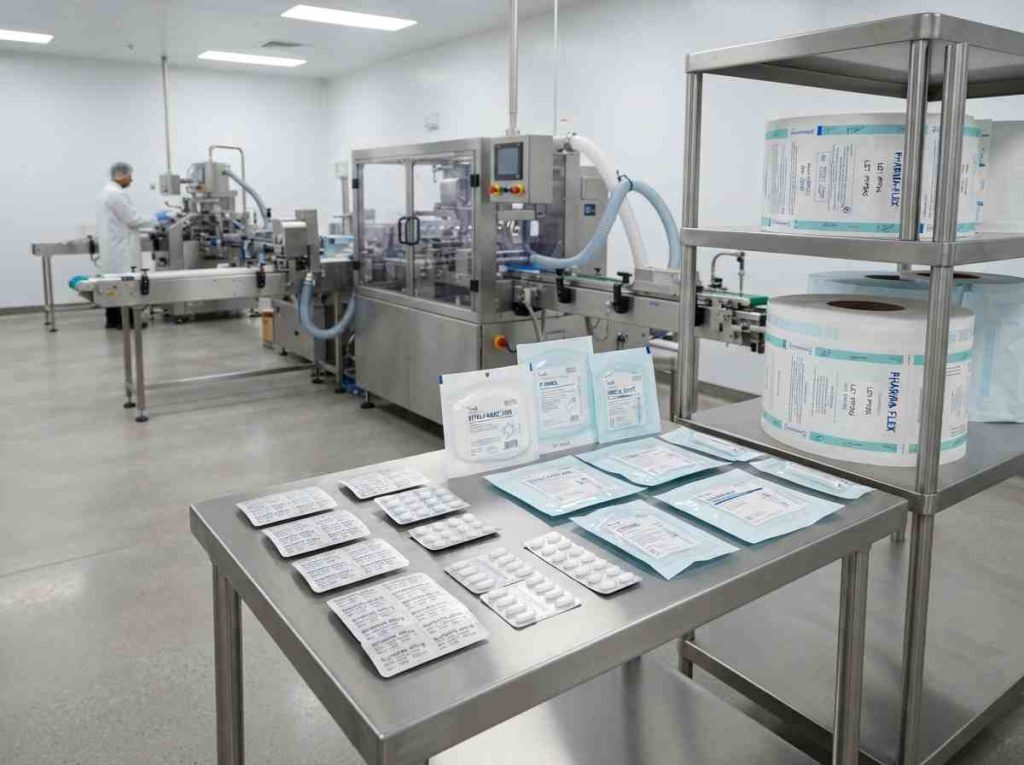
Pharmaceutical packaging is another good fit, since product protection and packaging quality matter a lot here. Tablets, capsules, and powdered medicines all need packaging that keeps moisture, oxygen, and other outside factors from messing with product stability.
Solventless lamination helps because the adhesive formulation doesn’t contain organic solvents. That takes away a lot of the worry about solvent residues and odors in the finished packaging, which is handy when a manufacturer needs the same packaging quality across big production runs.
Aluminum-based laminates are a common choice for pharmaceutical use thanks to their barrier properties. A PET/AL/PE structure is a typical example: an outer protective layer, an aluminum barrier in the middle, and an inner sealing layer.
3. Personal Care and Cosmetic Packaging
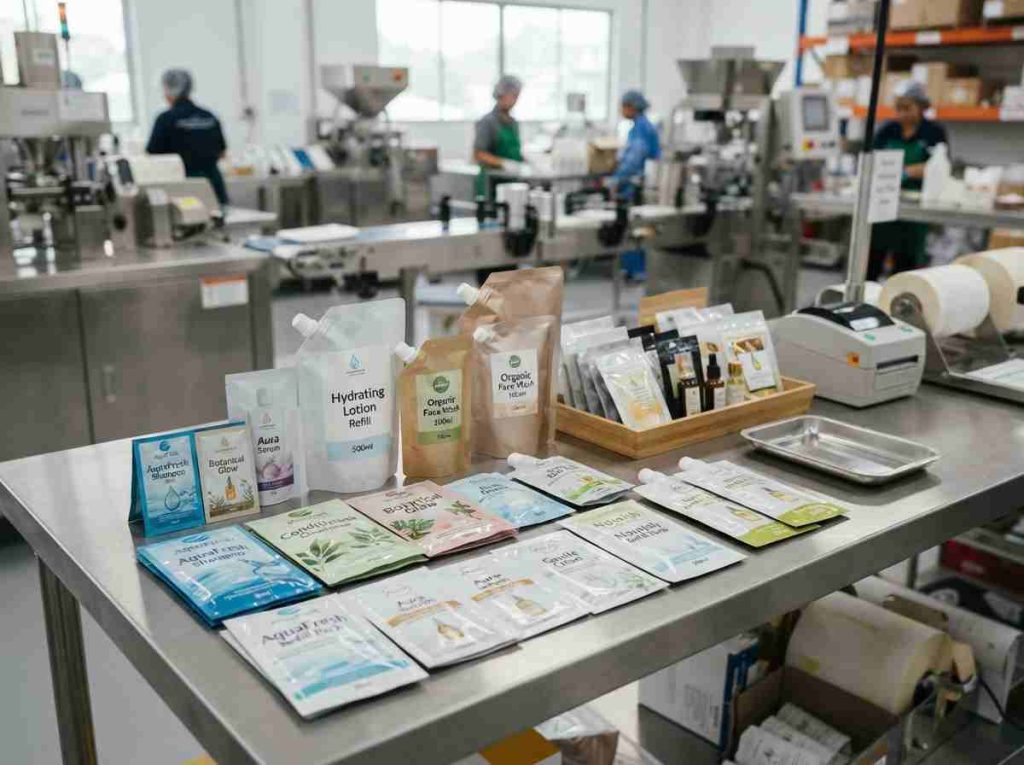
Personal care and cosmetic products often come in flexible pouches and sachets. Facial masks, shampoo samples, body wash, lotions, and skincare products are the usual suspects.
These packs have to look good in print while keeping moisture out and the product from leaking. Each film layer has its own job: the outer layer handles printability and mechanical protection, and the inner layer takes care of sealing and contact with the product.
Solventless lamination works well here because it bonds different film materials without a solvent-drying stage. It also cuts down on solvent-related odor, which matters when the product has a fragrance or a sensitive formulation.
4. Aluminum Foil Packaging
Aluminum foil is everywhere in flexible packaging because it blocks moisture, oxygen, and light so well. You’ll find it in coffee bags, food pouches, pharmaceutical packaging, and pretty much anything that needs a longer shelf life.
That said, foil almost never goes in alone. It’s usually laminated with plastic films like PET, PE, or CPP, which supply the strength, flexibility, and heat-sealing properties the finished package needs.
Solventless lamination is a great way to build these multilayer structures. With the right equipment, manufacturers can run three-layer lamination in one pass on a single line instead of splitting it into separate lamination stages. Less intermediate winding and material handling means better production efficiency.
You also skip the solvent-drying stage that conventional solvent-based lamination requires. Adhesive application does need careful control, though, especially with thin aluminum foil. Too much adhesive or sloppy coating control can lead to back-side contamination and other defects.
5. Retort Pouches
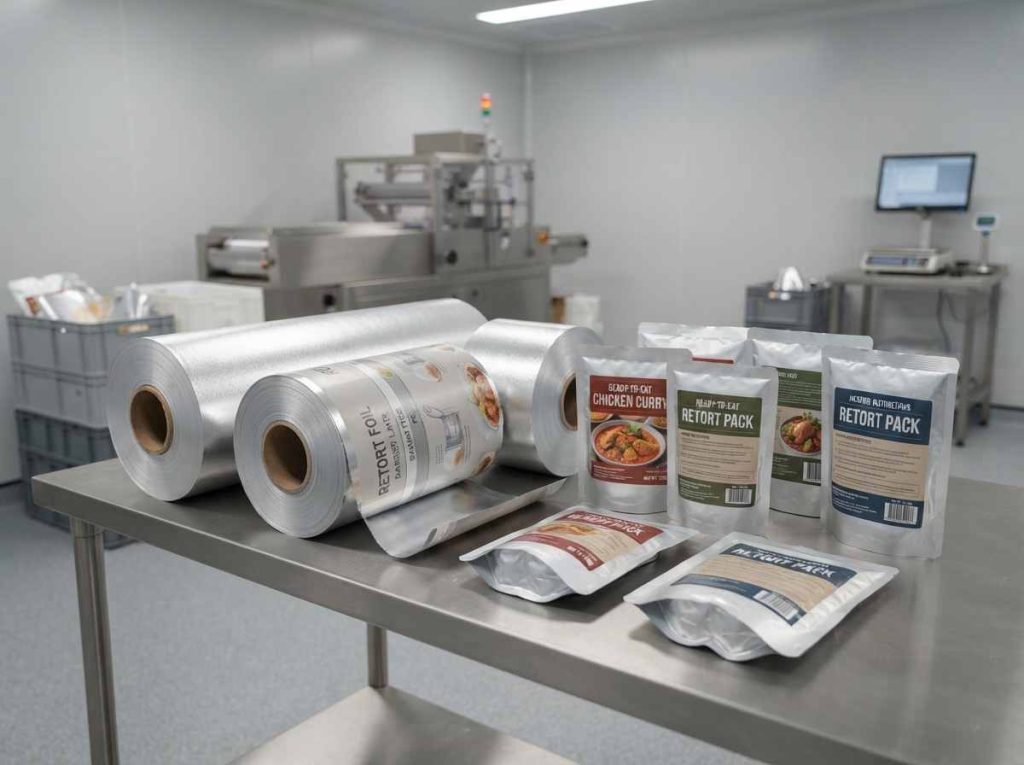
Retort pouches are made for products that go through high-temperature sterilization, like ready meals, meat products, seafood, and sauces. After all that heat and pressure, the pouch still has to hold its bond strength and barrier performance.
Solventless lamination can be used for retort packaging too, but adhesive choice matters a lot here. A standard solventless adhesive won’t necessarily survive high-temperature sterilization, so manufacturers need specially formulated retort-grade adhesives that can handle the processing conditions.
6. Breathable Membranes
Breathable membranes are used where a product needs to resist liquid water but still let water vapor through. Hygiene products, protective clothing, and building materials are the usual examples.
Unlike ordinary packaging films, these materials have one specific job to protect, and the lamination process can’t be allowed to ruin their breathability.
Solventless lamination can be a good fit because there’s no solvent-drying oven involved. That’s one less heating stage in the process, which helps when you’re working with heat-sensitive functional materials.
7. Industrial Insulation Materials
Solventless lamination isn’t just for packaging. It also gets used to make certain electrical insulation materials for motors and transformers.
These products often combine insulation films, paper, and other functional substrates. The laminate has to hold a stable bond while still meeting specific electrical and thermal performance requirements.
Traditional solvent-based processes need a drying stage to get the solvent out of the adhesive. Solventless lamination drops that step, so you need less drying equipment and burn less energy.
Frequently Asked Questions
1. Is solventless lamination suitable for all types of flexible packaging?
No. Solventless lamination is suitable for many flexible packaging applications, including food, pharmaceutical, and personal care packaging, but it cannot be used for every packaging structure.
2. What is the biggest advantage of solventless lamination in food packaging?
Its biggest advantage is that it eliminates the need for organic solvents in the lamination process. This reduces solvent residue and odor concerns while removing the solvent-drying stage.
3. Can solventless lamination be used for high-temperature applications?
Yes. Solventless lamination can be used for high-temperature applications, including retort packaging, when a suitable heat-resistant adhesive system is selected.
Conclusion
The potential of solventless lamination continues to grow as flexible packaging evolves and manufacturers explore new material combinations and production possibilities. From improving packaging performance to developing more efficient manufacturing processes, solventless technology offers plenty of room for further development.
At Sinstar, we specialize in solventless lamination technology and work closely with customers to develop solutions tailored to their specific needs. If you are exploring solventless options or would like to discuss a particular project, we welcome you to get in touch with our team.